
Systems Made by People Can Be Changed: How Therapists Pick Their Battles and Stay in the Fight – An Interview with Ben Caldwell, PsyD, LMFT
If you have ever read a new licensing board regulation or a change to your exam and wondered who decided this (and whether anyone asked therapists), you know how fixed these systems can feel. It’s easy to assume the only options are to work around them or leave the profession. Ben Caldwell has spent two decades in the rooms where those rules get written, and he sees a lot more room for change than most of us do.
Curt and Katie talk with Ben Caldwell, PsyD, LMFT, about how he picks his battles in the mental health profession and what keeps him in the fight when progress stalls. Ben shares what he learned helping shape SB 1172 (California’s first-in-the-nation ban on conversion therapy for minors), why online petitions carry so little weight with policymakers now, and how team sports taught him to lose and keep playing. Ben is President of High Pass Education and has published and presented widely on law, ethics, technology, and supervision.
Click here to scroll to the podcast transcript.Transcript
(Show notes provided in collaboration with Otter.ai and Claude AI.)
About Our Guest: Ben Caldwell, PsyD, LMFT
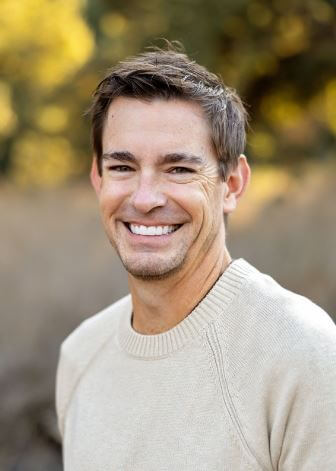 Benjamin E. Caldwell, PsyD is a California Licensed Marriage and Family Therapist and President of High Pass Education. He is the author of Basics of California Law for LMFTs, LPCCs, and LCSWs, and lead author of AAMFT’s Best Practices in the Online Practice of Couple and Family Therapy (2017). He also serves as Adjunct Faculty for California State University Northridge. He has published and presented around the country on issues related to law, ethics, technology, supervision, and professional development. Learn more at highpass.com.
In this Podcast Episode: Choosing Advocacy Causes and Persisting Through Setbacks
Ben explains why understanding how licensing boards, legislatures, and professional associations make decisions is the starting point for changing them. He describes raising his hand as a newcomer in Sacramento and ending up as a legislative chair, helping draft conversion therapy legislation alongside a CAMFT colleague, and pushing for free retakes after the national MFT exam outline was changed without notice. Curt and Katie also ask Ben about privilege and who gets a seat at the advocacy table, his concerns about how quickly AI tools are being adopted across therapy, supervision, and training, and why every clinician represents the profession whether they intend to or not.
Key Takeaways for Therapists: How to Advocate for Change in the Mental Health Profession
“The larger systems in our profession, number one, are not out to get you. They can feel like that sometimes, but they’re really not. And they can be changed, like all the rules, all the systems that govern us. They’re all made by people, and those people sometimes make mistakes.”
— Ben Caldwell, PsyD, LMFT
- Look for the next step when the larger fight is uphill. Ben argues that clinical exams have never been shown to correlate with safe or effective practice and that they disadvantage clinicians of color. Alternative pathways to licensure are one place advocates are making measurable progress while that longer argument continues.
- Get involved beyond membership. Joining a committee, helping your chapter, or simply offering to attend meetings puts you alongside people who already know how policy change happens. Once you’re there, be willing to be the one who says an issue matters.
- Your clinical perspective is valuable in policy rooms. When SB 1172 was being drafted, Ben and a CAMFT colleague were the only clinicians in a room of lawyers and lobbyists. Being able to say what specific bill language would stop in the therapy room helped shape the final law.
- Showing up carries more weight than signing your name. Policymakers have learned to discount online petitions, which are often used to gather fundraising data. Giving an hour to an online BBS meeting, a legislative hearing, or an organization’s working group tells decision-makers you actually care.
- Measure a cause by whether it’s right. Advocacy moves like a tide, and Medicare recognition for MFTs took decades. Ben stays energized by conviction that the work is morally sound, along with lessons from team sports about losing, recovering, and playing the next game.
- Use privilege without taking on someone else’s story. Ben listens before getting involved, supports bringing directly impacted people in to testify, and sees calling out racism as part of the responsibility that comes with power and privilege.
- Ask harder questions about AI adoption. Ben sees real value in AI tools and still worries that therapists, supervisors, and instructors are adopting them without adequate guardrails or a real conversation about the clinical skills we lose when we hand them off.
“Whether you see yourself as a representative or whether you see yourself as an individual, you’re gonna be perceived that way, and you have an opportunity to call attention to things that you want to call attention to, and I think that that makes us all stewards.”
— Ben Caldwell, PsyD, LMFT
Resources on Therapist Advocacy, Licensing Exams, and Professional Policy
We’ve pulled together resources mentioned in this episode and put together some handy-dandy links. Please note that some of the links below may be affiliate links, so if you purchase after clicking below, we may get a little bit of cash in our pockets. We thank you in advance!
- High Pass Education: highpass.com
- The Licensing Racket by Rebecca Haw Allensworth
- Karen Bogenschneider’s work on family policy
- California SB 1172 (conversion therapy ban for minors), California SB 903 (AI in mental health care), alternative pathways to licensure, the AMFTRB National MFT Exam
Relevant Episodes of MTSG Podcast
- Addressing Racism in Clinical Licensing Exams: An Interview with Ben Caldwell and Tony Rousmaniere
- The Licensing Racket: Therapist Licensing, Discipline, and Access to Care – An Interview with Rebecca Haw Allensworth
- Bonus Episode! When Good Intentions Lead to Bad Policy: Why the BBS Needs Therapist Feedback – An Interview with Dr. Benjamin E. Caldwell, LMFT
- Want to Fix Mental Health Workforce Shortages? Speed up the Licensing Boards: An interview with Dr. Ben Caldwell
- AI Therapy is Already Here: An interview with Dr. Ben Caldwell
- Training Therapists in the Age of AI: Preventing Deskilling and Teaching Clinical Judgment
- The Lasting Harm of Conversion Therapy: An Interview with Samuel Nieves
- Advocacy in the Wake of Looming Mental Healthcare Workforce Shortages
- Decolonizing Therapy: A Movement – An Interview with Dr. Jennifer Mullan
- Topic: Advocacy
Meet the Hosts: Curt Widhalm & Katie Vernoy
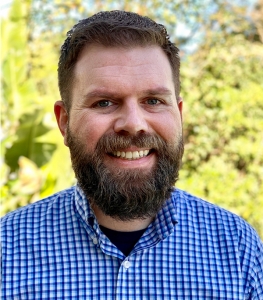 Curt Widhalm, LMFT
Curt Widhalm is in private practice in the Los Angeles area. He is the cofounder of the Therapy Reimagined conference, an Adjunct Professor at Pepperdine University and CSUN, a former Subject Matter Expert for the California Board of Behavioral Sciences, former CFO of the California Association of Marriage and Family Therapists, and a loving husband and father. He is 1/2 great person, 1/2 provocateur, and 1/2 geek, in that order. He dabbles in the dark art of making “dad jokes” and usually has a half-empty cup of coffee somewhere nearby. Learn more at: http://www.curtwidhalm.com
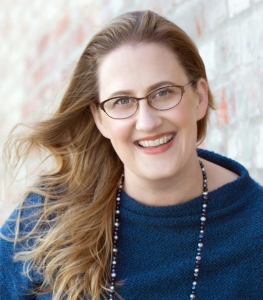 Katie Vernoy, LMFT
Katie Vernoy is a Licensed Marriage and Family Therapist, coach, and consultant supporting leaders, visionaries, executives, and helping professionals to create sustainable careers. Katie, with Curt, has developed workshops and a conference, Therapy Reimagined, to support therapists navigating through the modern challenges of this profession. Katie is also a former President of the California Association of Marriage and Family Therapists. In her spare time, Katie is secretly siphoning off Curt’s youthful energy, so that she can take over the world. Learn more at: http://www.katievernoy.com
A Quick Note:
Our opinions are our own. We are only speaking for ourselves – except when we speak for each other, or over each other. We’re working on it.
Our guests are also only speaking for themselves and have their own opinions. We aren’t trying to take their voice, and no one speaks for us either. Mostly because they don’t want to, but hey.
Join the Modern Therapist Community:
Podcast Homepage | Therapy Reimagined Homepage
Facebook | Facebook Group | Instagram | YouTube | LinkedIn | Substack
Consultation services with Curt Widhalm or Katie Vernoy:
Connect with the Modern Therapist Community:
Our Facebook Group – The Modern Therapists Group
Modern Therapist’s Survival Guide Creative Credits:
Voice Over by DW McCann https://www.facebook.com/McCannDW
Music by Crystal Grooms Mangano https://groomsymusic.com
Transcript for this episode of the Modern Therapist’s Survival Guide podcast (Autogenerated):
Transcripts do not include advertisements just a reference to the advertising break (as such timing does not account for advertisements)
… 0:00
(Opening Advertisement)
Announcer 0:00
You’re listening to the Modern Therapist Survival Guide, where therapists live, breathe, and practice as human beings. To support you as a whole person and a therapist, here are your hosts, Curt Widhalm and Katie Vernoy.
Curt Widhalm 0:16
Welcome back, Modern Therapists. This is Modern Therapist Survival Guide. I’m Curt Widhalm with Katie Vernoy, and this is the podcast for therapists about the things that go on in our profession, the way that our profession all fits together, and the ways that we kind of weave everything together. And while most of us spend our days focused entirely on the person sitting across from us on the couch, we’re in the weeds, we’re doing the work, we’re just trying to keep up, and then there are people who say, “Hey, who’s making sure that this whole house doesn’t fall down?” And that’s where people like Ben Caldwell come in. Dr. Ben Caldwell is an author, educator, advocate basically the guy who voluntarily steps up to tackle the biggest, messiest questions facing our field, and today we are talking with him about what it actually means to be a steward of the profession, how he chooses which big battles are worth fighting, and how the rest of us can help shape the future of mental health. So, thank you so much for joining us, Ben.
Dr. Ben Caldwell 1:15
That is a super kind introduction, Curt. I really appreciate that. Thank you. It’s great to be with you both, as always.
Katie Vernoy 1:21
So good to have you back, Ben. And before we jump in, for folks who haven’t heard you on the podcast about a million times, I want to ask you the question that we ask all our guests, which is, “Who are you, and what are you putting out into the world?”
Dr. Ben Caldwell 1:34
I am Ben Caldwell. I’m a licensed marriage and family therapist in California, and I run High Pass Education, where we do continuing ed and exam prep for mental health professionals. As part of my role with High Pass, I do a lot of advocacy work, which I know we’ll be getting into today.
Curt Widhalm 1:50
I’m going to start off with a little bit of a softball question for you here. What do therapists need to know about the larger systems within our profession?
Dr. Ben Caldwell 1:59
Well, I think there are a couple of things that, if you know them, it makes advocacy work honestly a lot easier. First of all, knowing how systems work. I think any MFT will tell you that understanding how a system works is important to making change within that system. You know, understanding how your licensing board works, understanding how your legislature works, understanding how your professional association decides what they want to work on. All that stuff is really helpful. And then, just kind of on an emotional level, it’s, I think it’s really helpful to know that the larger systems in our profession, number one, are not out to get you. They can feel like that sometimes, but they’re really not. And they can be changed. Like all the rules, all the systems that govern us, they’re all made by people, and those people sometimes make mistakes. Sometimes the rules and structures that govern us just become outdated because the world changes, and so you don’t necessarily have to demonize or blame anyone for things being the way they are, in order to understand and work on things becoming better.
Katie Vernoy 3:12
I think there’s a lot of times that people feel pretty daunted by what seems like very broken systems, and we’ve had you on talking about the kind of racist underpinnings or the the lack of equality built into our exams. You know, we’ve also talked about a lot of the things that I think feel so entrenched that it doesn’t feel changeable. How have you been able to, I guess, foster this sense of critical thinking and possibility? And I can’t think of what other words might fit in there about the profession because I think a lot of folks feel like it’s this is how it is and I just have to either work within the system or leave it.
Dr. Ben Caldwell 4:09
I appreciate your framing of the question. You’re you’re framing it very optimistically. I think sometimes in terms of righteous indignation. I get really bothered by those things where, and again, you don’t have to demonize anybody to understand current systems this way. But I think there are instances where systems as they are or rules as they are kind of set us up to fail, and that’s the stuff that really energizes me. That makes me want to go to work on that particular problem, even if it is deeply entrenched, even if it is really problematic, and the example that you gave of license exams. Okay, it’s really hard to make the argument that exams ought to go away tomorrow. That clinical exams are in fact so bad for the profession. They’re such an illusion of a high professional standard that we actually would be better off without them. That is a really, really difficult policy argument to make because there are a lot of people who have a vested interest in us having an exam. They can make some really compelling arguments for that. But the solution, if you’re somebody like me, who thinks that the exams, especially clinical exams, are really problematic, is not to just throw up your hands and give up hope. The solution, or at least the next step, is to work on changing hearts and minds. To help people understand, okay, I know that you think this has been this way forever, and this has to be this way forever. It really doesn’t. Here’s some of the history. Here’s how we got to where we are. Here is the problem with clinical exams now. They’ve never been shown to even correlate with safety or effectiveness in actual clinical practice. Here is the problem that they cause in terms of disparate outcomes and disadvantaging clinicians of color on the road to licensure. And then saying, “Okay, if we can’t get rid of the exams tomorrow, what’s the alternative? What can we do to make the process more fair than it currently is?” And you have seen wonderful advocacy in different states on what are called alternative pathways to licensure, ways that people can get licensed either after failing an exam one time or in some instances without having to take an exam at all. That doesn’t eliminate the exam, but it does acknowledge some of the harms that exams cause, and that is a change in the system that is making meaningful, measurable progress. And I think that has value, even if you know that the sort of longer fight is more of an uphill one.
Curt Widhalm 6:59
You have done a lot of advocacy work, and knowing you over the years has absolutely nothing to do with any kind of personal things that I have known about you in your life. And you know, for example, Ben was instrumental in the first in the nation SOCE ban legislation that started in California for minors under the age of 18. He runs a test prep company, and he’s advocating for licensing exams to go away. These are things that not only do you have nothing personal, but might even actually go against your own interests. I know you personally. I think that you would be amongst the first people to acknowledge you do come from a place of privilege in being able to operate in a lot of this. But…
Dr. Ben Caldwell 7:48
Sure.
Curt Widhalm 7:49
How do you go about what you decide to work on when it doesn’t seemingly just come from this place of I have this personal story myself. I’m actually doing this consistently at the highest levels for advocacy work. Can you talk about your decision-making process?
Dr. Ben Caldwell 8:08
Well, I’ve got my own internal morals and values that I draw from, and I believe very strongly in principles of fairness and equality. And I know that our systems, even though many of the systems ostensibly share the same aims, they don’t necessarily live up to that ideal. And I also recognize that, in at least some instances, even if it’s not my personal story, I can still bring some valuable perspective into the discussion, and I think you know your mention of Senate Bill 1172 years and years ago is maybe the perfect example here because at that time I was the legislative committee chair for AMFT California. What was the California Division of AMFT, and I got called into a meeting in the office of then State Senator Ted Lieu, where he had gathered these mental health organizations, psychologists, psychiatrists, MFTs, social workers, etc. He wanted representatives from all those organizations to come together in his office to talk about conversion therapy or reparative therapy, because he had just learned that California was kind of a hotbed for this kind of thing, and he was horrified by it. By that point, already the major mental health associations had come out with various forms of statements saying, “This is a harmful practice.” I again, it’s not my story, but I have personal connections with folks who have been through reparative therapy and have been harmed by it, and have very very powerful stories to tell about that. But all of these organizations were together in Senator Lieu’s office, and I realized in the course of that discussion that there were only two actual clinicians in the room. It was me and Angela Kahn who was there representing CAMFT. Everybody else in the room was a lawyer or a lobbyist. And while everybody said basically the same thing that they were with the senator in spirit, but that it was going to be really difficult to kind of thread the needle of writing a bill that would stop conversion therapy without also blocking a lot of legitimate conversations in therapy. Angela and I were the only ones who could actually say, if you write the language this way here’s what you are going to stop in the therapy room. So I think my perspective there I hope was really helpful in crafting the language that ultimately became state law. And Angela and I have very fond memories of like poring over draft language and legal cross referencing and all of this stuff at a Hollywood bar as we were trying to get to know each other, but also work on this legislation. That was important not because I had gone through reparative or conversion therapy, but because it was important to our profession. And I’m kind of representing our profession. It certainly is in line with my morals and values around fairness and equality, and and not doing people harm, and my experience as a clinician who has done some policy work was going to be able to influence the actual language of that bill. So all of those things together, hopefully, meant that my presence made a difference.
… 11:45
(Advertisement Break)
Katie Vernoy 11:48
So it was, you were in the right place at the right time, and you decided to show up and actually bring your skills and and clinical perspective to bear on a problem that landed at your feet, pretty much.
Dr. Ben Caldwell 12:06
Yeah, I think the you know the initial meeting in Senator Lieu’s office was something that we were all just kind of called to, but the the problem was a known problem in the profession at that time. It was something that had been causing some controversy in different professional associations. It was the subject of a fair amount of scholarship and and debate in the profession. So it wasn’t like I was brand new to that discussion coming into that meeting. But the fact that Senator Lieu’s office wanted to work on that problem in California at that time, that was certainly fortuitous.
Katie Vernoy 12:39
Not to diminish the efforts or the work, but it it’s something where that feels fairly hopeful. If we can put ourselves in the right place to be available for those conversations, that’s one way in.
Dr. Ben Caldwell 12:53
Oh, definitely.
Katie Vernoy 12:54
Be there. Be willing to step up when called, and you have a lot to offer. So I think that’s that’s really hopeful and positive. On the flip side, that very law has been threatened, and the landscape is changing. And so it can be two steps forward, one step back, or sometimes one step forward and two steps back. And it can be very hard to know what’s worth the time and effort. How do you keep your hope alive? Curt and I both were part of Medicare discussions and how long that took, and all of the pieces. So you know, years and years and years of advocacy can sometimes bear fruit and sometimes not, or bear fruit for a little while and then be rolled back. And so, especially in the current environment, with a lot of things being rolled back, including stuff around sexual orientation change efforts and those types of things, it can be hard to know what actually makes a difference. Can you talk a little bit about the current landscape and and what advocacy looks like in this moment in 2026?
Dr. Ben Caldwell 14:00
Well, sure, but I would I want to back up for a second first because I think it’s really important for people who want to be involved in advocacy in whatever form to yes, as you were saying, make yourself available for the discussion. In in my case, this meant way back in 2005 putting my hand up at a meeting of AMFT California and saying, “Look, I don’t know anything about anything, but I’m going to be moving to Sacramento, so if you want me to go to meetings and stuff, I’m happy to go to meetings.” And they said, “Great, you’re going to be our new legislative chair.” And it was quite the learning curve, but it it was me being willing to just kind of give my presence and voice in a way that would be helpful to the profession. I don’t think a lot of advocacy work goes well if you’re truly going it alone. I think there’s great benefit in getting involved in your professional association, by which I don’t just mean being a member. I mean join a committee, help out your chapter. Get to know people who have these relationships, who understand how advocacy and systemic change works, and have been doing it for a while. And then, within those systems, be willing to be loud. Be willing to be the one saying, “Hey, I think it’s really important that we get involved on this particular issue.” Now, you were talking about the struggles that we’ve had with SOSE and and the legislation around that, the court battles around that, I think it’s really important not to judge the value or moral rightness of a particular cause on its outcome, because it is going to be two steps forward, one step back. Sometimes the opposite, like you were saying, one step forward, two steps back. But the degree to which you are making progress on an issue is sometimes fully divorced from how good and right your work on that issue is. Some things are more difficult to crack than others. Some things take a lot of time. Medicare is a great example. You guys were working on Medicare for years and years. Our associations were working on Medicare for literal decades, and then once we got into Medicare 1000s upon 1000s of MFTs immediately opted out of Medicare. So advocacy never goes in a straight line. It’s always going to be the tide comes in and then the tide goes out, and that’s okay as long as you can remain confident that the cause you’re working on is right, that will keep you energized even in times that aren’t so great. But you, lastly, you were asking about like what’s possible in the current climate, right? What can we do now? It does feel difficult in a lot of areas, but advocacy is not just about legislation. It also can be about changing ethics codes and institutional policies. It can be about going to court. It can be about changing hearts and minds. Like it’s all of those things as avenues of advocacy are still available to us, even in times when, you know, the federal legislative environment. If you want to protect vulnerable populations at the federal level right now, that’s really tough. That may change once the midterm elections happen in November, but at least right now, as we’re recording this, it’s a tough federal environment. Okay, you still can make a difference at the state level in a lot of places, at the local level in a lot of places, at the association level, at the institutional level. Like there’s still a lot of good work to be done, and even if it feels like I can’t make any sort of change in policy right now because not enough people are on my side, or whatever it may be. Maybe that’s a signal that your work, your advocacy, is about helping people move to your side, helping people understand what the issue is and why it’s important.
… 18:15
(Advertisement Break)
Curt Widhalm 18:16
I would venture to guess, looking at kind of maybe the last five or six years, we’ll use COVID as kind of the starting point of this. Has that advocacy scene changed? Has the idea of what seemed possible really changed? I know that kind of before that, you’ve been operating in a lot of these advocacy spaces before, but as a lot of grassroots stuff has moved more online, does it feel different in the larger scene? Does it feel like things are as possible? Does it feel like things are more possible? I guess, kind of, what is the landscape that you’re seeing as far as how some of these tides have changed, especially as things have been easier to just kind of stay online and in our own spaces without necessarily being around other people.
Dr. Ben Caldwell 19:10
That’s a great question, and I think that what’s possible hasn’t changed more than it usually does. There is that constant process of the the tide sort of coming in and out on specific issues, but what I have seen change since COVID really is about processes and about how grassroots advocacy tends to work. There was a moment in time a few years ago where I think you really could make a tangible difference on some advocacy issues by signing an online petition, by sort of putting your name and and your weight behind a particular cause, and then an advocacy group could go to someone in a position of power, somebody who’s a policymaker, and say, “Look, I’ve got 50,000 people who have signed on to this,” or whatever the number was. And that I am noticing no longer makes much of a difference at all. Policymakers have sort of caught on that signing a petition not only is so easy that people often don’t really think about it, but also, people can get kind of tricked into it, can be misled about what the petition even is, and organizations now are using online petitions more as a vehicle for data gathering on people that they can fundraise from than as a real advocacy tool. So, if you think that you’re making a big difference by signing on to an online petition, I’m so sorry you probably aren’t. So, I think when we talk about how to do advocacy, how to be involved in something that you care about, it is more important now than it would have been 10 years ago to actually show up, and you can still do a lot of work online. Don’t get me wrong, but it might mean taking an hour out of your week to go to a meeting online with people who are involved in an organization or an issue that you care about. It might mean going to, and again, you can attend online a legislative hearing or a BBS meeting or something like that. But it means really giving more than just your name and a couple of clicks to a cause. It really means giving time, energy, and effort to it. That kind of thing is actually a little bit easier for policymakers to kind of suss out these days. How much do you really care about this? Are you actually willing to show up and be heard on this issue? If so, then you can at least get somebody’s ear for a little bit. But if your motivation to act on a particular issue only goes as far as a couple of clicks, probably doesn’t do anything.
Katie Vernoy 22:05
What are you working on right now? What do you feel like are the biggest concerns that need to be addressed in the profession these days?
Curt Widhalm 22:14
For those of you who can’t watch Ben because this is an audio podcast, he just shifted a entire ream of paper and started combing through it.
Dr. Ben Caldwell 22:25
As we’re recording this, a lot of my energy these days is focused appropriately, I think, on new courses and programs and things we’re doing at High Pass Education. But in terms of advocacy, my attention right now is really focused on two places, and one is exams, as we’ve been talking about before. You know, at the beginning of 2026, AMFTRB, which does the National MFT exam, they changed the outline for the exam so that the sort of balance of content was different, and some of the specific content areas were different. They neglected to tell anyone that they had done that, and that’s kind of a problem. So they went through multiple test cycles where people were being tested under a different version of the outline than what they thought they were going to be tested under. Now, at High Pass Education, we don’t yet have a program for the National MFT Exam, but that kind of thing really just gets to my sense of fairness, right? Sense of of what’s right, and I didn’t think that other people were really paying attention to that. So even though it doesn’t help our customers, we don’t have a program for that test, we went around and started telling licensing boards, “Hey, you’ve got a problem here with this test.” We went to the test administrator for the National MFT Exam, this company called PTC, and said, “Hey, we think you’ve got a problem here because you really cannot. And I mean, it’s a foundational failure to meet testing industry standards. You really cannot test people on the basis of a secret changed outline.” And by doing that, we were able to again not get rid of the test, but get hundreds and hundreds of people who had failed between January and April a free retake. And that was a situation where I genuinely don’t know, like, if we hadn’t caught that, I don’t know if anybody else would have. We were willing to make a stink over it and and get other organizations involved because we didn’t feel like it was fair. So, exams are an area that I’m continuing to give a lot of energy and effort too, because I think we ought to have as fair of a process as possible, even if it’s going to be an imperfect one. The other thing is AI, and what I believe to be the sort of inadequately critical adoption of AI tools across therapy work. And I should be really clear here. It’s not just therapists I’m talking about. It’s it’s also supervisors and instructors, and AI can do a lot of things really well. I’m not like reflexively anti AI, but I don’t think we have adequate guardrails yet. I’m actually really grateful for the work that I know you’ve done on Senate Bill 903, which hopefully in California will put some guardrails on AI and mental health care, and I’m I’m really concerned about this process of deskilling, where when we come to rely on a technology to do something for us, we inevitably get worse at performing that skill independently. I don’t have the particular right answer to that, but that’s an important issue that I’m going to continue to raise because I’m worried that a lot of AI adoption across mental health care right now is happening without meaningful discussion of that concern first. So AI and exams are are primarily what I’m working on. But as other stuff comes up, of course, if if it triggers my indignation, I’ll get involved there too.
Curt Widhalm 26:14
Being around the stuff that you have as long as you have, and I’ve gone through this, you mentioned Senate Bill 903, which Katie and I both contributed to the CAMFT Code of Ethics update, which served as kind of a precursor backdrop to that, as well as being able to work with State Senator Steve Padilla’s office on feedback around language, very much in the way that you talked about your work with Ted Lieu’s office. I think you did more with Ted Lieu than we did directly with Steve Padilla, but it’s fun getting invested into things. It’s disappointing and heartbreaking when you get as deeply involved into things and they don’t come to fruition.
Dr. Ben Caldwell 26:56
Sure.
Curt Widhalm 26:56
How do you continue to stay in the work that you do when the things that you’re trying to work on get stepped over, get ignored, get pushed to the side. One of the things that I’ve learned across my career is when it’s not the sexy topic for the legislature in a particular year to deal with something. How do you keep going?
Dr. Ben Caldwell 27:24
I think that’s such an important question because you can’t do advocacy work without frequent disappointment. Now I’ve got friends here in Southern California who have been involved in the entertainment industry in one form or another, and they talk about the constant disappointment, constant judgment of going to auditions for things that they don’t get, and I think advocacy work can sometimes feel similar, where you are often working on issues where you’re not successful, where people say no to you, where people say, you know what, I actually am on the other side entirely, or where you are successful at first and then things get rolled back, or there’s movement in the other direction. It helps a lot for me, at least, when I have the conviction that what I am working on is right, and I I don’t just mean like logically correct. I mean morally correct. It’s in line with my values. It’s in line with the values of the profession. Even if we fail sometimes at things that are good, I’d rather keep working for things that are good and fail than be shuffling paper around all day. You know. I want to be working on things that are important that change systems. That’s part of why I became an MFT in the first place. I I really do believe in systemic work and systemic change, and I know it doesn’t go in a straight line. I know that there’s a lot of failure on the road to lasting change, and I’m willing to endure that.
Curt Widhalm 29:01
How do you you learn this early on? Because I feel like it can be so easy to just get filled with cynicism. And you’re talking about this as somebody who’s really experienced with this. I’m also imagining you kind of like Dennis from It’s Always Sunny in Philadelphia. At some point, where something’s just not going your way, and just continuing to escalate things up, and just being like, “This is the right way! Damn it! Aren’t people seeing how this can just improve everything for everybody?”
Dr. Ben Caldwell 29:34
Well, if I were to be one of the characters from Always Sunny, either Dennis or Charlie, I’m not really sure which, but I’ll I’ll go with Dennis. That’s fine. I’m going to give you an answer that’s going to sound like it’s out of left field. Team sports. Team sports are great because you learn that you make mistakes, and people will maybe sometimes get frustrated with you. But also have your back. You learn to fail. You learn to lose. You learn to win graciously, understanding that that’s just one game, and you might not win your next one. You get better as a process of failing over and over again until you do get better. I think part of the reason why I’m able to do advocacy work and not get down on myself or the process when things look bleak is because I’ve done a lot of team sports in my life, and you learn to lose, and you learn that’s that’s not the end of anything.
… 30:34
(Advertisement Break)
Katie Vernoy 30:35
So I’ve got a question that’s a little bit shifting focus here. I want to acknowledge that we’re three white folks of privilege talking about a lot of volunteer work, talking about things that, when done really wrong, can look like white saviorism, and I recognize that some pieces of advocacy are not accessible for all, just depending on whether it’s time or money commitments, or even just relative power and standing, and and who’s going to listen to us, right? I mean, I especially had this thought when we put out a racism in the exams episode, and it was four white people on the episode, right? And so I think it’s it’s something where how do you consider who’s at the table, why they’re at the table, what the table looks like, and what your role is? Because I feel very strongly that the work that you do from a place of power as an ally or an accomplice or whatever it is is very important, and we also want to make sure that all of our colleagues are included in these conversations and are represented in these places. And so, how do you consider that? What are your thoughts on how to make sure that we have a more diverse pool of folks advocating?
Dr. Ben Caldwell 32:05
I think it is critically important that we not take on anyone else’s story as our own. So we were talking about SB 1172, and it was so powerful, especially hearing the testimony of folks like James Guay, who had been through conversion therapy himself as a as an adolescent, and was testifying very powerfully about that. If you look at advocacy work that’s happening on exams, you know I can go in and talk about the process of how exams are developed and and sort of issues in that process, but it’s not my story to tell when it comes to the actual impacts. And so, where there have been legislative hearings in other states about this, the organizations involved have have done a really wonderful job of bringing in folks who were personally impacted, who have been set back on the road to licensure. For me personally, I think that part of what goes along with having some level of power and privilege is a duty to use that power and privilege responsibly and to lift up those who don’t have it, and it can be a challenging line to walk sometimes. I’m not going to pretend that I always get it right, but I I do think that part of that is a responsibility that we have, I think as white people to call out racism where we see it. I think if we don’t call out racism on the basis of well, that’s that should be somebody else’s to sort of decide. I think we’re actually missing a real opportunity to create a more fair and equal professional environment. But I am sensitive to the idea that we want more voices at the table. We want to create opportunities for people to be advocates to tell their own stories, and so I try to do a lot more listening than talking before I ever get involved in an issue. I want to make sure that I understand it well enough that, again, my perspective will have some kind of value there, and that it’s also as much as possible not the only one.
Curt Widhalm 34:22
Bringing us back to the theme of the sprint of episodes that we are here, we’re in here to help close out this episode. How do you define stewardship versus just doing your job? And as maybe a second part of that, why is every clinician a steward, whether they realize it or not?
Dr. Ben Caldwell 34:45
I have no idea, my friend. Listen, it’s a it’s a good question. I don’t know that I have given it a ton of thought in those terms. I will tell you that most of what I do, I think about as just putting my head down and doing my job as best I can. I do think that part of my job as a MFT, also as a human being, is to try to create a better, fairer, more equal world. And I think maybe that’s what you’re getting at. I don’t think about it in in terms of like what does it mean to be a steward. But I do think that each and every one of us, by being affiliated with the world of mental health care, is seen as a representative of that world. So, for folks who are listening, when you go visit your family over the holidays, if you are the only mental health professional in the family, you are seen as a representative of the mental health care world. Whether you want that and intend it or not, that’s just how you’re seen, and the things that you do and say in that context are going to be seen as representative, so you will wind up having influence over what people think of mental health care. Whether you see yourself as a representative or whether you see yourself as an individual, whether you see yourself kind of in that role or not, you’re gonna be perceived that way, and you have an opportunity to call attention to things that you want to call attention to, and I think that that makes us all stewards.
Curt Widhalm 36:32
I want to thank you so much for spending your time with us once again, and we have all of the love and respect for you and the work that you do, and that you continue to show up and be such a wonderful steward and role model for our profession. Where can people find out more about you and the work that you’re doing?
Dr. Ben Caldwell 36:51
You can find my stuff at highpass.com. That’s h i g h p a s s.com. And if I could give a quick little shout out here at the end, you had an episode a while back on the licensing racket, that book by Rebecca Allensworth. Really good episode. I think she’s really interesting. And for folks who are specifically interested in advocacy and and understanding around the licensure process, really great episode. And the book’s a really great read for folks who want to know more about family policy stuff, Karen Bogenschneider has done great work over the years. I think her her work is worth looking into as well.
Curt Widhalm 37:30
And we will include links to High Pass in our show notes over at mtsgpodcast.com as well as links to a bunch of episodes, including the one that you’re referring to here. Please follow us on our social media. Come over to the Modern Therapist Facebook group and continue on with this and other conversations. And until next time, I’m Curt Widhalm with Katie Vernoy and Dr. Ben Caldwell.
… 37:54
(Advertisement Break)
Announcer 37:56
Thank you for listening to the Modern Therapist Survival Guide. Learn more about who we are and what we do at mtsgpodcast.com. You can also join us on Facebook and Twitter. And please don’t forget to subscribe so you don’t miss any of our episodes.




SPEAK YOUR MIND