
From Corporate Leadership to Counseling Advocacy: An Interview with Iris Wilson-Farley
Special Series: Becoming a Therapist
Curt and Katie welcome back Iris Wilson-Farley for a second-year check-in as part of the Becoming a Therapist special series. In this conversation, Iris reflects on how her experience in graduate school has shifted since her first year, including settling into an online program, navigating a high-pressure internship search, and preparing to transition into primarily in-person clinical work. Iris also shares how her background in corporate leadership continues to inform her approach to training, professional relationships, and advocacy, alongside her growing involvement in sexual wellness education, gender-affirming care, and research. Together, they explore how graduate training, supervision, and professional engagement intersect as students move closer to clinical practice.
Click here to scroll to the podcast transcript.Transcript
(Show notes provided in collaboration with Otter.ai and ChatGPT.)
About Our Guest: Iris Wilson-Farley
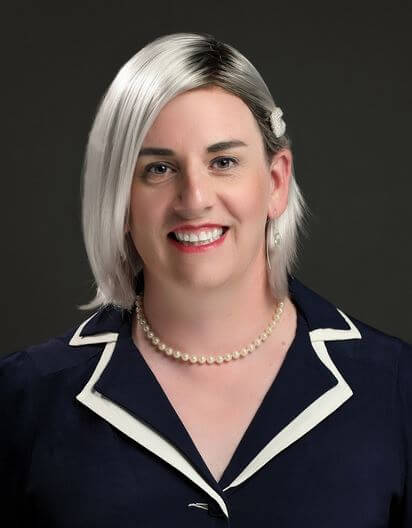 After a 33-year career in corporate Human Resources that included 25 years in learning and career coaching and three years working at the executive level, Iris Wilson-Farley is a second-career counselor-in-training, focused on learning about trauma-informed practices, sexual diversity, and how she can best serve the LGBTQIA+ community. She is in her second year in the Master’s in Clinical Mental Health Counseling program at The Chicago School and is a proud member of the American Counseling Association’s Association for Counseling Sexology and Sexual Wellness (ACSSW) and Society for Sexual, Affectional, Intersex and Gender Expansive Identities (SAIGE). Iris is also currently working toward an AASECT sex therapist certification through the Sexual Health Alliance.
In January 2025, Iris was featured on The Modern Therapist’s Survival Guide podcast as part of the series on graduate students’ motivations, expectations, and experiences.
Iris lives in Chicago with her wife, their dog (Scooby), and their cat (Mac). Outside of her studies, Iris enjoys running, watching old movies, and volunteer work advocating for affordable housing.
In this podcast episode: Graduate training realities, advocacy, and preparing for clinical work
Curt and Katie talk with Iris about what has changed since her first year in a clinical mental health counseling program, including how her expectations of graduate school have settled and how her confidence has grown through coursework, practice sessions, and finding a practicum site. Iris discusses the challenges of securing an internship within an online program, the importance of faculty mentorship and supervision, and what it has been like to prepare for a shift from virtual learning to mostly in-person clinical work. She also reflects on how her interests in sexual wellness, gender identity, and advocacy have become more central to her professional development, and how she is beginning to engage in research and leadership roles while still in training.
Key Takeaways for Therapy Students and Early-Career Clinicians: Professional development, advocacy, and supervision
“Every time you get one of those moments, it’s like, ‘Oh yeah, this is right. This feels good. It feels like I’m exactly where I should be.’”
— Iris Wilson-Farley
- The second year of graduate training often brings greater integration of skills, theory, and clinical confidence.
- Internship searches can be one of the most stressful parts of training, especially in programs without established local placement pipelines.
- Supervision is essential for building competence, particularly when working with more complex diagnoses.
- Prior professional experience can shape how students navigate systems, relationships, and leadership opportunities.
- Early involvement in advocacy, continuing education, and research can help clarify long-term professional direction.
“Find one or two areas of interest that really grab you…find the passion within the passion.”
— Iris Wilson-Farley
Resources on Graduate Training, Sexual Wellness, and Professional Advocacy
- The Chicago School – Clinical Mental Health Counseling program
- American Counseling Association
- Association for Counseling Sexology and Sexual Wellness (ACSSW)
- Society for Sexual, Affectional, Intersex and Gender Expansive Identities (SAIGE)
- Sexual Health Alliance – AASECT certification pathway
Relevant Episodes of the MTSG Podcast
- Finding Alignment in a Second Career: Special Series – Becoming a Therapist
An Interview with Iris Wilson-Farley (Year One) - The Practicalities of Mental Health and Gender Affirming Care for Trans Youth: An Interview with Jordan Held, LCSW
- What Therapists Need to Know to Support the Trans Community: An interview with Artie Hartsell
- What Goes in Your Notes? Interstate therapy practice and documentation for clients considering abortion or gender affirming care
- Protecting Clients Through Better Notes: An Interview with Dr. Maelisa McCaffrey
- Getting Personal to Advocate for Compassion, Understanding, and Social Justice, An Interview with James Guay, LMFT
Meet the Hosts: Curt Widhalm & Katie Vernoy
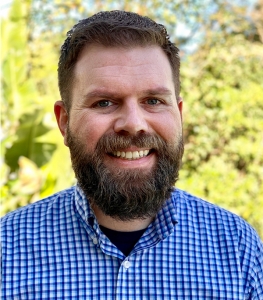 Curt Widhalm, LMFT
Curt Widhalm is in private practice in the Los Angeles area. He is the cofounder of the Therapy Reimagined conference, an Adjunct Professor at Pepperdine University and CSUN, a former Subject Matter Expert for the California Board of Behavioral Sciences, former CFO of the California Association of Marriage and Family Therapists, and a loving husband and father. He is 1/2 great person, 1/2 provocateur, and 1/2 geek, in that order. He dabbles in the dark art of making “dad jokes” and usually has a half-empty cup of coffee somewhere nearby. Learn more at: http://www.curtwidhalm.com
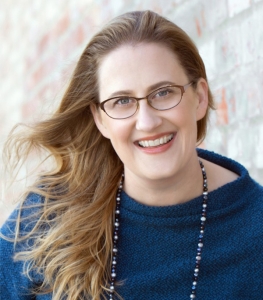 Katie Vernoy, LMFT
Katie Vernoy is a Licensed Marriage and Family Therapist, coach, and consultant supporting leaders, visionaries, executives, and helping professionals to create sustainable careers. Katie, with Curt, has developed workshops and a conference, Therapy Reimagined, to support therapists navigating through the modern challenges of this profession. Katie is also a former President of the California Association of Marriage and Family Therapists. In her spare time, Katie is secretly siphoning off Curt’s youthful energy, so that she can take over the world. Learn more at: http://www.katievernoy.com
A Quick Note:
Our opinions are our own. We are only speaking for ourselves – except when we speak for each other, or over each other. We’re working on it.
Our guests are also only speaking for themselves and have their own opinions. We aren’t trying to take their voice, and no one speaks for us either. Mostly because they don’t want to, but hey.
Join the Modern Therapist Community:
Podcast Homepage | Therapy Reimagined Homepage
Facebook | Facebook Group | Instagram | YouTube | LinkedIn | Substack
Consultation services with Curt Widhalm or Katie Vernoy:
Connect with the Modern Therapist Community:
Our Facebook Group – The Modern Therapists Group
Modern Therapist’s Survival Guide Creative Credits:
Voice Over by DW McCann https://www.facebook.com/McCannDW/
Music by Crystal Grooms Mangano https://groomsymusic.com/
Transcript for this episode of the Modern Therapist’s Survival Guide podcast (Autogenerated):
Transcripts do not include advertisements just a reference to the advertising break (as such timing does not account for advertisements)
… 0:00
(Opening Advertisement)
Announcer 0:00
You’re listening to the Modern Therapist’s Survival Guide, where therapists live, breathe and practice as human beings. To support you as a whole person and a therapist, here are your hosts, Curt Widhalm and Katie Vernoy.
Curt Widhalm 0:13
Welcome back, modern therapists. This is the Modern Therapist’s Survival Guide. I’m Curt Widhalm with Katie Vernoy, and this is the podcast for therapists about the things that go on in our lives and the things that go on in our practices. And last year, around this time, we published a first group of grad students, then pre licensees, that we wanted to do a project where we follow up with each of them once a year or so, and we are so thankful for them joining along on our journey. And one of them is back today, Iris Wilson-Farley, and we had a wonderful interview with her last year, and just thanks for stopping by telling us about how your grad student experience has been, and helping our audience be able to just kind of hear everything. We will include Irise’s first episode in our show notes, so you can easily reference where she’s been and where where we’re at now. So thank you so much for joining us.
Iris Wilson-Farley 1:13
Yeah, thank you both so much for having me back. I’m really excited to chat today.
Katie Vernoy 1:20
I’m excited to hear what’s going on with you and all those things, but we’ll start with the question I’ve put together for this group of folks, which is, who are you and why do you want to be a therapist?
Iris Wilson-Farley 1:31
So actually, it’s interesting because it’s changed a little from what it was a year ago. So I’m Iris Wilson-Farley. I’m a second year grad student in a master’s program in Clinical Mental Health Counseling at the Chicago school. And I am also now working toward certification as a sex therapist with the Sexual Health Alliance and doing all kinds of work in support of the profession with the Association for Counseling Sexology and Sexual Wellness. So a lot of what has increasingly come to the forefront for me in the clinical work that I want to do focuses in that area of sexual wellness. And you know, connects to my desire to work with clients in the LGBTQIA+ community, but also, increasingly, have you know, gotten some really good advice from mentors that has led me to understand that my impact as a transgender counselor could actually be really strong just by being a really damn good counselor who happens to be trans. And so it’s been a year of a lot of introspection, lot of thought, and I’m thrilled to talk about all that as we go today.
Curt Widhalm 2:56
Last year, when we interviewed you, you were very early on in your grad school experience and bright and shiny, everything’s super exciting. What has the last year been like for you? How have your expectations been met? How have they been completely thrown out the window? What has your experience been like?
Iris Wilson-Farley 3:18
It has I would say my experience has calmed down quite a bit. When I went back and listened to that, that first episode, I was struck by how much I was talking about just struggling with the format of of my master’s education in an online program and and all that. And I settled into that which I had hoped would be the case, and it really created a lot of room for me to reconsider expectations. You know, I came in very much dedicated to and I still am working with the queer community, but it was a very singular focus. And the more time I’ve been able to spend role playing, practicing, starting in on some of my electives, things like that, it’s really broadened my understanding of what this could look like, what this second career could look like. The other thing that’s happened is that, in terms of that second career part, I’ve officially retired from corporate America, which was a very it was a very good transition out of that previous career, and has freed up time for me to just continue to explore. So, you know, continuing to think about things like sexual wellness, thinking about religious trauma, thinking about some of these areas, and actually digging into theories and ideas that I didn’t take a lot of time with in my first year, learning more about EMDR, learning more about Gestalt Therapy, learning about some areas where I had just kind of zeroed in on a theoretical orientation that’s very relational. You know, relational cultural theory really drew me in very quickly. But starting to look at that and and I think part of what has rounded some of that thinking out has been the process of looking for an internship.
Katie Vernoy 5:24
Can you talk a little bit about what that process has looked like just to date?
Iris Wilson-Farley 5:31
Yeah, it actually, it actually was probably the most stressful part of my master’s so far, because, for some reason, it hadn’t clicked with me that it was going to be a full on job search, and that that job search would be kind of compressed into about a seven week period. One of the things that has changed and developed for me in the last year is my, are my relationships with faculty members. I have a faculty mentor now, and so they were a great help in, kind of pointing me in some directions, of people they knew and and even my own counselor, you know, reached out to some some peers of hers. But it really was a bit of a choose your own adventure. As part of a an international online program, it’s, it’s not really realistic that my school would have a whole bunch of relationships every anywhere and everywhere that they could say, well, just go to this person, or go to that person, or we’ve got a program over here. So it really is, you’re kind of on your own to go find a site, and it has to, you know, be able to abide by the certification standards, but also the school standards. So it was it was a process. It was seven rather stressful weeks, but one of the things that came out of that was that I got to talk to professionals and clinicians in so many different practices. When all was said and done, I had a handful of offers to choose from, and just learning more about what they were about, what they were emphasizing in their practice, how I could fit into different practices, and what I could bring to them. And going through those interviews and just clarifying some of my own thoughts around what I felt like I could bring was really, really a great experience. And I came out of it thinking, Okay, well, you know, any of these five that I got offers from, I could see myself potentially working with them. In a couple of cases, they didn’t meet the requirements of the program. In another case, it was going to be an hour and a half commute each way, which was not going to work. But I won’t lie, there was a moment where I thought, If worst comes to worst, I will go do that 90 minute drive. Fortunately, that it’s an amazing organization, but I wasn’t liking the idea that 90 minute commute, so kind of glad we went a different way with that one.
Curt Widhalm 8:12
How have you felt that your classes are preparing you to step into the room with clients to be able to feel confident. I tell a lot of grad students and pre licensed clinicians that when it came to sitting down for my very first client, I was in my second semester of my program, and I got through about the first 10 minutes of the session and said, Well, that’s all of the therapy I’ve learned. We’ve got 40 minutes. How are you feeling prepared to work with clients, and how your program has set you up for that?
Iris Wilson-Farley 8:49
I’m feeling really good. I’m feeling really good about it. The last year has been, I think I had said in the previous interview we did that I was starting to understand the method behind the madness, and this second year has really born that out. You know, where we kind of started with psychopathology, and then went into diagnosis, and then we went into treatment planning, and now into our residency. Our residency terms are these opportunities to come together and just really hit it hard for three days and multiple online live sessions, so a lot of practice time. But the difference between that residency at this time last year and the one that I just got done with was dramatic, because now it is okay, so I’m going to leverage all those skills that I learned in year one, add some new skills, but also start to work in some theoretical inter, you know, some some interventions aligned with theory and and I’ve had a chance to do that in some practice sessions. And it really feels very natural and seamless, which has been, every time you get one of those, it’s like, oh yeah, this is right. This is, this feels good. It feels right. It feels like I’m exactly where I should be. So, yeah, I’ve got another recording due in a couple of weeks, and I’m looking forward to it, because each one I feel like I’m learning a little bit more.
… 10:23
(Advertisement Break)
Iris Wilson-Farley 10:23
I will say, the one thing that I don’t feel as prepared for as I’d like to is dealing with some of the really, what I will just call more difficult diagnoses. Because when you’re working together in class, the role plays tend to be, you know, with the exception of some that we did recently around suicidality and homicidality, when you’re left to your own devices in a diad or triad, and you’re you’re talking through stuff, it’s a lot of interpersonal issues. It’s a lot of you know what probably would get if they were going to get coded as adjustment disorders. Or you all have referred to them as, you know, the problems of the worried well. That that’s a lot of what comes up in these scenarios that we end up working with. And so when I think about, you know, again, personality disorders or bipolar disorder, you know, any number of problems and presenting concerns that I just haven’t touched at all, and I know I will. And in that way, I’m just really, I am hanging on to the idea that I’ve got supervision and that I’ll, you know, be able to work through the initial assessment and then sit down and say, Okay, here’s what I think, here’s where I think we go from here. And have somebody who’s got a hell of a lot more experience than me say, Yeah, that sounds generally in the right ballpark, or no, you’ve missed this, that and the other. And let’s talk about that. I think that’s going to be absolutely essential to not be on my own, because, like I say, the worried well problems. I feel like I could do that. I could walk into a room and do that right now, some of these others, I’m going to need some support, and fortunately, I know I’ll have that.
Katie Vernoy 12:23
Just to kind of make sure I’m tracking the program that you’re in is primarily or solely virtual?
Iris Wilson-Farley 12:33
I would say it’s solely virtual, with the exception of six on site days that we’ve spent together.
Katie Vernoy 12:42
Okay.
Iris Wilson-Farley 12:42
Three in year one, and we just finished three in year two. So vastly online and virtual.
Katie Vernoy 12:49
And your practicum or your internship is going to be in person, and is it going to be primarily in person therapy as well?
Iris Wilson-Farley 12:59
Yes. So that was an interesting thing that we found out on the day that this what they call practicum readiness, which is where you go and find your site and get it approved and all of that. And the first day, there was a an initial meeting of the class, and they said, okay, so important for you to know the rules around hours that you can accrue using telehealth have changed effective today, and…
Katie Vernoy 13:29
Oh no!
Iris Wilson-Farley 13:29
…it’s it used to be that it could be up to 50% of your direct contact hours, and now it’s up to 25% and so when I alluded earlier to the fact that there were a couple of offers I had to turn down because they didn’t meet the requirement. That was a really interesting thing I learned in going through the process was just how many clinics I was dealing with. There was one that I had to turn down because they just didn’t have space. They didn’t have physical space. They, I mean, they had some offices, but they didn’t have enough space to accommodate me in an office and an on site supervisor in an office for every time that I was there. And so they couldn’t guarantee that, and I had to, I had to turn that one away. There were others that said, No, we’re like 75% telehealth. And so that was interesting to be able to sort of prod and learn more about the market here in my area, and what what clients are looking for, but also the ways that clinicians have chosen to set up their businesses, and ultimately, I found one that is a lot of their clientele comes from, there are a lot of Medicaid customers, and there are requirements around that that limit the amount of tele being-behavioral health that you’re doing. And so it was just a really good fit with the program requirements. Turns out to be a really good fit for where I want to go as well. So that worked out brilliantly, but it has been interesting and and when it comes to my internship, to come back to your question, Katie, yeah, it’s, it’s intentionally, you know, at least 75% on site.
Katie Vernoy 15:25
So this is going to be a big shift for you from primarily virtual to primarily in person. And those of us who are older than dirt and have been doing this for a very long time, we were always concerned about this idea that if someone is learning how to become a therapist virtually, when they get into in in-person with a client, that there’s going to be some challenge there. And so I was just curious what your thoughts are, if you have reflections on that yet, or if that’s something that will be a question for next year.
Iris Wilson-Farley 16:04
I I would love it if we come back to that question next year, because I think it’ll be really interesting. I’ll be interested in what my answer is as well. I’m looking forward to it, and I kind of go back to some of the struggles I had in the first year of my program, where I wanted so badly to be on site, and I’m going to bump myself in with those who are older than dirt, generationally, that’s what I grew up with, and still to this day, even though most of my sessions with my counselor, we end up being remote, because she’s about an hour and a half from where I live, anytime that I happen to be in the area and can drop by and do a live session, I relish that. So you know, I’ve spent enough. I know it’s different. Let me preface this by saying that I’ve spent enough time in a therapy room on the client side of things, to know that I love that, and I understand all the benefits and the value of being able to offer access via technology. And I think somewhere in my head, it’s always going to feel second best to being in a room. I’ll be really surprised if I come to a different conclusion than that at the end of my internship, because I’m I’m actually really looking forward to showing up at an office each day and doing the work there.
Curt Widhalm 17:41
What is your program support been like through this process? I went to a program that was very, very hands on, and did almost so much of the work for students. It was also an in person, very locally connected University. I’m imagining with online where you can be literally anywhere, some of those deeper relationships with agencies and placements aren’t quite there. What has your experience been like with program support?
Iris Wilson-Farley 18:14
So it’s really interesting you ask that because in this, so let me just quickly say that this three days that I keep referring to that just wrapped up, we’ve been focused on learning how to lead therapy groups. And so one of the things we had to do was, you know, lead a therapy group, and we could pick a topic, but generally it was like, do something related to current student experience. And so my partner and I decided to open up the fresh wound that was support in trying to find an internship. Oh my goodness, it was. It was really dramatic. A lot of people dramatic with a D, let me be clear about that. A lot of people really struggled, and I did as well, to a degree. I was really fortunate in that I had some faculty relationships and people that were like I said, nudging me in certain directions. I was tapping into my network, I think in some ways, the skills that I learned in HR in a corporate setting came into play and really helped me out. But there were times that I felt unsupported. I felt like I was kind of working against the institution and the process. And I know a lot of other people that are in my my cohort felt similarly to the point that we’ve talked about coming back together as a group and kind of really dissecting it and advocating within the school for how could this look different, given the constraints of an online program without those, you know, close, local relationships. You know, how could it have been? How could it have felt more supportive than it did? Because it really felt like, I think I used the phrase, choose your own adventure earlier. It really felt like you were on your own.
… 20:18
(Advertisement Break)
Katie Vernoy 20:18
You’ve moved from working full time and doing school to this being your your full attention. So when you talked about retiring from corporate America, the question that came to mind for me is, what does your what is your current life look like? What it, what is it, what does it look like now? And I guess, what is it, what is the plan for how it’s going to look as you begin your practicum and all of those things?
Iris Wilson-Farley 20:49
What I’ll say to that first off is I was really, really fortunate in being able to work things out with my previous employer and retire in the way that I did. Yeah, I’m a full time grad student right now, which is kind of great, and it’s given me a different perspective on retirement, because even though I haven’t been fully retired, I’ve got this gift of like, six months of semi retirement, and it’s been enough for me to know that I need more structure in my life than this. I have, I have struggled at times, just because, you know, the first couple of weeks of sleeping in feel great, and then you’re like, what, what? You know, the funny thing is, I got more done. I felt like in a more timely way when I was working and trying to cram 80 different things into a given day than I did when I had a full day ahead of me to knock out a paper.
Katie Vernoy 21:53
Sure.
Iris Wilson-Farley 21:53
So it took there was some adjustment there. As I look towards the next year, I’m going to get some of that structure back, and it’s the reason why I had to retire, because I knew that once I started doing my internship, I couldn’t do the job that I was doing full time and the internship and school. And so I’ve been preparing for this since I entered my program, for the fact that year three was going to have to be one where I was just focused on internship. Jury’s still out on whether or not I might need to pick up a part time job just to supplement some of the savings that I’m drawing from. But again, I’ve been fortunate to be able to do it in this way and really center a lot of my focus. I think when, like I said, when I get to show up at an office each day, I’m really looking forward to that structure and to just, I think it’s going to feel real in ways that it just hasn’t yet.
Curt Widhalm 22:58
So how is the current world being taught in your classes? Last year, we asked a little bit about, hey, artificial intelligence. Now it has kind of started to take over the world.
Iris Wilson-Farley 23:15
Yeah.
Curt Widhalm 23:16
How is current politics being talked about in your classes? As a field that is largely based in a lot of theories that were developed 50, 60, or more years ago, how do you feel that your education is reflecting the world that we live in today?
Iris Wilson-Farley 23:35
What I would say is that the formal course catalog for my education is still firmly rooted in CACREP standards for the counseling profession, and I’ve come to understand how slowly those update. So the core class list hasn’t really adapted that much. I think last year I said, you know, I’ll pick my opportunities to bring things into discussion posts or into class discussions. But as for classes built around AI or AI being a significant part of a class, not really there yet. What I am seeing, though, is a lot more being done by the school and by other organizations like the, I live in Illinois, so the Illinois Counseling Association, others, I have a better sense now of where to go find continuing education to supplement what my formal program isn’t giving me. So I brought up sexual wellness a couple of times. Going for this sex certification is taken care of for me, my desire to get more than a seven week elective. I’ve attended webinars about AI that have been fascinating, and where AI is being used and how people think it will be used. I’m starting to see more of my professors talking about things like psilocybin and ketamine and some of these treatments about which I know nothing, and they’re not covered in in the required coursework. So even things like neurobiological approaches, you know, EMDR, brain spotting, things like that, we’ll get a little glimpse here and there, but not a lot of dedicated time spent, and so what I have taken up is just an attitude that says, Okay, there’s a list of topics that I want to learn more about, and I’m going to go get it, because it’s not part of the the formal program. I tend to say this most often related to sexual wellness, because it’s just a big clinical interest of mine, but it is concerning to me that in 48 states you can become a licensed clinician without taking a course in human sexuality. And I suppose you could say the same about any of the topics we’ve just been talking about. You also mentioned politics, that one does come up, and it tends to come up more within class discussions. But here’s what’s really been interesting to me, because there are times, there are actually a number of times I’ll be the one to bring it up. And this came up in in this past weekend, when we were all on site, and there was an exercise where they had pictures of different people, and there was this idea that we had to, you know, figure out who was going to, who was going to be saved in a disaster situation and who wasn’t. And the idea was you would open up all kinds of contentious conversation around biases and things like that. But one of the pictures had an adolescent with wearing a make a great make America great again t shirt, and I brought up the point. I said, Look. I said, understanding that there’s a line to be managed between safety and comfort, I can be uncomfortable and be safe. It’s when I’m unsafe that I’m really going to start to worry. When somebody comes in and they’re flagging to me a certain philosophical or political or sometimes religious perspective, my antenna go up, because of my identities. And so I’m in what, for lack of a better term I call just a threat assessment mode. Is there a threat here to my safety, and I say that, understanding that in the vast majority of cases, the answer to that question will be no, I trust it will be no. But then you get into comfort, and you know, that’s then something I need to manage, and I need to be able to work with somebody who’s coming at me from a different political ideology, given that they’re willing to do that. So it’s been but what’s really been interesting is when I said that, we immediately got some other folks who were like, Oh no, no, no. I don’t have any biases. And, you know, we just need to love every person who comes in the door and it’s like, well, I hear what you’re saying, and I’m describing a realistic reaction that I know I need to manage so that I can try to get the place that you’re describing. And we had some really interesting conversations in class. Our professor had some, some great thoughts to share on that. Basically, he came down more on the side of, yeah, everybody’s got biases. You’re going to have to, you’re going to have to understand where you stand, what you can do, what you can’t do, and, you know, keep in mind that you can’t simply go and refer out every other person who comes in the door, you got to get comfort, comfortable with discomfort. And I guess I always knew that, and we talked about it last year. It’s been very much on my mind as a trans person that I’ve got to be able to make some pretty quick determinations in the moment and ongoing determinations of, is this safe, what’s uncomfortable, and how am I going to deal with that? And set it aside so that we can do the work.
… 29:51
(Advertisement Break)
Katie Vernoy 29:53
In some of the communication back and forth before our episode you talked about doing some professional advocacy and research, and I’ve been very curious, with everything that’s going on in the state of the world, how you have continued to evolve as a clinician, as a professional, especially given your history in corporate America, and your history as a human and your capacity to do quite a bit, it seems like, to augment your education and to maybe even do a little bit of advocacy within the school to try to improve what’s happening there. So talk to us a little bit about professional advocacy and research that you’ve been digging into over the past year.
Iris Wilson-Farley 30:44
Thank you for asking that. I have been really a lot of my professional advocacy and focus has been focused on sexual wellness and sexology. So the American Counseling Association’s newest division is the Association for Counseling, Sexology and Sexual Wellness, and I actually am the co-chair of their social justice and advocacy committee. So we’re working on things like coming up with a statement that will, you know, come out as a you know, the voice of the ACA, to some extent, around conversion therapy, in light of current Supreme court litigation, a case was heard, waiting for the results, and we’re working, in the meantime, to put out a statement that will touch on the ethics because I think a lot of people watching the court are thinking that based on the questioning that took place, it will probably lean in the direction of laws outlawing conversion therapy are going to be treated as illegal, opening the door to conversion therapy being legal in those states where it’s currently banned. And and then what? Where are your guardrails? So we want to talk about the ethical implications and come at it from that direction as a compliment to some statements that have already been issued by the American Counseling Association talking more about the legality and the practice, the harm that is done. So we kind of looked for, where can we come at that and add a layer to it that is complementary, but not duplicative? And then also aligned with that Association for Counseling, Sexology and Sexual Wellness called ACSSWA, we’re starting the first state chapter in Illinois. So I’m going to be the president of the first president of I-ACSSWA, so that we can focus there and really look at what are the needs in talking about sexual wellness. And a big focus for me is, what are the needs across the state? In Illinois, so much of the oxygen in the room gets taken up with the Chicago metro area. And really being able to look at what are, what are clinicians needs downstate? Are they any different? And what can we be doing to make sure that whatever we put out into the world for my ACSSWA is really meeting the needs of the state in its entirety? And then the research side, my faculty mentor and I are starting to look at doing work on gender affirming care and sexual wellness and how they contribute to gender euphoria, as, I guess, an expression of protective factors. So like, to what extent does having a fulfilling sexual experience contribute to overall well being as a trans person. And you know, in coming up with that topic, I’m drawing on some of my own experience, but really eager to do the research and see kind of am I an oddball in this, or is this something that a lot of people feel? Because my my thoughts on it are very complicated, and I can’t wait to hear, to see what we hear. I think it’s going to be a mixed methods study. And as much as I think there’s value in the quantitative portion, I’m really interested in the qualitative discussions and hearing people’s stories and understanding what what their sexuality has meant to them in terms of their well being as a trans person. So it’s all kind of woven into trans advocacy, sexual wellness that my my interests are showing themselves pretty clearly, and what I’m choosing to be involved with. But it’s been really energizing to start to engage in that way, and to do so as a second year student, feels like a good leap in the right direction.
Curt Widhalm 35:11
At this point in your education what is your advice to people who are considering entering into this field?
Iris Wilson-Farley 35:20
I think I would say my advice is to find one or two areas of interest that really grab you, find the passion within the passion. You know, I came into this with a passion for the idea of, I’m going to help people. I’m going to help people in my community. And I had to dig a layer down into that and find Okay, what does that look like for me, and where am I going to focus my time? Because that has been revelatory, and I feel like it has set a path for me for at least the next year, and probably well beyond that. My wife actually decided that she wanted to go for a counseling degree within the last year. So we’re both grad students at home right now, and she did that as well, you know, very quickly determined that she wanted to work with people in communities like the goth community and the metal community and communities that typically are kind of, you know, looked at sideways, and what are the, what are the concerns there? Religious trauma is an area she wants to look into. So she’s, she’s digging into those areas really early in her her program, you know, in the first year settling in on those things that she thinks might guide her career in the future, and that’s what I would offer up, is if you can find that, then it just sharpens your radar for those opportunities that you might want to throw yourself into.
Katie Vernoy 36:56
I love that.
Curt Widhalm 37:00
I want to thank you for spending some time and giving us an update on everything that’s going on with you, and I look forward to every thing that you have coming up over the next year, and can’t wait for another episode. So closing out here, follow us on our social media. Look at our show notes over at mtsgpodcast.com. Follow us on Substack and LinkedIn and continue on with these conversations in our Facebook group, the Modern Therapist Group, and until next time, I’m Curt Widhalm with Katie Vernoy and Iris Wilson-Farley.
… 37:37
(Advertisement Break)
Announcer 37:38
Thank you for listening to the modern Therapist’s Survival Guide. Learn more about who we are and what we do at mtsgpodcast.com. You can also join us on Facebook and Twitter, and please don’t forget to subscribe so you don’t miss any of our episodes.




SPEAK YOUR MIND