
The Licensing Racket: Therapist Licensing, Discipline, and Access to Care – An Interview with Rebecca Haw Allensworth
Curt and Katie chat with Rebecca Haw Allensworth, law professor and author of The Licensing Racket, about therapist licensing, professional self-regulation, discipline inconsistencies, and how licensing boards shape access to care. After attending licensing board meetings across professions and states, Rebecca shares what she discovered about rising barriers to entry, inconsistent discipline, and the psychological forces that influence licensing decisions.
Click here to scroll to the podcast transcript.Transcript
(Show notes provided in collaboration with Otter.ai and ChatGPT.)
About Our Guest: Rebecca Haw Allensworth
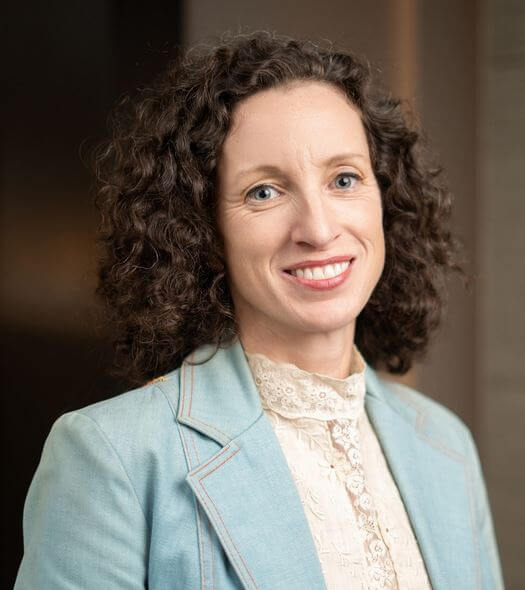 Rebecca Haw Allensworth is the David Daniels Allen Professor of Law at Vanderbilt Law School, where she studies antitrust and professional licensing. Her research explores how lawmakers should balance the need for expertise in regulating professions with the problems that can arise from self-regulation.
She is the author of The Licensing Racket: How We Decide Who Is Allowed to Work and Why It Goes Wrong (Harvard University Press, February 2025), a deep dive into the pathologies of professional licensing in America. Her work has been cited by the U.S. Supreme Court and received the thirteenth annual Jerry S. Cohen Memorial Fund Writing Award for groundbreaking antitrust scholarship.
Professor Allensworth graduated magna cum laude from Harvard Law School and clerked for Judge Richard A. Posner of the U.S. Court of Appeals for the Seventh Circuit. At Vanderbilt Law she has won six teaching prizes, held the Tarkington Chair of Teaching Excellence, and served as Associate Dean for Research from 2023 to 2025. She teaches Contracts and Antitrust Law.
In This Podcast Episode: Who Does Therapist Licensing Protect – The Public or the Profession?
After reading The Licensing Racket, Curt knew therapists needed to hear this conversation. Rebecca attended licensing board meetings across professions and states to observe how licensing policy and discipline decisions are actually made.
For therapists, this raises critical questions:
- Why do supervised hours and educational requirements continue to increase?
- Are licensing boards protecting public safety or professional prestige?
- Why are some complaints aggressively pursued while others receive leniency?
- How does self-regulation influence discipline?
- What happens to access to care when barriers to entry continue to rise?
This episode focuses on therapist licensing reform, workforce shortages, discipline processes, professional identity, and the tension between public protection and professional self-interest.
Key Takeaways for Therapists on Licensing Reform, Discipline, Workforce Shortages, and Professional Self-Regulation
“It amounts to self-regulation. It ends up being more in the interest of the profession and the professionals than in the public.” – Rebecca Haw Allensworth
- Licensing regulates roughly 20% of American workers, making it one of the most significant labor regulatory systems in the country.
- Most licensing boards are dominated by members of the profession, creating inherent tension between public protection and professional self-interest.
- Entry requirements tend to “ratchet up” over time (more education, more supervised hours), often without clear evidence that additional barriers improve safety.
- Rising barriers contribute to workforce shortages, increased costs, and reduced access to mental health care – especially in rural communities.
- Prestige, professional identity, and comparisons to adjacent professions can drive increases in requirements.
- Complaints about unlicensed practice may receive stronger enforcement than complaints from clients.
- Discipline decisions can reflect identification with the professional rather than the complainant.
- Boards are often under-resourced and funded primarily by licensing fees, limiting investigative capacity.
- Licensing reform requires balancing expertise, equity, public safety, and access to care.
- Boards may be strict about who enters the profession but more lenient when disciplining members.
- Belief in rehabilitation and professional redemption can influence discipline outcomes.
- Client complaints may be complicated by stigma or credibility assumptions.
- Structural reform may require broader stakeholder representation beyond the profession itself.
“‘We can never be too careful’ went away totally in discipline, and it became, ‘you can never not get another chance.’” – Rebecca Haw Allensworth
Resources on Therapist Licensing Reform and The Licensing Racket
We’ve pulled together resources mentioned in this episode and put together some handy-dandy links. Please note that some of the links below may be affiliate links, so if you purchase after clicking below, we may get a little bit of cash in our pockets. We thank you in advance!
- The Licensing Racket: How We Decide Who Is Allowed to Work and Why It Goes Wrong by Rebecca Haw Allensworth
- Vanderbilt Law School Faculty Page for Rebecca Haw Allensworth
Relevant Episodes of MTSG Podcast
- What Should Not Be Normalized in Our Profession?
- MFTs Providing Therapy Across State Lines Through License Portability in the United States: An interview with Roger Smith
- Are Therapy and Coaching All That Different?
- Want to Fix Mental Health Workforce Shortages? Speed up the Licensing Boards: An interview with Dr. Ben Caldwell
- Advocacy in the Wake of Looming Mental Healthcare Workforce Shortages
- Bonus Episode! When Good Intentions Lead to Bad Policy: Why the BBS Needs Therapist Feedback – An Interview with Dr. Benjamin E. Caldwell, LMFT
- Reviewing a Disciplinary Case on Suicidality, Erotic Transference, and Between-Session Communication: How do therapists hold appropriate boundaries?
- An Expert Witness Weighs in on Therapist Malpractice: An interview with Dr. Frederic Reamer
- Is the Counseling Compact Good for Therapists?
- When Doing “No Harm” Isn’t Good Enough: Bringing beneficence to your clients
- Liability Hot Potato: Defensive Therapy practices that give clients inadequate care
- Topic: Law and Ethics
Meet the Hosts: Curt Widhalm & Katie Vernoy
 Curt Widhalm, LMFT
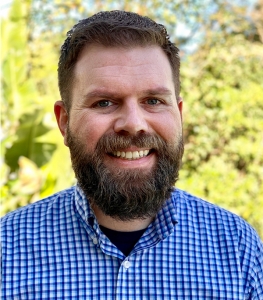
Curt Widhalm is in private practice in the Los Angeles area. He is the cofounder of the Therapy Reimagined conference, an Adjunct Professor at Pepperdine University and CSUN, a former Subject Matter Expert for the California Board of Behavioral Sciences, former CFO of the California Association of Marriage and Family Therapists, and a loving husband and father. He is 1/2 great person, 1/2 provocateur, and 1/2 geek, in that order. He dabbles in the dark art of making “dad jokes” and usually has a half-empty cup of coffee somewhere nearby. Learn more at: http://www.curtwidhalm.com
 Katie Vernoy, LMFT
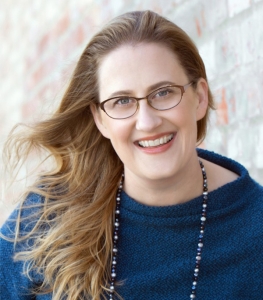
Katie Vernoy is a Licensed Marriage and Family Therapist, coach, and consultant supporting leaders, visionaries, executives, and helping professionals to create sustainable careers. Katie, with Curt, has developed workshops and a conference, Therapy Reimagined, to support therapists navigating through the modern challenges of this profession. Katie is also a former President of the California Association of Marriage and Family Therapists. In her spare time, Katie is secretly siphoning off Curt’s youthful energy, so that she can take over the world. Learn more at: http://www.katievernoy.com
A Quick Note:
Our opinions are our own. We are only speaking for ourselves – except when we speak for each other, or over each other. We’re working on it.
Our guests are also only speaking for themselves and have their own opinions. We aren’t trying to take their voice, and no one speaks for us either. Mostly because they don’t want to, but hey.
Join the Modern Therapist Community:
Podcast Homepage | Therapy Reimagined Homepage
Facebook | Facebook Group | Instagram | YouTube | LinkedIn | Substack
Consultation services with Curt Widhalm or Katie Vernoy:
Connect with the Modern Therapist Community:
Our Facebook Group – The Modern Therapists Group
Modern Therapist’s Survival Guide Creative Credits:
Voice Over by DW McCann https://www.facebook.com/McCannDW/
Music by Crystal Grooms Mangano https://groomsymusic.com/
Transcript for this episode of the Modern Therapist’s Survival Guide podcast (Autogenerated):
Transcripts do not include advertisements just a reference to the advertising break (as such timing does not account for advertisements)
… 0:00
(Opening Advertisement)
Announcer 0:00
You’re listening to the Modern Therapist’s Survival Guide, where therapists live, breathe and practice as human beings. To support you as a whole person and a therapist, here are your hosts, Curt Widhalm and Katie Vernoy.
Curt Widhalm 0:12
Welcome back, modern therapists. This is the Modern Therapist’s Survival Guide. I’m Curt Widhalm with Katie Vernoy, and this is the podcast for therapists about the things that go on in our professions, things that go on in our lives, the hidden impacts on the ways that we practice. And occasionally we come across materials that we get really, really excited about and feel that everybody needs to hear. And I was recommended a really wonderful book earlier this year, and went through it, and I said, Katie, we have to get the author on. I think that this is a person with a lot of really wonderful ideas that can challenge many of the things that are just very much in place. And this book is called “The Licensing Racket.” It’s by Dean Rebecca Haw Allensworth, and she did something that I think is both insane and fascinating, which is she attended licensing board meetings just out of every sort of single licensing board for years on end, and wrote about many of the problems that are existing in just the very systems of licensing. And so I am so excited to have this conversation, and we got her on. So thank you very much for joining us.
Rebecca Haw Allensworth 1:36
Thanks for having me, and thanks for recognizing what a what a crazy undertaking this was, I really do see it that way, and and I appreciate it being, being appreciated by you.
Katie Vernoy 1:49
Yeah, I’ve, I’ve been digging into this book, and it’s just, I’m gonna put the phrase mind blowing, because I it’s, it’s challenging the very way we think about licensing and all of those things. But before we jump into this exciting conversation, and of course, some of our listeners are like, Licensing is exciting? Yes, it is. I promise. Stick with us, folks. This is gonna be great. But before we jump into that, let me ask you the question we ask all our guests, which is, who are you and what are you putting out into the world?
Rebecca Haw Allensworth 2:17
Well, I’m Rebecca Haw Allensworth. I’m a law professor, and really, I’m an antitrust professor. And the thing that I’m putting out in the world is this book, okay. And the idea that licensing is interesting, I had, one of my favorite comments I got about this book is that it’s a beach read, okay. So maybe it’s not quite a beach read, but it is, it is as close as you’re going to get, you know, to a beach read, if it’s a book about licensing policy. But yeah, so that’s, that’s what I’m putting out in the world, is the idea that, like, you know, even the most mundane policy issues can actually be really interesting and really important and really, like, personal and emotional. And, you know, this is livelihoods, this is safety, this is things that we should all really care about. So thanks again for having me on.
Curt Widhalm 3:03
So can you explain in simple terms what you mean by the licensing racket?
Rebecca Haw Allensworth 3:09
Yeah, so the licensing racket describes, you know, obviously pejoratively, the system of regulation that we have over about a fifth of American workers. That’s like, I think 30 million American workers have to have a state license to do their job. So this would be obviously therapists of all stripes, doctors, hair professionals, nurses, the list goes on and on. It is actually the most important labor regulatory institution we have. It covers more people than are in unions, by far, more more than the minimum wage, and it’s done by like, almost 2000 state licensing boards in all 50 states. And I that’s kind of, that entity, that that regulatory apparatus, is what the book is about, and it’s a racket. Because, in fact, a lot of the regulation that these boards create goes too far. It’s not reasonably calibrated to patient protection. It’s really because it’s done by these boards that are mostly dominated by members of the profession, like volunteers working, you know, full time jobs in their profession, volunteering a few days out of a quarter to be on the board. Because it amounts to self regulation it ends up being more in the interest of the profession and the professionals than in the public. And it’s that kind of, that sort of self dealing, is a part of what the title the racket is meant to to evoke. The strangest thing about it is that all of that was sort of that was sort of consistent with what I’ll call the antitrust hypothesis I had as an antitrust professor, I thought that if you self regulate, you’ll go too far in restricting competition. But ports actually also do something else that I wasn’t quite expecting, which is that they don’t police their own very well at all. So. They’re way too easy on members of the profession that have acted inappropriately. So that that’s a big problem with boards. The racket title doesn’t really get to that idea quite as well, but they both come from this problem of self regulation.
Katie Vernoy 5:14
So in my reading the book, there’s a wide array of professions that you look at from attorneys, doctors, therapists like us, to hair braiders, and the thought process around licensure seems to be about creating scarcity within the profession, having some sort of bar someone has to pass in order to be able to do the their professional work legally. And it seems like the line doesn’t make sense right now. And so you talk about licensing being appropriate for jobs that require professional judgment and that could be potentially dangerous. How do you define that, like, who needs to be licensed and who really doesn’t need to be licensed, who is now?
Rebecca Haw Allensworth 6:02
Yeah, so it’s a great question, and in some ways, it’s best answered by understanding the drawbacks of licensure rather than starting from the benefits. Right? So the drawbacks of licensure are, as you say, it creates scarcity, it makes the service less available. This is especially true in like rural communities, and I know to the therapists listening to this podcast, that’s a very familiar problem, access to care in mental health services, and it makes it expensive. Those two things sort of go hand in hand. It also can stop things like innovation, like licensure can act like sand in the gears if you want to have a new way of delivering services. Maybe this is an issue, if you think about telemedicine. But the big ones are scarcity, access to care and cost. So you would want to do this. You would want to do state licensure, which means you cannot practice unless you have this license. And by the way, I define professional licensure as requiring a number of months, typically years of education and a test and a big investment in getting that license. It’s not like you take a CPR course and you’ve got a license. So you would only want to create these big barriers to entry to create the scarcity along with this, if that requirement, the requirement of significant education and testing, were necessary to create self, to create safe providers. So you can imagine another scenario, like a restaurant, where you could really be harmed. Okay, you could eat food that is, it has bacteria in it, and you could you could die. But that’s not necessarily preventing that kind of illness and handling food safely is not something that takes years of education. It’s just a few simple rules that you can kind of, if you’re the city, you’re going to go and inspect that you have refrigeration, and you’re, you know, using safe food handling processes. So let’s take those out of what should be in professional licensure. So the things that may be dangerous but don’t require that kind of case by case, professional judgment, informed by months, usually years, of deep education. And there, I think we are left with therapists, okay, like, like therapists that are doing an ongoing course of like mental health treatment. You certainly have doctors, you certainly have lawyers, but you may not have hair professionals whose risk to the public could be dealt with through rules about how to handle your instruments or sort of more straightforward rules. So you know, the book is not, doesn’t say these are in, these are out. This is what you do. This is what you don’t. But I do try to identify the questions you might ask about A, whether regulation is needed. And B, even if regulation is needed, if something else other than professional licensure were available just because it is so expensive to the public in terms of access and cost.
… 8:51
(Advertisement Break)
Curt Widhalm 8:51
In your book, you talk about the ratcheting up effect and about some of the requirements that can end up happening, and I’m now, as I’m listening to you, also hearing that this might also be something that some of these licenses do, just to continue to justify having a license. But can you expand on what you were talking about with the ratcheting up effect and how that plays out for licenses?
Rebecca Haw Allensworth 9:18
Yeah, so entry requirements into the profession, you know, typically, some education and a test are going to address public safety to the extent that they ensure that only people who know what they’re doing and have that professional judgment and can be safe can be in the profession. But of course, the higher you go, the more you’re going to have the scarcity and the cost problem. And members of the profession, however, have a bit of a conflict of interest here in drawing that line, because while more is more to members of the profession, the higher the barriers to entry, the more scarcity they’ll be. And that can actually be better for the profession, because they’ll make more money, they face less competition. And, if I sound like an antitrust lawyer, that’s because I am. But the thing that I didn’t quite anticipate, and this is why going to the meetings was so important, is I saw that not the, you know, just the economics of it. I saw the emotion and the sociology and the psychology of licensing. And what I saw with those barriers to entry is that they’re very attractive to members of the profession because they contribute to prestige. You know, if you have to have a master’s degree to do what I do, if you have to have a doctorate to do what I do, in our society, that makes it seem more important, that makes it seem more meaningful, and it seems more exclusive. And that kind of prestige and identity, I think was a huge part, and then also maybe a little bit of dollars and cents in the economics too, was a huge part of why members of the profession regulating themselves through these boards typically raised barriers over time. It’s like a ratchet. It only goes one way. So I think I watched the alcohol and drug abuse counselors board, which is a kind of therapist, and they went from requiring 1500 hours of supervised practice after the education to get a license. Well, that went to 3000 and then before long, that went to 6000 and part of why they justified this really high ratchet effect was that that’s what the other counselors were requiring. That’s what was required for psychology, or that’s what was required for social work. And what we do is just as important as what they do. It’s just as dangerous, you know, life and death we do alcohol and drug abuse counseling, which means that we’re dealing in overdoses and suicides. And you know, we cannot have too much if we’re talking about the kind of important work that we do. And so that it got it got wrapped up, instead of thinking about, Okay, well now you make it so that you have to have three years of supervised practice. When I know that the listeners will will know I’m right when I say, during supervised training, you’re not really making a lot of money. So three years of not making a lot of money, then you’re gonna, you know, on top of that, the education, on top of that, the test. Guess what? Not a lot of people go into this profession. So now, if we think about the safety and the protection of people who are suffering from opioid use disorder or suffering suffering from alcoholism. We’re talking about people who can’t see therapists and they don’t have access to care because they’ve ratcheted up the requirements so high. So that’s, that’s how the ratchet works, and that’s, that’s how it looked in practice to me.
Katie Vernoy 12:37
Ratcheting up what it takes to get a license, whatever that license is, and adding more requirements oftentimes it seems like the motivation to do so is not consciously that we’re making it harder for people to become therapists and trying to decrease competition. It’s more I want to make sure that our profession is, as you said, you know that there’s prestige there, and that we’ve set an appropriate minimum barrier to entry, so that we know that people are providing high quality service, that they’re doing the they’re doing good work, they’re doing safe work. And that motivation and that stated goal, seems very contradictory to how your book talks about people addressing discipline and and how hard it is once someone’s actually licensed for them to have true consequences for poor behavior. How do you maybe describe that dichotomy or that hypocrisy, but also, why do you think that happens?
Rebecca Haw Allensworth 13:50
Yeah, so that was like I said, really the most interesting finding of the book was that, on the one side of things it was all about, we cannot be too careful. Okay, well, think about how much more you would learn in that extra 3000 hours of supervised practice. You know, obviously you’re going to learn something. You’re going to be a better therapist for it than you started out. And so it’s almost like, you know, we can never be too careful. And then when it came to discipline, it really flipped around where the conversation was: Well, you know, it would really be a shame here to not give the benefit of the doubt to the the accused, you know. So I’d actually, I saw a lot of this phenomenon in front of the medical boards, and most of my examples are from the medical boards. But I think this is a problem throughout the professions, and it’s a function of self regulation. Not quite that the board members specifically identified with the physician who was facing discipline, you know, thought, well, I could be doing that exactly, you know, selling scripts for, you know, 200 scripts a day for like, $50 cash, maybe, or sexual abuse of patients, which was all too common, but rather, there was a there was a point of identification that was like, well, they came through the same path I did. They went through the rigors of of the education that I went through, and they lost their way, and I didn’t lose my way. But you know, there’s part of there’s a part of me in them, and that’s the part that I want to pay attention to. That’s the part that I want to redeem, it’s the part that I want to rehabilitate. And I actually think that it was sort of ironic, because it was almost those instincts to heal and to think about people as capable of change and capable of getting better, that the regulating board members, whether it was nurses or it was doctors, kind of got in the way of the public protection angle, because they really wanted to see in terms of, you know, they can get better. They can they can redeem themselves. And so that idea of you can never be too careful, that went away totally in discipline, and it became, you know, you can never, you can never, not get another chance. Like everyone deserves another chance. Everyone is capable of redemption and of getting better and of treatment. And often it was literally treatment, because so many of these professionals that were engaged in this kind of extreme malfeasance or ineptitude were suffering from drug or alcohol use disorders. That was a very, very common thing. And so it was very common for the boards to say, let’s treat that. Let’s get get him clean. And then he’s all that training, all the investment in making this professional, you know, won’t be lost. He’ll be back. He’ll be back in the in the workforce. So I think that’s that’s my attempt at an explanation for why it happened. But honestly, some of the examples were so extreme, some of the professional misconduct was so sad and scary and inappropriate, and the discipline was so light that I don’t even, as I’m speaking to you today, feel like I have an airtight explanation for why, the for the story that the board members were telling themselves about why this was okay. Another thing I also believe, though, is that the board members were high integrity, and they were not corrupt, and they were not, you know, heartless, they just were blinded, I think, by a lot of different forces in play.
Curt Widhalm 17:19
One of the examples that you wrote about in your book were from the opioid epidemic and over prescriptions in a lot of the medical field. But I’ve heard from people in our profession, and have probably espoused this more times than I care, to admit as well that our licenses in behavioral health is based on the idea that people can change, and that includes professionals who have fallen outside of the parameters of our profession or our professional standards. There’s also something, a phenomenon that you write about in your book about how boards tend to prioritize complaints from licensees, as opposed to maybe even those from the public. And it does end up kind of contributing to the self protecting factor as well. Can you expand on that here?
Rebecca Haw Allensworth 18:11
Yeah, so you know, for professions where unlicensed practice is the big problem, which actually is true in therapy. I mean, I’m saying actually, like, this is probably not news to anybody on the podcast, but it was sort of news to me, right? Because this is a an old, traditionally licensed profession, and so I was like, unlicensed practice, but, you know, the coaches or the there’s a lot of people who can engage in very similar kind of conduct to a therapist, and they’re and they’re trying to say they’re not therapists. So, so in any profession for which there’s an unlicensed, significant unlicensed practice, also, I won’t say problem, because it’s not necessarily a problem, right? But where there’s, there’s, there’s a phenomenon of unlicensed practice, you have this real dichotomy between what the complaint, what complaints boards will go after. So if there is a claim of unlicensed practice, boards tend to be very interested in going after it. This is kind of a threat against the idea of licensure, and that idea of licensure is both how they are able to create the scarcity that ultimately benefits them, but it’s also the idea of a closed profession. Not anyone can do this. You can’t just call yourself a coach and all of a sudden you’re a therapist, right? That’s that’s something that board members, I think, understandably, like, really react badly to. But a complaint from a patient, a complaint from a client, a complaint from a consumer, is a little bit different. And I would imagine in therapy, it’s especially tempting to to look past them, because they’re kind of subjective, right? It’s like the things that make somebody a bad or an unsafe therapist are probably hard to describe in clear, bright lines, kind of you know, at least with opioid prescribers, you have the milligrams, you know you have, the times per day. You have some way of identifying. Oh, no, You never should have given them three morphine patches. Therapy is different, you know, it, it does require that judgment and that kind of like ongoing relationship to really understand what’s going in and going on in the room between, between the patient and the and the therapist. And so even though, I think we can all agree there’s real harm potential there, it’s a, he said, she said, situation, essentially, you know, the patient, the client is going to say that this was unsafe, abusive practice, and the provider is going to say, No, it wasn’t, you know, it was, it was tough love. It was, you know, maybe they won’t say tough love, because that’s not good therapy. But whatever it is, they’re going to say, you’re going to have a real proof problem. And you know what you do with proof problems is that you have trials. Trials are so expensive and they’re so time consuming. And another thing to understand about these licensing boards is that they’re very under resourced, both in terms of money and in terms of time. And so I think, you know, while I did not, I did not as closely study inadequate discipline in the therapy professions as I did in medicine. I think that all of these things would add up to a situation, plus the one about, you know, everybody’s capable of getting better, everybody’s capable of being treated. I could see this being a real problem in the in the mental health professions as well.
… 21:21
(Advertisement Break)
Katie Vernoy 21:20
Curt and I are both on the California Association of Marriage and Family Therapist’s ethics committee, and get some similar complaints (and our usual disclaimer, we’re not speaking for the CAMFT board of ethics), but I I feel like there’s a piece of what you’re saying that seems to apply, and there’s also an opposite that seems to also apply. And I won’t go too far into it, but my my sense of it is that there is this wild disbursement of discipline. Sometimes somebody comes in with basically the equivalent of a hangnail and is hung out to dry, and then on the other end, somebody does something pretty egregious, and, you know, the board, or the ethics committee or whatever, say, hey, yeah, that seems that seems reasonable. It seems like, you know, they can get better, or it’s not that bad, that you know, What would other therapists do? And so whether or not what you’re finding is exactly true within our profession, it, it feels very relevant, because I don’t know that there’s really clear senses on how discipline should be decided. I think, I think there’s, there’s a, you know, and maybe I’m overstating it, so I’ll leave that there. But I think that there is folks who will go to that’s unethical, and this therapist is horrible, and all of these things, at least in the public arena, and hang their their fellow clinicians out to dry. And then there’s folks that will say, well, oh, that’s not that bad. And and the piece that really speaks to me about what you’re talking about is, not only is it he said she said, it’s someone who is a mental health patient, to put it pretty dramatically, against a professional. And so there are a lot of reasons there’s still stigma around mental health, and there’s a lot of reasons why even our professionals might say this patient’s or this client’s perspective must be wrong must be based in their their symptomatology must be based in why they came into treatment. And so there is a huge, huge reason that we might really fail the public in discipline, as a profession, or as a, you know, in those types of things. And I’m saying we as the profession, not we as the CAMFT ethics committee, we do a great job. Curt, don’t we do a great job? We do a great job.
Curt Widhalm 23:45
I like to think that we do, yeah.
Katie Vernoy 23:47
But, but there’s this element of of you don’t get into our club very easily. It’s very costly, it’s very time consuming. But once you’re in the club, we’re going to protect you. And that feels so wrong. And so I’m curious what your thoughts are on how to shift that, because that’s.
Rebecca Haw Allensworth 24:09
Yeah.
Katie Vernoy 24:09
It’s psychology, right? It’s psychology that we’re going to protect our own and if you’re one of our own, but if you’re not, we’re going to keep you out. But if you are, you know.
Rebecca Haw Allensworth 24:19
Yeah, there’s a lot of othering. And I think it’s human nature, like you said, it’s psychology. It’s not, you know, I don’t, I don’t want to throw any, like licensing board members under the bus. This is how we all think. You know, it’s just, it is natural. And it’s interesting you said that about therapy patients because I had not thought about that. But I thought about this a lot when I wasn’t doing the side, doing this stuff on medicine, because a lot of the people who were victims of sexual abuse by doctors or of over prescribing were themselves suffering from opioid use disorder, and were, you know, unreliable, or perceived as unreliable, or perceived as manipulative, or perceived as drug seeking? I mean, all some of the similar kind of stigma, what you’re talking about that was, was one of the tools that you know that that the board could use to sort of justify giving the benefit of the doubt to the professional. So I think, I think that’s right. I think that’s really interesting. And I saw an analogy to that. And, yeah, how do we how do we prevent othering? Well, I think the answer is that you bring the other the outsiders, right? And it’s so funny to talk about patients and clients as outsiders, because actually, that is what the regulation is supposed to be for, right? And so to bring them in and and what I what I kind of advocate for in the book, is that is to reduce at every stage that we can reduce the degree of self regulation that this is, you know, make this not about the profession regulating itself, and bring the real stakeholders to the table and give them a say in the decision. And the real stakeholders in a profession are members of the profession, yes, but also the constituents that they serve, so their patients and their clients. And then when we think about things like, I mean, mental health is a good example of this, but so is so is medicine, public health professionals, people who see the big picture of what access to care is doing to the communities and and advocates of different kinds. You know, advocates for certain patient populations that are particularly vulnerable. People who know about rural provision of care and services. So I would want to see the decision makers be something other than nine, member board, six of whom are professionals. You know, 12 member board, nine of whom are professionals. And that’s really dominantly what you see in these state boards. And those three or five or two members of the public are not selected based on their their interest and expertise in providing the other side of the story. They’re really just sort of volunteers that they can find who like are, you know, they’re hard seats to fill honestly, and so they just try to get public members who will do the service, and they’re not thoughtful about necessarily getting actual advocates for the other perspective. And I say that broadly. I mean, I’m talking about almost 2000 licensing boards and, you know, in 50 states, so I can’t really say that never has a governor thought through, you know, putting an advocate on the board, of course, that happens sometimes, but not enough.
Curt Widhalm 27:27
A lot of the licensing boards that you’d seem to attend were in Tennessee, if I remember correctly, and some of the things that you’d written about, I didn’t see necessarily, with California, and some of the familiarity that we have with our profession here, and I think part of that is because, for example, our licensing board is 13 members, and the public has to make up half plus one of that. And so I think part of the implementation here is already on your recommendation. So great job, California. But as we’re seeing more and more interstate compacts come out. Is this actually something that you see as being able to reduce some of the problems, the gate keeping of people coming in as now we have multiple potential boards looking at who’s able to practice, or does this just add more bureaucratic red tape to the entire process.
Rebecca Haw Allensworth 28:21
I mean, it’s kind of both. I think that, I think that compacts have a limited ability to address some of the problems that I identify in the book. So a compact will allow for greater interstate mobility as between the states that enter the compact and interstate mobility is sort of unambiguously good for the individual license holder. So now, now I can practice in 7, 50, you know, 40 states, however, many are in the compact hopefully, you know, they try to get to 50. And so that’s good. It’s also good for consumers, in the sense that it is able to redistribute the workforce a bit and that and that can lead to to lower prices and better access to care. But the problem with them, from my perspective, is that they don’t actually lower barriers to entry overall. So they don’t actually make for more therapists or make for more physicians. So they can’t really add to the workforce very much. They can make it a little more fluid, which is like marginally better, and they tend to be a bit of a ratchet to the top. So for a compact to be something a state is willing to sign up for, it typically has to have the licensure requirements at or close to the most restrictive state. And so often, I think that these are like, you get your state license, and then if you want the compact licenses, even maybe a little more, you have to do. So it’s not really so I’m not, I don’t think it’s just red tape. I think that, like it is, it is better than nothing, but it is important for us not to, like, pat ourselves on the back saying, Oh, we did licensure reform. We have a compact. Because there’s also, there’s no accident, that they’re popular because and they actually happen politically, because they benefit the profession, actually, so much. So, you know the and that’s fine. It’s a win win to an extent, but it doesn’t really do a lot for patients.
… 30:09
(Advertisement Break)
Katie Vernoy 30:11
I think about these interstate compacts, and I think about all the different, well, I guess not all, all three of the different master’s level licenses that we typically interact with counselors, social workers, marriage and family therapists. And it seems like MFTs are not going after compact. They are doing parity. So there’s it’s easier to get licensed in another state. It’s not, they avoided the compact because more MFTs are in California than anywhere else, and California doesn’t like interstate compacts. So they were just weren’t going to get enough. And so what I what I think about when I think about our professions, these master’s level clinicians that Curt and I are involved in a lot of it goes to turf wars. So interstate compacts are great, but they’re still very separated. There is social work compact, there’s a counseling compact, there’s a psych pact, which is a psychologist compact, and it still seems like some of the efforts that we participate in as professionals with our professional organizations or licensing boards is really about turf, and it seems to me pretty pointless, and so I don’t know if you have thoughts on that and how that interplays with licensing, because oftentimes I find that licensing roles to distinguish between an MFT and a social worker, an MFT has to have a certain number of hours or what time spent working with families, and that makes them an MFT, whereas the social worker has a different, you know, a different test or a different thing, and so it and consumers see us functionally the same.
Rebecca Haw Allensworth 31:53
Yeah, yeah, no, I agree about this, and I have a chapter called turf, about turf wars, and I think that one thing that’s important to distinguish is is, is that there’s there’s the profession, there’s the professional identity, there’s the education, and then there’s the license. And I think for too long, and in a way, that’s too strong, we’ve been equating those two things, so that if you are a distinctive profession, and you are distinctive modality, and you have a set of ethics and whatnot, then you have to have your very own license. And I think this has really poorly served the public, and it has contributed to these turf wars. So as a as somebody who studies competition, as an antitrust professor, I love overlapping turf because that just means that consumers have more choices. So if I want to talk to somebody, you know, if I want to do cognitive behavioral therapy, and now I’m I probably shouldn’t, like use specifics here, because I’m going to say it wrong, right? But I would have the choice of going to a psychologist. I could go to a marriage and family therapist, I could go to a counselor, and I could go to a social worker. I could probably even go to a psychiatrist if any of those are doing talk there.
Katie Vernoy 33:02
Yep.
Rebecca Haw Allensworth 33:04
And so the fact that I have these choices is good for me. I can find something that suits me best, and it drives competition and potentially prices down where multiple people can do the same service. And moreover, I would say, and then here, I’m sure some listeners will depart with me here, but I would say that the risks to the public and the signs of competency for talk therapy are actually quite similar in terms of the barrier or the floor or the minimum that we want to have for safety. What kind of experience and education do we want somebody providing therapy to have, need not be different between these different identities, professionals, you know, education. So we could have one license. I actually think Utah does something like this. You could have one license for Master’s level clinicians, maybe. And within that license, have people who are social workers, have people who are marriage and family therapists, who are differently expert, who have different training, who have different perspectives and are going to give you a different product at the end of the day, but the public safety is backed up by a single license, and I think this would help consumers and the professions will hate it, because It’s giving up their turf.
Curt Widhalm 34:21
I’m just imagining the people listening to this going some version of egads, all of the very…
Katie Vernoy 34:28
I’m sure they’re saying egads.
Curt Widhalm 34:31
All of the very things that you have spent writing about, as far as protecting the license, or protecting the soul identity as being at the core of that. One of the other things that you did write about that is kind of tied into protecting core identity is just about the funding of licensing fees and how that ends up really ending up steering what a board structure and what their interests end up being. A lot of boards are funded by mostly the license fees that the professionals have in it. Some of that funding might come from fines from people who have been found guilty by the board. You also talk a little bit about what a public interest model might look like in public funding. So can you explain what you found out in your looking into these?
Rebecca Haw Allensworth 35:20
Yeah, well, you know, when I saw these lapses in discipline and just how sort of casual and ineffective the disciplinary side of things was, I asked a lot of licensing board members and people worked for the state, you know, why don’t you do more? And almost all the time they said, like, we can afford it, like with whom, like with what, people like, we don’t. We’re not the FBI, you know, we don’t, we can’t do all this stuff. And so that idea of an underfunded, low-resourced board was a major theme in my research, and it was true about all the boards that I studied. And then I thought, well, hold on a second. Why? Why is that? And it actually ties up with the reason why there are so many licensed professions, even when it may not make sense for the public, and that’s because when you go to ask for a new licensed profession, so art therapists was is an example from my state that I followed during my research. You go to the legislature and you ask for a law creating a license and a board, and you tell the legislature, guess what? It’s going to be free, because the fiscal note on this is zero, because we are going to have the board run by volunteers, and whatever regulatory efforts we have to make, we’re going to pay for them through licensing fees. And so the legislature says, Okay, well, it seems fine, you know, zero cost to us. You guys want it. Nobody’s really opposed to it. They pass the law, and then, you know, you have a board set with these responsibilities that’s systematically underfunded. And even worse, it’s members of the profession who are in charge of deciding their own fees and of their own budget. And so they kind of underfund themselves because they don’t want to raise fees on on therapists or on doctors. So, yeah, I think that this, so I think we got it if we need regulation. And I don’t think we need it for all the professions that we have licenses for. I don’t think we need licensure for all of these, but for the ones that we do we as a state, as a public, you know, government should be prepared to fund it, to fully fund it, and to not just get the licensees to pay for it, but to actually say no, as a state, we’re we’re going to put our money where our mouth is, and we’re going to pay for this. I still don’t have a state who’s gone for that, yet, any sort of like tips about how to get that passed by a legislature would be, would be useful, but that’s the idea.
Katie Vernoy 37:38
So before we close up, because I know we’re getting a little long on time, and I just want to continue with this conversation forever. So I will, I will limit to one more question, but in how you describe licensing broadly, and I think for therapists, it feels a little bit harder to to talk about the nuance here. I think with doctors, with lawyers, with the folks who are there is a potential risk, a safety concern. It can be very hard to parse through it. But when you were talking about hair braiders, I think there was some other licensing that you had brought out. There was such evidence of bias, of exclusion that was potentially coming from a pretty negative place. And so maybe just to talk briefly about the real harms that licensing can cause in that way, because I understand the public, you know, scarcity, but when you were talking through some of these stories of folks who were coming up against these licensing boards because they were doing unlicensed practice and and that impact that, that was, that was, I think, one of the most compelling pieces for me, and I was able to then, kind of think about it from my own profession, and we talk about it, but it’s, it’s kind of that that like tiny little wiggle area that I think we need to think about in our profession, whereas it’s, it’s just blatant in some of these licenses that seem unnecessary.
Rebecca Haw Allensworth 39:12
Yeah, so for a lot of licenses that that I made, you know, sitting in my ivory tower and with my economic theory of licensing, can say, like, we don’t need licensing. The one that comes to mind, you know, this clearest to me is hair. So hair cutting, hair braiding, really kind of any kind of hair profession. I look at that and I say, look, to the extent there’s a risk of infection, let’s, let’s have some rules about how you have to handle your instruments, but to require people to take a year out of their lives, a year out of their earning potential go to school, which, by the way, costs between 10 and $20,000 to learn all these hair techniques that they’re probably not going to use, this just seems really, really absurd. But when I interrogated that argument, and I really looked at who was advocating to keep hair licensure barriers high. What I was really interested to learn is that, at least in Tennessee, it’s, it’s, it’s the kind of middle class people who’ve pulled themselves up out of poverty by entering the the class of licensed professionals. You know, they said, hey, look, I have a hair license. It’s like anybody. It’s like an MD license hanging on the wall. And what that means is esteem and prestige and respect, and it also means income protection to some degree, because licensing will, you know, increase wages, as we just talked about. And I started to feel uncomfortable with the way that licensing reform, at least in my state, was starting with those professions. They called it the low hanging fruit. Oh, well, we’ll just, you know, roll back licensing on the on the hair professions, when that was a way that people really kind of pulled themselves up out of poverty. But there was another side to that story, which was the people who pulled themselves up out of poverty by being entrepreneurs, braiding hair, unlicensed, you know, hair stuff also like finding a toehold into the middle class. But who didn’t have the ability to go to school for a year, to spend 20, you know, 10 or $20,000 and so it kind of became this, like, very interesting study, and like, you know, the problems with trying to solve a problem that, by the way, is for everybody. It’s for lawyers. It’s for doctors. You know, if we were always going to start if somebody’s ox needs to get gored, we’re always going to start with the person who’s least privileged in terms of goring their ox. So when we do licensure reform, we start with hair. We don’t start with medicine. So the book kind of explores that nuance. And then another thing that I think touches with what you’re just saying is the idea that a lot of these professions systematically leave out people with criminal records, people who had contact with law enforcement, and just simply put, people who cannot afford the professional education and cannot pass a written test, in a practice for which there’s no reason why you would need to take a written test on like the theory of barbering. So that’s, that’s chapter that’s chapter five in the book, and it’s really one of my favorites.
Curt Widhalm 42:12
Where can people find out more about the work that you do? And the wonderful book The Licensing Racket?
Rebecca Haw Allensworth 42:19
Well, it’s right here, and it’s for sale. I wish there was, like, a little QR code you could scan right now, but it is available on Amazon and also on the Harvard University Press website. And I promise, even though it’s a Harvard University Press book and it has a lot of footnotes, it really is a beach read. I can be found at Vanderbilt Law School. That’s where I where I work, and I’m so thrilled to be invited here and for you guys to listen to me.
Curt Widhalm 42:46
And thank you so much for your time and sharing this. I do really recommend this. Admittedly, I had reached out to a good friend and said, Hey, I’m going on vacation. I need a book. He was the one who recommended this as a vacation book for me, so you’re not that far off.
Rebecca Haw Allensworth 43:01
Oh yes, I have two data points now.
Curt Widhalm 43:06
The book is The Licensing Racket. Follow us on our social media, go to our website, mtsgpodcast.com, for footnotes and a link to where you can buy the book. Join our Facebook group, the Modern Therapist’s Group, to continue on with this conversation. And until next time, I’m Curt Widhalm with Katie Vernoy and Rebecca Haw Allensworth.
… 43:24
(Advertisement Break)
Announcer 43:26
Thank you for listening to the Modern Therapist’s Survival Guide. Learn more about who we are and what we do at mtsgpodcast.com. You can also join us on Facebook and Twitter, and please don’t forget to subscribe so you don’t miss any of our episodes.




SPEAK YOUR MIND