

AI Ethics Codes for Therapists: What CAMFT, APA, NASW, and AAMFT Now Require
Curt and Katie break down how the major mental health ethics codes have been updated for artificial intelligence. Centering on the new CAMFT updates and cross-referencing the APA, NASW, ACA, and AAMFT codes, they turn the new language into a practical roadmap for competence, consent, data privacy, bias, and human accountability.
This is a continuing education podcourse.
Click here to scroll to the podcast transcript.Transcript
(Show notes provided in collaboration with Otter.ai and Claude AI.)
In This Podcast Episode: How Updated Ethics Codes Are Regulating AI in Therapy
Regulation moves in years while technology moves in weeks, so the job of guiding individual clinicians has fallen to the professional associations. Curt and Katie, drawing on their work on the CAMFT Ethics Committee, explain why the codes aim for broad, durable principles rather than tool-specific rules, and how much of the new language simply applies long-standing healthcare ethics to a new context. The starting premise is not whether to use AI, but how to use it competently and responsibly now that the tools are already in the room.
Key Takeaways for Therapists: AI Competence, Consent, Privacy, and Accountability
“If you’re explaining to your client what it is they’re consenting to, you need to understand it sufficiently to be accurate and concise, frankly, about what it is they’re opting into.”
— Katie Vernoy, LMFT
- AI is defined broadly. The codes lean on a wide definition (adapted from California’s AB 2885), described as autonomous-ish programs that replace human thinking, so the standards don’t expire as tools change.
- Four principles still anchor everything. Autonomy and informed consent, non-maleficence, beneficence, and justice (Beauchamp and Childress) are being applied to AI rather than reinvented.
- Competence means operating, not engineering. Like driving a car safely without being a mechanic. The benchmark is the adequately trained, critically thinking clinician, and competence is increasingly treated as mandatory rather than optional.
- Three obligations travel together. CAMFT separates disclosure, informed consent, and informed decision making. Clients can opt out, and the clinician must offer reasonable alternatives instead of forcing AI on anyone.
- Client-facing and administrative tools are not the same. Scribes and adjunctive apps a client interacts with require explicit opt-in or opt-out. Back-end administrative tools that don’t touch client data do not, in the same way.
- “HIPAA compliant” is marketing, not a certification. No office certifies vendors, so do real due diligence, get a signed BAA to shift liability, and confirm the servers sit in the country where you practice.
- Read the output for bias. Beyond demographic and cultural bias, watch for medical-model bias and overreach. AI rarely flags its own bias, though reviewing output can also surface your own.
- You still own the record. The human in the loop verifies accuracy and stands behind anything signed under their name and credentials. “The AI wrote it” is not a defense.
- AI isn’t right for every client. A client with persecution delusions is a poor fit for a monitoring tool, and capacity to give informed consent has to be weighed case by case.
“At the end of the day, they are the ones who are responsible for the output that they are putting their professional name and credentials on.”
— Curt Widhalm, LMFT
What This Means for Supervisors and Educators
- Put written AI policies in place for the practice or agency.
- Prevent supervisees from becoming over-reliant on AI, and teach it as a tool, not an authority.
- Protect skill development (see the related deskilling episode below).
- Keep advertising and publication accurate and non-deceptive, credit AI appropriately, and verify sources at the original.
Resources on AI Ethics, Consent, and Data Privacy for Therapists
We’ve pulled together resources mentioned in this episode and put together some handy-dandy links. Please note that some of the links below may be affiliate links, so if you purchase after clicking below, we may get a little bit of cash in our pockets. We thank you in advance!
- The Fifty-Minute Hour (consultation): https://therapyreimagined.com/consultations-for-modern-therapists/
- Workshops for Modern Therapists: https://therapyreimagined.com/workshops-for-modern-therapists/
- Curt Widhalm, LMFT, Real Honest Therapy: https://www.realhonesttherapy.com/
- Katie Vernoy, LMFT, Therapy Practice & Consultation: https://katievernoy.com/
- The Modern Therapist’s 10-Point Guide for Vetting AI Tools, available with the CE course
Continuing Education Information
Hey modern therapists, we’re so excited to offer the opportunity for 1 unit of continuing education for this podcast episode. Therapy Reimagined is bringing you the Modern Therapist Learning Community!
Once you’ve listened, to get CE credit you just need to:
- Go to moderntherapistcommunity.com
- Register for your free profile
- Purchase this course
- Pass the post-test
- Complete the evaluation
Your CE certificate will appear in your profile and can be downloaded for your records. Find the full course (including handouts and the 10-point AI vetting guide) at: https://learn.moderntherapistcommunity.com/courses/ai-ethics-codes-for-therapists-what-camft-apa-nasw-and-aamft-now-require
Continuing Education Approvals
When we are airing this podcast episode, we have the following CE approval:
Therapy Reimagined is approved by the California Association of Marriage and Family Therapists to sponsor continuing education for LMFTs, LPCCs, LCSWs, and LEPs (CAMFT CEPA provider #132270). Therapy Reimagined maintains responsibility for this program and its content. Courses meet the qualifications for continuing education credit as required by the California Board of Behavioral Sciences. Please check with your licensing board to confirm eligibility.
Please check back as we add other approval bodies: Continuing Education Information, including grievance and refund policies.
References Mentioned in This Continuing Education Podcast
- American Association for Marriage and Family Therapy. (2026). AAMFT code of ethics. https://www.aamft.org
- American Counseling Association. (2014). ACA code of ethics. https://www.counseling.org
- American Psychological Association. (2017). Ethical principles of psychologists and code of conduct. https://www.apa.org/ethics/code
- California Association of Marriage and Family Therapists. (2025). CAMFT code of ethics. https://www.camft.org
- National Association of Social Workers. (2025). Code of ethics of the National Association of Social Workers. https://www.socialworkers.org
Relevant Episodes of MTSG Podcast
- Training Therapists in the Age of AI: Preventing Deskilling and Teaching Clinical Judgment
- Is AI Smart for Your Therapy Practice? The ethics of artificial intelligence in therapy
- Is Artificial Intelligence Bringing Bias into Mental Health Treatment?
- CAMFT Ethics Code Update
- When Doing “No Harm” Isn’t Good Enough: Bringing beneficence to your clients
- Is Your Informed Consent Based on Magical Thinking?
- Who’s in the Room? Siri, Alexa, and Confidentiality
- Why You Shouldn’t Just Do it All Yourself, An Interview with Bibi Goldstein
- How Can Therapists Accept (and Impact) Technology?: An interview with Dr. David Cooper
- Topic: Artificial Intelligence (AI)
Meet the Hosts: Curt Widhalm & Katie Vernoy
 Curt Widhalm, LMFT
Curt Widhalm is in private practice in the Los Angeles area. He is the cofounder of the Therapy Reimagined conference, an Adjunct Professor at Pepperdine University and CSUN, a former Subject Matter Expert for the California Board of Behavioral Sciences, former CFO of the California Association of Marriage and Family Therapists, and a loving husband and father. He is 1/2 great person, 1/2 provocateur, and 1/2 geek, in that order. He dabbles in the dark art of making “dad jokes” and usually has a half-empty cup of coffee somewhere nearby. Learn more at: http://www.curtwidhalm.com
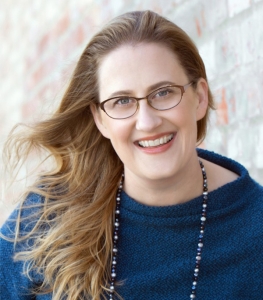 Katie Vernoy, LMFT
Katie Vernoy is a Licensed Marriage and Family Therapist, coach, and consultant supporting leaders, visionaries, executives, and helping professionals to create sustainable careers. Katie, with Curt, has developed workshops and a conference, Therapy Reimagined, to support therapists navigating through the modern challenges of this profession. Katie is also a former President of the California Association of Marriage and Family Therapists. In her spare time, Katie is secretly siphoning off Curt’s youthful energy, so that she can take over the world. Learn more at: http://www.katievernoy.com
A Quick Note:
Our opinions are our own. We are only speaking for ourselves – except when we speak for each other, or over each other. We’re working on it.
Our guests are also only speaking for themselves and have their own opinions. We aren’t trying to take their voice, and no one speaks for us either. Mostly because they don’t want to, but hey.
Join the Modern Therapist Community:
Podcast Homepage | Therapy Reimagined Homepage
Facebook | Facebook Group | Instagram | YouTube | LinkedIn | Substack
Consultation services with Curt Widhalm or Katie Vernoy:
Connect with the Modern Therapist Community:
Our Facebook Group – The Modern Therapists Group
Modern Therapist’s Survival Guide Creative Credits:
Voice Over by DW McCann https://www.facebook.com/McCannDW
Music by Crystal Grooms Mangano https://groomsymusic.com
Transcript for this episode of the Modern Therapist’s Survival Guide podcast (Autogenerated):
Transcripts do not include advertisements just a reference to the advertising break (as such timing does not account for advertisements)
… 0:00
(Opening Advertisement)
Announcer 0:00
You’re listening to the Modern Therapist’s Survival Guide, where therapists live, breathe, and practice as human beings. To support you as a whole person and a therapist, here are your hosts, Curt Widhalm and Katie Vernoy.
Curt Widhalm 0:15
Hey, modern therapists, we’re so excited to offer the opportunity for one unit of continuing education for this podcast episode. Once you’ve listened to this episode, to get CE credit, you just need to go to moderntherapistcommunity.com, register for your free profile, purchase this course, pass the post test, and complete the evaluation. Once that’s all completed, you’ll get a CE certificate in your profile, or you can download it for your records. For a current list of our CE approvals, check out moderntherapistcommunity.com.
Katie Vernoy 0:48
Once again, hop over to moderntherapistcommunity.com for one CE once you’ve listened, woo hoo!
Curt Widhalm 0:55
Welcome back, Modern Therapists. This is the Modern Therapist Survival Guide. I’m Curt Widhalm with Katie Vernoy, and this is the podcast for therapists about the things that go on in our practices, the things that go on in our professions, and this is another one of our continuing education episodes. So, listen to the beginning and end of the episode, the intro outro for information on how to get your CEs through us. We’ll also include that information in our show notes over at mtsgpodcast.com. We are taking this as an opportunity to talk about the major therapists, psychologists organizations, how their ethics codes have updated on artificial intelligence, and Katie and I first talked about this a few years ago. Katie, you were pulling up some of those episodes.
Katie Vernoy 1:42
Three years ago.
Curt Widhalm 1:44
Three years ago, around the time that Katie and I were on the California Association of Marriage and Family Therapist Ethics Committee, saying we should really update the CAMFT code of ethics to deal with artificial intelligence, and over the course of the last couple of years, we did it. We were able to go through a very long process, a lot of public feedback, a lot of meeting with artificial intelligence vendors, users, customers, and being able to put that into the CAMFT code of ethics that got updated at the end of 2025. I know that the American Psychological Association, National Association of Social Workers, and the American Association of Marriage and Family Therapist have all made updates to their ethics codes as well. We’re going to talk about all of them, and the American Counseling Association has gone through a public comment period, they have some pretty significant stuff in their code that they are looking at updating. They have promised a release on that this fall. We’ll probably put something out on our social media when they do that, but ACA is kind of in an in-between time, so we’re acknowledging the work that they do, but we’re going to focus on the codes that have already been updated.
Katie Vernoy 3:07
Well, and one comment, although we are both on the ethics committee for the California Association of Marriage and Family Therapists, we are not speaking for them. We are speaking as Curt and Katie.
Curt Widhalm 3:17
Who just happened to be heavily involved in that kind of a process, but noted we are doing this as the Modern Therapist’s Survival Guide.
Katie Vernoy 3:28
Yes.
Curt Widhalm 3:30
So getting into the episode, every time that I have spoken about artificial intelligence in any kind of presentation, I have found that it is very helpful to talk about what are we referring to when we talk about artificial intelligence, and for those people who are doing continuing education stuff, I know the guy who’s writing this quiz, and this is very likely to show up on a quiz. I have largely taken the California definition that was established in 2024 AB 2885 was what established this. It refers to artificial intelligence as an engineered or machine-based system that varies in its level of autonomy and that can, for explicit or implicit objectives, infer from input it receives how to generate outputs that can influence physical or virtual environments. That is the legal California definition of this. I also like to simplify it as saying these are autonomous-ish computer programs that replace human thinking. So that’s kind of where I like to start a lot of these conversations, just to be able to say we’re not going to get specific about, you know, this only deals with large language model LLM types, or this deals with generative AI types, we’re talking about the broader concept of artificial intelligence, as defined here. Regulations take a long time to show up, and technology evolves in weeks or days, or now, with some of the updates with artificial intelligence, it seems like in hours, and a lot of the regulation stuff, such as HIPAA updates, ethics codes updates. It takes years. When I had first proposed this as a member of the CAMFT Ethics Committee, to update our code from suggesting it to final approval took about two and a half years. Some of that is it’s largely a volunteer force that serves on ethics committees. So, shout out to everybody volunteering their time on ethics committees. But it takes a long time, and from the beginning to the end we were kind of circling around, do we need to re-update this now that it’s published, because it feels like so much has changed since the beginning, and I know from being involved with some of the California legislature’s offices when they’re proposing AI bills, occasionally they’ll send a bill my way and say, “Yeah, you worked on the CAMFT Ethics Committee. How does this stuff end up working from your perspective?” That the laws are even kind of lagging behind some of the ethics code stuff now that the professional associations are putting this stuff out there. So while we’re waiting for those laws to catch up, the ethical burden is falling on the professional associations to tell the individual practitioners: this is what you need to be doing.
Katie Vernoy 6:38
And to be fair, I think the conversations that we had behind the scenes, and I’m assuming other ethics committees and similar bodies have had similar conversations. We were aware that we did not know what was going to happen, and so we were really trying to make these things broad, dynamic principles, not the detailed, you must use this type of app, or you must have this type of thing. We were really trying to say, to the best of our ability, this is the principle of how you ethically employ AI in a practice, not anything that would become dated too quickly. At least we tried, I guess. Time will tell. But I think that I wanted to add that piece of flavor from behind the scenes, because I feel like I don’t want folks to disregard the work that we did, because it really was aimed towards having some sort of guidance that will last throughout technological updates.
Curt Widhalm 7:35
And we see as best as we could the promise of what AI brings in. That there are lots of people that we talk to, as far as this can reduce burnout, it can eliminate paperwork, it can increase access to care, and these are all of the shiny opportunities that AI can bring therapy to people who may not have access to it. It helps us as professionals in a lot of ways, and we’ve also talked about there’s the potential for a lot of risks. We had an episode earlier this year on the deskilling of therapists and what educators and supervisors should be doing and incorporating this into their training regimens. And we really tried to find balances between where are therapists going to be tempted to use this for things that benefit the therapist and the therapist’s schedule, where things fit in for what benefits clients and their healing, and some of the core considerations that therapists should have in being able to look at how they implement artificial intelligence. So we had a lot of discussion around things such as algorithmic bias, that and we’ve talked about this in previous episodes here. We’re going to link a lot of those in our show notes at mtsgpodcast.com. We talked a lot about on the committee level, as far as data vulnerability, where information gets stored, and…
Katie Vernoy 9:08
Or how it’s used.
Curt Widhalm 9:09
How it’s used, and also making sure that there’s still clinical efficacy and clinical responsibility by therapists that are providing a human in the loop oversight, so that way we’re not just trusting things that AI could just completely rewrite itself. I want to get into some of the overarching principles that we’re seeing from all of the professional associations ethics codes, and as it pertains to AI, I think the natural place to start with this is the 1970s.
Katie Vernoy 9:49
Of course it does.
Curt Widhalm 9:50
And the reason for this is this is when the foundational healthcare ethics from Beauchamp and Childress were originally published, and that has been the basis for our professional ethics codes largely since then, and it was a big portion of how we viewed these healthcare ethics as it pertains to artificial intelligence, and so it became somewhat of a we’re just making parts of the ethics codes that already exist, and just applying it to artificial intelligence. So, again, people who are taking a quiz, these four things might show up on it. Beauchamp and Childress really split their four areas into autonomy and informed consent, that clients have a right to self-determination. The second one is non-maleficence, our favorite, do no harm. The third one is beneficence, we also need to provide clinical benefit, and the fourth one is justice, that it’s available to all and addresses systemic injustices. So these are the four core principles that Beauchamp and Childress put out.
Katie Vernoy 11:07
And we’ve talked about some of these in more depth, and so I’ll link to those in our show notes over at mtsgpodcast.com. Because I think there’s some of the things that we know really well, like do no harm, but I think that we have one on beneficence, we have one on… we have a lot of stuff, we have a lot of, a lot of episodes on ethics, so we’ll just link to the whole ethics section.
Curt Widhalm 11:32
So we are looking at all of the codes, and as I have mentioned, the CAMFT code of ethics is the one that is the most explicit at the time that we’re putting this episode out, and I think that it will continue to be this way. It’s not to say that the other ethics codes are not addressing artificial intelligence in the same way that CAMFT is, but the updates, I think, if you look at them from the other organizations, still hold a lot of these same ideals, and we’re going to talk about what our experience was, why, what some of the discussion was, as far as coming up with some of these, and we’re going to surmise some of where the other professional associations may feel that some of the things that CAMFT put in are already covered in other parts of their ethics code.
Katie Vernoy 12:28
So for posterity this is being recorded on April 30, 2026 And when did the CAMFT ethics code officially get implemented?
Curt Widhalm 12:40
December 2025.
Katie Vernoy 12:42
Okay, so this is based on the camp December 2025 ethics update, and anything in the other organizations that is currently active as of April 30, 2026.
Curt Widhalm 12:56
Yeah, so the American Psychological Association also had end of 2025 early 2026 update, the ACA code, as I mentioned, is currently in process and should be published here in 2026. I don’t imagine that they’re going to get significant changes to what they had proposed. NASW was 2024 2025 as far as their update, AAMFT went into effect January 1, 2026. So the timing seems to be right from all of the organizations to put out this information.
Katie Vernoy 13:40
Yes.
Curt Widhalm 13:40
I don’t think it was some sort of, you know, the heads of all of the ethics portions of each of these organizations got together and said we should all update these things at the same time. I think it was really more members of all of these organizations were really looking for guidance.
… 13:58
(Advertisement Break)
Curt Widhalm 13:58
So we’re not going to specifically get into every single update and read it through. We’re going to kind of do more of a high-level discussion around what is meant by some of these updates, because a lot of them are pretty similar from organization to organization, and some of them are fairly minor updates, as it deals with CAMFT. A lot of what our updates were was updating the telehealth section of CAMFT to include more of just a broader technology and artificial intelligence specific aspects in order to be able to make sure that people have guidance. So some of the approaches that we really took in a lot of our conversations weren’t even around the debate of whether or not artificial intelligence should be used in clinical work. Like we really started more with the concept that artificial intelligence is here, the tools are already being used, and we want people to be able to use them in an ethical and responsible manner. And a lot of this idea comes around the idea of having competence around how these tools work, and we found that one of the better metaphors that described how we were going about things, and I think we’ve talked about this on the show before, is it’s kind of like driving a car. You don’t necessarily need to know how every single system within the car works, you don’t necessarily need to know what all of the computer chips do, and how it processes information, but you should have some responsibility around knowing how a car operates, and that you can operate it in a manner that is safe and doesn’t create harm or danger to those around you. You don’t have to be a mechanic, you don’t have to be a coder in order to be able to operate these kinds of systems, but you should at least be aware of how these systems end up working, where the strengths are of them, where the pitfalls are of them.
Katie Vernoy 16:11
So, when we’ve had conversations like this in the past, we have had folks listening to our presentations, or podcasts, or even just colleagues we’ve been talking to have wanted to know what is good enough, and I like the metaphor of the car. I think that helps, but there’s obviously very different levels of how well do you know how to drive the car if it’s kind of the standard of what most people do. I think that there’s there’s a an averageness. I mean, there’s some folks that never do any maintenance or forget that they need to do oil changes. I think that’s not the average we’re talking about, and I think the other piece that can be very challenging with trying to compare yourself to your colleagues is, I think that there is still a small portion, and maybe it’s large, I don’t know, but it’s not, it’s small within my sphere of folks who are still very anti AI and are refusing to learn about it, are refusing to engage with it, and also think it’s very dangerous, and I want to acknowledge that there are some points being made by those groups of folks, and Curt and I have come out and said in different arenas, we’re going to say it more formally in a few weeks. We believe that we need to engage with technology and do it in a crit with critical thinking. We need to do it in a way that makes sense, and so when we’re talking about the level of competence, it’s not what all of the professionals are doing, because when AI first came out, all the professionals were putting PHI and ChatGPT, or many were. It’s about folks who are adequately training themselves within the space. So that’s who you’re comparing yourself to, not the folks who are skirting a lot of these laws and ethics that are coming out.
Curt Widhalm 18:00
Part of the discussion on this too was for the people who make up our professions that we tend to skew older than a lot of other professions, and a lot of the discussions that we had in the background was really around, hey, the median age of the members of CAMFT tends to be mid to late 50s, and that’s probably going to be pretty similar across the other organizations as well, and so there’s a lot of discussions around what do we reasonably expect from people who are digital natives, people who have grown up the entirety of their lives with smartphones and internet at home versus people who are digital immigrants that had these things incorporated into their house later in their life or once they had some lived experience of having to stay outside until it was dark and drinking from garden hoses, until they were able to have some of the technology be more readily available and apparent. The idea of competence, we were trying to find what is something that makes sense for people who are incredibly familiar with technology and might be bypassing things versus people who are learning this for the very first time. So we did have a lot of discussion around competency, and settled on California has laws around things such as it’s mandated to have telehealth CEs for people to have to do telehealth now, and competency isn’t necessarily an option, but participating in workshops such as this, getting more information helps us to understand how artificial intelligence works, so that way we’re as practitioners able to explain our familiarity with the programs that we’re using and how they end up working. Now with some of the updates that we’re also talking about is that there are various ways that the tools end up working. I mentioned earlier in the episode that there are tools that people use, such as artificial intelligence scribes that listen in on sessions. There are other administrative tools that don’t necessarily interact with clients. Katie and I have been fairly open about our use of artificial intelligence for formatting our newsletters and helping us to be able to frame some of the verbiage that we end up using in some of the ways that we interact with the podcast, and so not all artificial intelligence is necessarily stuff that is going to be used with clients, and at least as far as the CAMFT code goes, we tried to separate out that there are varying levels of client consent that are going to be needed, and this goes back to Beauchamp and Childress’s ideas that informed consent is a thing, and clients need to be able to opt into the use of some of these tools.
Katie Vernoy 21:09
And I think that’s one reason why competence is especially important, because if you’re explaining to your client what it is they’re consenting to, you need to understand it sufficiently to be accurate and concise, frankly, about what it is they’re opting into.
Curt Widhalm 21:28
And this is something that out of the major ethical codes that we’re talking about, all of the organizations are putting in, in one form or another. So transparency and informed consent is built into the APA code, for example, clinicians must disclose when AI is used in care and obtain specific patient consent for that use. NASW talks about self-determination. Social workers must ensure that AI tools do not undermine a client’s right to self-determination by directing them toward automated solutions without human alternatives. AAMFT informed consent standard 1.11 explicitly requires informed consent for any AI-driven recording or transcription of sessions, ensuring clients understand how their data is processed by machine learning models. Now with CAMFT, we got a little bit more specific, and little is definitely not the word that should be used here, because why have one ethic standard when you can have three?
Katie Vernoy 22:36
Oh goodness.
Curt Widhalm 22:37
And part of this was we took one idea and decided that it’s really one idea, but it was so lengthy and wordy that it really needed to be split up into three different sections just to be digestible. The first part of it is the same as the other organizations, marriage and family therapists obtain consent from clients and patients or legal guardians for the use of artificial intelligence tools in the provision of therapy under the delivery of adjunctive services. Now we recognize that it’s also the possibility that artificial intelligence might not just be being used when it comes to the therapy hour, and this is one of the windows that we left open for the future, and assuming that we weren’t going to be able to update the code immediately as each new tool ends up coming out, that there are tools that people are going to use in between sessions that might be sending information to their therapist, and that stuff needs consent, as far as understanding how it works, how it understands the risks and benefits of it, so that way we’re not just telling clients, hey, use this tool without any understanding why, and don’t feel like I’m monitoring you all the time, because it’s actually AI that’s doing that, and just sending me updates.
Katie Vernoy 24:06
I want to also just acknowledge that that was all client-facing, so it was the AI scribe thing, as well as the adjunctive services, which could be AI journals or chat bots, or other things that you may use that could be either part of your practice that’s built specifically for you or a an app that you’re having a client use that you can have access to data for, and so we wanted to make a division between that and administrative tools that are on the back end for your purposes and don’t interact with a client.
Curt Widhalm 24:41
Now, examples of this might even be more readily available than what you’re already considering. We’re talking about wearables and journals, but some clinicians are already suggesting to their clients that have social anxiety: If you’re looking for a job, you might want to have ChatGPT pretend to be the company that you’re reaching out to, and if you give it a prompt that says, “Please act as this company, and what are some of the interview questions that I might face, and give me feedback on my answers, that might be a homework assignment. And what we’re looking for, as far as informed consent and competence around interventions like this, is to be able to say now, if you’re using the free ChatGPT, that’s not going to be private, so you might want to make sure that you’re not putting in there any of your information that you don’t want ChatGPT or anything else to know, and the limitation might be that it’s not going to be an absolute exact replica or example of how this company might ask questions, but this can give you some practice into thinking about how a company, such as the one that you’re applying to might be providing feedback or the types of questions that they might have.
Katie Vernoy 26:05
And I think the other thing is that we are already facing, and we’ll have an episode on this, I think, but we’re already facing clients coming in and saying, I brought this to ChatGPT or brought this to Claude. And I’ve already started having conversations around the risks and benefits of that to the the ability that I’m aware, but really talking about the sycophancy issue, the the feedback that you might get, how you may want to prompt these tools a bit better, so that you’re getting good feedback, versus sure you know the person that you’re mad at, they’re horrible and they’re wrong, and of course you’re right, and this is, you know, this is how it should be happening for you. So, I think we have a whole other episode on that particular thing, but being aware of how AI is being used adjunctively to your therapy services, if the client’s bringing it in, or you’re recommending it, I think those things are helpful, but the ethics code is really about the things that you’re recommending, and the things that you’re adding in the way it’s written.
Curt Widhalm 27:05
And so beyond consent, we move into the second part of what is really one idea, which is the informed decision making for clients that comes as part of this, because just in bringing it up and getting consent doesn’t mean that the clients are going to fully agree to that. And why we had talked about it in our discussions around updating CAMFT, and this is CAMFT 6.7 in the new code around informed decision making for the use of telehealth technology, AI is that clients can opt out of it, and that we don’t force this upon them, and that we should be able to provide reasonable treatment alternatives if they opt not to use the tools that we’re suggesting that they use, because at the end of the day it’s their treatment and they are able to get some of the best treatment that they want in the capacity that they can. I find that when I talk about this in workshops, that usually there ends up falling into two kinds of categories of questions. One is, can I make this as a standard of my practice, I use artificial intelligence in my practice. This is what it means to work with me. And if you are one of those people, my answer to that question is you’re completely allowed to run the practice in the way that you see fit. And treatment alternative might end up being, sorry, this is the way that I practice. Here are reasonable referrals of people that might be able to help you. That is following the spirit of this ethics code in that capacity. The other camp that I get questions from is, what if I’m implementing these tools to clients that I already have a clinical relationship with, and my answers to those questions are, well, you can continue doing therapy in the old-fashioned way that you did with this client before, and that might mean that you have to do your notes in the way that you did before. That’s one kind of a reasonable alternative. One reasonable alternative is, if you’re fully embracing artificial intelligence, you can appropriately terminate, take a few sessions, provide appropriate referrals, refer to somebody else, but you can’t force the use of artificial intelligence tools on your clients without doing so in some responsible way, one way or another.
… 29:42
(Advertisement Break)
Katie Vernoy 29:44
And all of the rules that are already good practice in the ethics codes, legally, all those things still apply to the clinical work. You can’t abandon your client, you can’t force them to do a particular thing, and so this is not new information, it’s just trying to adjust it to specifically acknowledge that your responsibility to your client doesn’t change because you’re excited about AI tools. I think the other thing that I want to add in here, and maybe this goes into another piece, the opting in versus opting out, the things that we talked about related to what needs this level of consent and decision making were things that directly impact the client, the recording, the transcription, any adjunctive tools, and the other tools that might be used in your practice do not require opt in or opt out, necessarily, not in the same level. You can make your systems work the way they work in the background, and so determining, is this a an administrative tool versus is this a tool that’s going to be client facing and or client interacting, I think, are is part of where much more obvious consent is needed. The way I’ve done it is, I’ve described the AI tools I use for my practice, and I get specific consent for recording, and so I have clients who’ve opted in and who have opted out of recording. The other tools that are administrative, they’re on the back end. Those are things that they’re aware of. They are technically in the informed consent, but there’s not an option to opt out of those if they’re going to be working with me.
Curt Widhalm 31:29
And part of the benefits of having the larger code update that CAMFT did, all of the other organizations have, by comparison, fairly minor updates, a few standards, get some updated language or additions. All of the other organizations, APA, NASW, AAMFT, the public comment on the ACA makes mandatory requirements for the use of artificial intelligence, mandatory disclosure, and informed consent. CAMFT’s is considered an enhanced consent procedure because of what you’re talking about, Katie. Where there are some AI tools that are that are specifically going to fall on the administrative end that don’t necessarily deal with clients or their client data that doesn’t require the full consent that is open to interpretation in the other ethics codes.
Katie Vernoy 32:27
And it’s something where I think at some point if you’re using an electronic health record, you can’t opt out of every single AI tool. There is AI in the background in how those things operate more smoothly. There are things that are suggesting different times for appointments or automated reminders, or there’s things that that maybe have more decision trees, you know, kind of the logarithmic, if the client responds this and this comes back, you know, the very basic quote unquote AI type principles, I think there’s so much, and this was part of our conversation, there’s so much that’s going to be just automatically a piece of this that we wanted to make sure that the client-facing client data type tools were specifically consented for.
Curt Widhalm 33:18
The three pieces are disclosure, informed consent and informed decision making around the tools that’s going to be on the quiz. Those are the three pieces that we’re really talking about, and the amount of disclosure is going to be based on which organization’s ethics codes that you are held to and as we look at this, going into some of the overall work, is then looking at data privacy as another responsibility that people should be ethically thinking about. Now we have talked on a number of episodes before about how to handle client data privacy and looking at the availability of the number of tools that are out there, but also the number of companies that we had spoken to who were readily able to point fingers at, if you look at this other company over here, their website says that they’re HIPAA compliant, but if you read their terms and conditions, they are not doing HIPAA compliant work. And that’s really some of the responsibility that you, as the clinician, are going to be held to with these ethics codes updates, is you have to know that the tools that you’re using maintain confidentiality and aren’t sending this information out or having gaps in their platforms that make it to where you’re now providing data leakage or readily just handing over client information. I will say, and I will continue to say this: HIPAA compliant is a marketing term. There is no HIPAA office that goes through every single organization and says you meet our standards for HIPAA compliance. There are HIPAA guidelines around what it means to protect client data, but if you’re seeing the words HIPAA compliant on a website, you can’t just take that one at face value. So therapists need to be able to follow all of the legal and ethical privacy standards that and take reasonable risk-based precautions to safeguard your client information. And one of the better ways to look at this is having a business associates agreement, a BAA signed with the companies that you’re giving your client information over to. A BAA doesn’t necessarily guarantee client privacy on anything, but it’s an agreement that the liability for handling that client data, if it’s something that happens with the vendor or the program on their end, they’re the ones who are going to be responsible for it, not you. If you don’t have the BAA and you’re putting this client information just anywhere, you’re the one who’s going to be responsible for that.
Katie Vernoy 36:17
And I think the big piece here goes back to the competency of knowing how to drive a car versus knowing all of the inner workings of a car. If you’re one of the many clinicians who are tricked by a website that says they’re HIPAA compliant, but, but the terms of service don’t match up, or they’re, you know, pretty shady, or pretty confusing, I would argue that that is, that’s hard to sort through for me. Yes, we should all be able to sort through this. We should have that information, and I think if we’re doing our due diligence to the best of our ability, there might be there might be organizations that are just lying to us, and I don’t know that we can protect against that, and so I think if you’ve done your due diligence, you’ve read through it, you’ve tried to sort it out, you’ve run it through an AI chat bot to see, does this align with HIPAA compliance? I’m laughing because then it’s like, what are they going to protect each other, these AIs? Again, I’m back to the Terminator situation, but the due diligence that you’re doing may be up against a big corporation that is bound and determined to dupe you. I’m more concerned about folks who don’t do the due diligence and don’t have a reasonable argument of this is why I chose this tool. I chose this tool. I went through, there’s reputable folks who are saying that it’s okay. I’ve read through the terms and conditions, it looks right to me. Those types of things, I think it’s something where the level of detail that we go into should be more than zero, but it doesn’t need to be 100% because I don’t think we can, we cannot know that, and people can lie, so I think the BAA is a good, is it is a good resting point to make sure that there’s at least that in place, but I think there’s other pieces that may be beyond the legal competence that we each have.
Curt Widhalm 38:20
Part of this is also listening to podcasts like ours for updates and considerations that do help you to find other kinds of ideas around building your competence. But the metaphor, Katie, that I was thinking of while you were talking is if we’re going back to driving the car, we want to be aware of three kids stacked on top of each other in a trench coat, and not letting them drive our car. That’s kind of the equivalent of just maybe going on a fly-by-night sort of any AI tool is going to be great.
Katie Vernoy 38:55
Yeah.
Curt Widhalm 38:56
Some of the other data privacy stuff that falls into this is any company that is using artificial intelligence needs to have the servers based in the country where you are located. Now, Katie and I are practitioners in the United States, but if you are working in the United States with clients in the United States, our HIPAA laws are written for people in the United States, and you should ask the companies, where does the data get stored if I am using your artificial intelligence tool? And if their answers are anywhere other than the United States, that is a big sign that you shouldn’t use those tools because the laws differ in country to country on who can access that information. So part of our competence as we’re talking about data privacy is making sure that the information is stored geographically in the same country where you’re practicing. If you’re one of our listeners who has clients in multiple countries, I’m just going to give you a couple of finger points and say good luck in figuring that out, but it is something that you should take into consideration when you are using these tools to make sure you’re remaining in compliance with the law. We’ve talked before, and this is something that I think is spelled out in both the APA code as well as the NASW code around the ideas of social justice and around mitigating bias, and this is something that we’ve talked about as far as making sure that the data that gets published, released, processed by artificial intelligence, we recognize that a lot of the data that’s fed into it that trains these models is based on potentially biased information from any of the data sets humans are biased in and of themselves, and when we get the results out of our AI tools that we’re specifically looking for is the output from a particular output showing bias that it shouldn’t?
Katie Vernoy 41:20
And that’s looking for all types of bias. I think there’s also a medical model bias, so there’s obviously demographic, racial, cultural bias, but there’s also medical model bias. There’s a bias toward giving a good enough answer and being able to look at what it is that actually is coming out, because sometimes in the AI that I’ve used, I’ve seen a bias towards making sure everything’s covered, and so all of a sudden I’m prescribing something that a medical doctor would prescribe, and I’m actually in the session I said go talk to your doctor about this, and so I think making sure that you’ve looked at all of the output, of course, but, but looking at what is it, how is it trending, if you can identify the pieces that you’re seeing consistently, so that you can be aware of those known bias points, and if it’s too, too integral to the system that I would shift systems, but being able to make sure that you’re really assessing that.
Curt Widhalm 42:31
We had talked about this a couple of years ago in the episode that you and I had done, that at the time there was research that some models would provide different verbiage depending on the race of the air quotes around “the clients,” I think that they were using actors, but depending on how a client showed up, if it was a white presenting client, the models would be more prone to saying that a client was frustrated, where if it was a black presenting client, that it would label them as aggressive or angry, and just exaggerated in what the responses were. The output of all of the artificial intelligence that I have used over the last couple of years never highlights here’s where I might be potentially biased in this output. So you do have to read through the output that you’re getting, looking specifically for is there bias showing up? And this is an ethical standard that at least three of the organizations are pointing out that we need to look at from a social justice end.
Katie Vernoy 43:36
I think that there is also room for AI to help with bias. There have been folks who’ve created AI transcripts or AI transcription service, AI bots, whatever, that will listen to sessions and determine if a clinician is showing bias. There is also a study that we talked about long ago, where clinicians, and I think it was medical doctors and AI chat bots were given the same type of clients, and the AI chat bots actually showed less bias because they provided the same types of resources to all clients, and the human counterparts were gatekeeping some of the treatment options, because they assumed that their clients of different races were less able to afford them, or those types of things. And so I think that this is not just AI bad look at the bias, I think it’s also reading through and at the same time assessing your own bias around what might I be assuming in this, that the chatbots are now pointing out to me that maybe I didn’t see this in the same way.
… 44:51
(Advertisement Break)
Curt Widhalm 44:52
This is really where the human in the loop aspects really come into play, is making sure that we are not relying on artificial intelligence to do our jobs for us. Looking for bias is one example of this, but all of the codes are trending towards or explicitly stating don’t just offload your work to AI and just accept whatever the output is. That you need to verify that the accuracy is correct, because could be something that your clinical skill, your clinical education, the reason why you invested 10s of, if not hundreds of 1000s of dollars into getting to the point of the career where you’re at, is to be able to put your name on things. And this is a major point of emphasis that we kept coming back to is the clinicians are the ones who are licensed, they’re the ones who are going to be held responsible. They can use artificial intelligence as tools to help inform differential diagnoses, but at the end of the day, they are the ones who are responsible for the output that they are putting their professional name and credentials on. And if you use an EHR system, you know when you type your note in, there’s a little note on there that says, I am stamping my name onto this, I have reviewed this for accuracy, that gets taken seriously when you’re being investigated by a regulatory board or you’re being investigated by an ethics committee. And what we didn’t want is people to just be able to say, “Oh, sorry, that’s what artificial intelligence put out, I didn’t really review that.” This is somebody’s clinical record, this belongs to the client, not just you, and I’m sorry doesn’t really work when you’re in trouble.
Katie Vernoy 46:45
And I think this is a good point to just tie back to our AI deskilling episode, where it really talks about how do you make sure that you’re keeping your clinical skills sharp, or how are you making sure your supervisees’ clinical skills are sharp, or that you’re actually teaching clinical skills and the age of AI, because much of what I’ve seen come out of AI, the different tools that I’ve used, is really interesting, and there are things that maybe I didn’t think about. There are points being made that I’m like, oh, well, maybe that’s good, maybe it’s not, and being able to really look at it critically and assessing the output, making sure it makes sense for me. I actually want to make it, make sure it sounds like me. There’s, there’s those types of things. I think it actually improves what goes into the chart. I think it improves to a certain extent my clinical skill, because I’m basically being observed in my sessions when they’re, when, when AI is listening, and so I think that there is a potential benefit here, and there might be things that you don’t know or remember that it’s bringing forward that you can then do some due diligence about, and see if it makes sense to put into your record and into your clinical picture, and even treatment planning. But if you don’t assess it, you don’t critically look at it, you can get information that’s completely wrong. I think there was one point there was, there was, I found it, and so I’m assuming that this was this was something where I was, I was reading quickly, but there was a just an inaccurate statement. It was somebody was getting licensed for one thing, and it assumed they were getting licensed for something else, and they put that in. So, for like, for example, if it was you when you were getting licensed, and you were my client, it was assuming that you were getting licensed as, I think, at one point a teacher, and then one point as a real estate broker, and so for me it was, you know, I missed it once, and then it showed up on a summary, and then it showed up, and I was like, wait a second, so I had to go back in, correct the note, do you know all the things around why I’m having to re-edit the note, and it’s something where I read it through, and I still missed a couple of words, right, and so I think it’s this is really important that we recognize these are our records that we’re in charge of, that we’re responsible for, and these are the types of errors that have happened even before AI scribes existed. You know, you copy and paste from a previous note, you go through, you update everything, and then all of a sudden you’re like, oh, I forgot to update when the next appointment was, you know, or whatever it is, and so this is these are things that you want to do the best that you can, recognizing that you’re human and you’re going to make mistakes, but it’s still your responsibility, that is still a mistake, that is still something that you need to be very vigilant about, and make sure that you’re only signing stuff that you’ve really looked at, and I’ve claimed an error already, I fixed it, but I, you know, it’s, we can’t be perfect, but we need to be as good as we can be.
Curt Widhalm 49:46
And by extension of that, we’re also looking at the ways that technology and artificial intelligence tools are not just showing up in the clinical record or the treatment planning or the diagnoses, but also the temptation to use it for advertising and publication, and some of the more business-related things that a clinician might do, and especially those who put out a lot of content or blogs, and we at CAMFT made sure that there was a code that addressed this specifically that says that it’s an accurate reflection of the nature of your knowledge, and we didn’t want somebody all of a sudden publishing 2000 blogs on a random Tuesday that shows at least a passing competence around every condition known to human nature. So this is being accurate and not deceptive in the ways that you advertise your practice, but it’s also if you are using it to come up with aspects of a blog, I’ve, I’ve used AI to help illustrate points or help to craft stories for some of the presentations that I have, and there’s a workshop that I’m giving in a couple of weeks, where, hey, I can’t find anything that fits this particular talking point from any of my Google searches. Can you give me examples of where clinicians have actually gotten in trouble for this point, and it’ll give me a lot of fluff, and it’ll give me a lot of fluff, and I’ll say you still haven’t given me any specific examples of this, and I think on this particular one it took like 13 prompts before it finally said there are no California therapists that have specifically run into this.
Katie Vernoy 51:34
For more in depth on that, I think our three and a half year ago episode probably is pretty strong on these points around the use of AI for marketing information, for blogs, for scholarly articles, that kind of stuff. We may have shifted a little bit in citing and how that happens, and so I think those, there may be some room for there, but I wanted to, before we run out of time, I want to get into a little bit, the decision making that clinicians need to make regarding is, is a client appropriate for AI? Is AI appropriate for that client? Because not all clients are going to be appropriate, and, and tying back to what we were just talking about with the human in the loop, I think there’s, there’s more and more in the EHR that I have, there’s a new tool that I haven’t used yet, but it says that you can send your client an AI summary of the session or homework assignments or that kind of stuff, and all of those things I think are really interesting tools and may not be appropriate for everyone, and really will need the oversight of the clinician to make sure you’re not sending something that you’ve not fully understood. And that goes the same with any of the AI tools that are on the open market that you want to make sure that you understand them well enough if you’re going to recommend them. So, for me, I think what what would help me is to kind of shift this a little bit to the decision making based on the ethical codes that we have gone through that are pretty common across the organizations.
Curt Widhalm 53:12
Some of the thoughts that we’ve had around this particular point, and thank you for bringing it back around to this, because this is a pretty darn important point.
Katie Vernoy 53:22
Yes.
Curt Widhalm 53:24
Not only is there the clients opt into it, but you have to consider necessarily the client’s overall presentation diagnosis on whether or not introducing artificial intelligence is appropriate. For example, clients with delusions or hallucinations about being followed around by someone or being constantly monitored, probably a pretty terrible decision to introduce some kind of tool to them that constantly monitors them or follows them around.
Katie Vernoy 53:57
Yes.
Curt Widhalm 53:58
So what you want to be able to do with each and every one of your clients is to consider the rationale of the use of that tool for the client in a way that might not just look at the benefits but also what are the risks of introducing this with a particular client? So that’s just one example here, whether or not somebody can even consent to it, if they’re in the state of mind of being able to provide actual informed consent, is another issue that you’re going to want to consider, too.
Katie Vernoy 54:35
I use AI, I think, more specifically with clients than you do, and so I want to give some practical advice around this. For virtual sessions, it can be very easy to just flow into using an AI scribe. It records the session. It’s like what Curt and I are doing. We’re on Zoom right now. We’re recording to Zoom. Yes, we recognize we’re being recorded. There’s a little red light, whatever, but it doesn’t necessarily impact how we operate. And so, while consent is still, I think, very important, and you want to make sure that you’re talking it through, it isn’t as obvious on a week to week basis, depending on your thing, sometimes it will say you’re recording in progress, you know. Some tools have that in place, so the, the, the tool is getting consent every single time, and some tools you get consent on your own, and you can just hit record, and the client, it just, it’s, it’s seamless, the client’s not aware, I mean, they’re aware, but they’re not informed every single time record is hit. In person is very interesting, and I think a lot of folks start balking at this. I know, Curt, you’ve talked about that, you’ve had some other medical professionals kind of shove a phone towards you, that kind of stuff. I think being very clear, how you’re going to do it. I do use my AI scribe within my in-person sessions. I have my table where my phone goes, and I have a recording, and I look to make sure it’s recording. It shows it kind of has like a little screen that shows that it’s recording, and so the client’s aware every single time. Sometimes you know, I get it started, and then bring the client in. Sometimes I’m still trying to find it as the client comes in, and it’s just a part of the process at this point. And so it does impact how you interact with your clients in that space. There’s now a phone there. I try to keep it to the side, it’s out of sight, like they’re usually it’s not a big deal, but there are times I even refer to it. I say, okay, well, this is what we’re going to talk about next time, and they look at me, yeah, I’m saying this for the AI scribe over here, so that we get that in our notes, so that both of us will remember this is what we need to talk about next time. For some folks, it’s that real easy conversation. For other folks, I’ve had them say no, they didn’t want to do it because it felt awkward, because it didn’t seem right, or they didn’t, they weren’t comfortable with AI, and so then it’s also making sure that you know client by client who’s opted in and who’s opted out, and what tools are available to you for the clients who’ve opted out and what tools are not available. And so the consent piece is really understanding and talking through this is what I’m doing, this is how it, this is how it operates, and your, your service is not going to change if you, if you use it or don’t, but for me this is a, this is a handy tool for these reasons, and these are the benefits I see for our work together, and these are the risks, those types of things, but you need to make the decision do you approach that with them? You need to be accurately informed, and then you also need to give them full autonomy to say yes or no to the elements of the AI tools that you’re using that they need to explicitly opt in and out of.
Curt Widhalm 58:02
As you were talking, I got flashbacks to recording sessions, and how much that that was not necessarily a representation of how my sessions normally went until I got comfortable recording sessions.
Katie Vernoy 58:14
Yes.
Curt Widhalm 58:15
Everybody who’s ever recorded a session, which you should do.
Katie Vernoy 58:19
Yeah.
Curt Widhalm 58:20
It does definitely have an impact on you.
Katie Vernoy 58:23
And it’s something where I recognize there were times when I was more aware, I was more on, because I recognized that this, there’s this AI bot that’s going to be documenting what I did, I better do something. But it’s it’s something where I can also go back before the transcripts are deleted, because that’s what my, my tool does, but I can go back and look and do some deliberate practice on how did I handle that, what were the things that were said, and so it is actually potentially a strong clinical tool, and that’s something you can introduce to your clients, but it is something where you have to be aware things shift, it does shift how you work. It might shift the relationship, and you have to make sure, is that okay? And is it for the better? Is it just for your own convenience, or is it something that might actually improve the client experience even.
Curt Widhalm 59:13
A couple of the codes, ACA code makes reference to this, CAMFT code makes reference to this. This falls kind of under professional competence, but it also falls into when you’re using artificial intelligence for academia, for publications, for continuing education, that you’re accurately representing the use of it, and when you’re using concepts generated by AI tools, give the AI tools credit for the considerations that they did, and make an attestation that you provided the professional oversight that it reflects accurately. You don’t just take what your AI tool of choice says as fact, you go back through it, and find the articles and the case examples at their original sources, and make sure that it’s accurately representing those.
Katie Vernoy 1:00:07
It’s interesting, the CE episode that I most recently did was on gifted adults, and I did use AI to help generate, organize the thought process there, and I think it took me longer, and I think it was better. It was something where I went through, and I checked everything. I added my own input. I had it help organize, but it is something where it’s, it’s not necessarily quicker. It just kind of helps organize your thoughts. It helps get more ideas forward. It’s interesting. It’s kind of, it’s kind of a collaboration partner, I don’t know, I mean, we can have an argument about that later, but it’s, it is something where all of this stuff shifts your processes. I think it’s just being aware and conscious on how you want to do that in a way that’s going to line up with the ethics, as well as your own morals, values, business practices, those types of things.
Curt Widhalm 1:00:59
The last point that I want to make on this, as it pertains to the ethics codes, is around supervision and around education. We did have the episode earlier this year on deskilling, but wanting to make sure that people know that this is also part of the standards that are around the supervisory responsibilities. A lot of what I’m seeing, whether it be what we wrote for CAMFT, whether it’s AAMFT, whether it’s APA, ACA, NASW, is we’re monitoring the welfare of the clients, that we’re not becoming too reliant on artificial intelligence as practitioners, but we’re also not letting our supervisees or the students that we’re teaching become over reliant on artificial intelligence either. Just want to highlight that for supervisors it’s making sure that you have policies around how artificial intelligence can be used within the agency that you’re at, the practice that you’re at, and that you’re taking standards to make sure that supervisees and people who are coming up in their profession are learning how to use AI as a tool and not just be reliant on it, so last point there. We will have our show notes over at mtsgpodcast.com. We will include links to a number of previous episodes, articles, etc. including our 10 point modern therapist guide for how to vet AI tools. Didn’t really fit within the continuing education pieces of this episode, this 10 point guide that we created distills down a lot of what a therapist’s responsibilities are, as far as we’ve come up with some guidance, we don’t expect everybody to know all of the ideas that are going to go into the technical standards, for example. And so we’ve created a couple of things that we’ve learned along our pathway for clinicians to consider, is this AI tool right for me? Does it meet the thought process that Curt and Katie would do with the AI tools that they use? And so this is a 10 point guide that brings in questions such as, does it meet the standards for where they store their data? That’s a question that we talked about earlier in the episode. Is this a company that’s going to sign a BAA with me? Is this a company that’s going to use my client’s data for training? These are some of the considerations that we have, as well as some of the technical stuff, such as, does this company get independently audited by people who try to break stuff and make sure that they are good companies that have good security, and you’re going to find out about breaking stuff next week, so little bit of a preview here, but these are some of the things that we put together in this handy 10 point guide for you.
Katie Vernoy 1:04:01
So we’ll add that in with the CE course over at moderntherapistcommunity.com. You can grab that guide as well as the course and get your CEs. If there are other questions you have, don’t hesitate to ask, because we can put together more helpful tools, more survival guides, so to speak, as well as additional episodes to talk through how we navigate what’s happening now with AI.
Curt Widhalm 1:04:28
And until next time, I’m Curt Widhalm with Katie Vernoy.
… 1:04:32
(Advertisement Break)
Katie Vernoy 1:04:33
Just a quick reminder, if you’d like one unit of continuing education for listening to this episode, go to moderntherapistcommunity.com, purchase this course and pass the post test. A CE certificate will appear in your profile once you’ve successfully completed the steps.
Curt Widhalm 1:04:48
Once again, that’s moderntherapistcommunity.com
Announcer 1:04:51
Thank you for listening to the Modern Therapist’s Survival Guide. Learn more about who we are and what we do at mtsgpodcast.com. You can also join us on Facebook and Twitter, and please don’t forget to subscribe, so you don’t miss any of our episodes.




SPEAK YOUR MIND