

Your Client Is Not a Category: Binary Thinking, Gender Trauma, and Presence as a Clinical Skill – An Interview with Alex Iantaffi
Grad school handed most of us a short stack of checkboxes for gender, sexuality, and relationship structure, then sent us out to meet actual human beings. The checkboxes did not hold. What survived them was the binary underneath: cis and trans, straight and queer, normal and special population. That binary quietly shapes who we believe in the room, who we can empathize with, and what we never think to ask about.
Curt and Katie talk with Alex Iantaffi, Ph.D., LMFT, author of Gender Trauma and co-author of How to Understand Your Gender, about why binary thinking is a clinical problem before it is a political one. Alex traces the rigid gender binary to colonial and Christian supremacist thinking, shows how it plays out in ordinary couples and family work, and makes the case that gender liberation includes cisgender clients without minimizing who carries the heaviest cost.
Click here to scroll to the podcast transcript.Transcript
(Show notes provided in collaboration with Otter.ai and Claude AI.)
About Our Guest: Alex Iantaffi, Ph.D., MS, SEP, CST, CST-S, LMFT
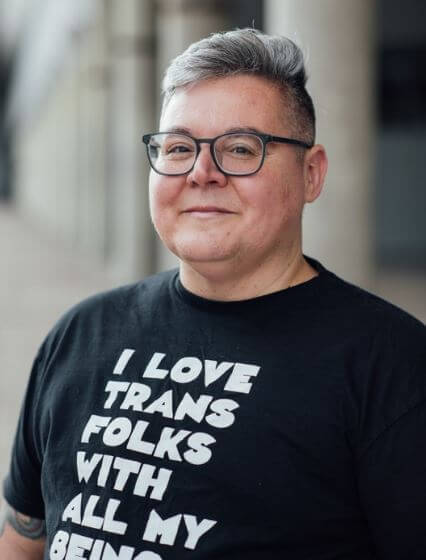 Alex Iantaffi (they/them) is the author of the award-winning book Gender Trauma, co-author of How to Understand Your Gender, How to Understand Your Sexuality, How to Understand Your Relationships, Life Isn’t Binary, and Hell Yeah Self-Care: A Trauma-Informed Workbook, and editor of the Trans and Disabled anthology. They are also a cultural worker, family therapist, WPATH certified gender specialist, AASECT certified sex therapist, Somatic Experiencing® practitioner, clinical supervisor and mentor.
Trained in the UK as a systemic psychotherapist and now practicing in the United States, Alex is also an AAMFT Approved Supervisor and Supervisor Mentor and an AASECT certified sex therapy supervisor. Their first degree is in linguistics, which shows up in how they read interaction, meaning, and power in the therapy room.
Alex hosts the podcast Gender Stories and the YouTube series Warm Take Wednesdays with Dr Alex. When they are not working, writing, parenting, or organizing, Alex can be found reading, sitting by the lake, crafting, watching TV and movies, making music, reading tarot, cooking, dancing, doing ritual, and hanging out with their dogs. They love collaborating with others in service to the vision of a more liberated world for all of us.
In this Podcast Episode: How Binary Thinking Shapes Clinical Judgment
Alex makes the case that gender and sexuality are systems we are all immersed in rather than identity categories a subset of clients happen to occupy. From there, the conversation moves through the colonial roots of the rigid gender binary, the ways it distorts relational and family therapy, the gendered pain that cisgender clients carry unexamined, and the collective gender trauma visible in the manosphere. Alex also names clearly that being universally shaped by gender does not mean being equally harmed by it. Along the way they share two systemic tools they were trained in, a live moment where Katie catches herself asking a binary question and works it out on air, and a practical starting point for clinicians who find all of this compelling and have no idea what to do with it on Monday.
Key Takeaways for Therapists: Gender Trauma, Categorization, and Clinical Presence
“We live in a world that’s so deeply steeped in binary, and then we’re in a profession where we’re encouraged to sort people into binaries all the time.”
— Alex Iantaffi, Ph.D., LMFT
- “Special population” framing installs a default. Treating trans, non-binary, and gender expansive clients as a special population sets cisgender, heterosexual, and monogamous as the unmarked baseline that everything else deviates from. Alex argues gender is a biopsychosocial and cultural construct with power attached, which is a different thing from a demographic checkbox.
- The rigid gender binary is a colonial inheritance. Alex locates binary gender in colonial thinking, bound up with Christian supremacy, rather than in biology. That origin story changes how it surfaces clinically: in parenting expectations, in who is allowed to earn more, in who is read as competent, in who gets to have an appetite.
- Everyone is shaped by gender trauma, and some people pay far more for it. Cisgender boys often go unprotected from real violence under “boys will be boys.” Alex holds that alongside an explicit statement that Black and Brown trans feminine people and Indigenous people bear the brunt of systemic violence, including murder. Naming the universal does not flatten the disparity.
- The manosphere is a symptom of collective gender trauma. Alex reads red-pilled young men as looking for agency, identity, and belonging, and finding the only place that offers it to them. That framing does not excuse the harm, and it gives clinicians somewhere to work.
- Casting roles derails relational therapy. When we lock into victim and perpetrator, oppressor and oppressed, we stop seeing the people in front of us. Power and harm are real. Alex’s point is that treating those positions as fixed and clean costs us clinical opportunity with both partners.
- Track patterns instead of sorting categories. Rather than adjudicating whether a presentation is “really” about gender or race or disability, Alex looks at positionality and relational patterns across the systems everyone lives inside. Therapy’s habit of chopping humans into separable chunks is borrowed from the medical industrial complex.
- Sociology is the missing course in most grad programs. Individual psychology alone cannot account for what walks into the room. Alex notes that therapists with more privilege have the most ground to make up here, because moving through the world without noticing the systems is itself a function of privilege.
- Non-binary thinking is an ongoing practice. Alex catches themselves in binaries regularly and treats the return to values as the work. Wanting to master it and be done is itself a product of binary thinking, and a characteristic of white supremacy culture.
“I often talk to folks about how presence is a really underrated skill when it comes to therapy, and so often we’re worried about diagnosing and interventions.”
— Alex Iantaffi, Ph.D., LMFT
Two Systemic Tools Alex Uses to Read What Is Happening in the Room
Alex was trained systemically in the UK, and two models from that training still shape how they work. Both are ways of slowing down an interaction rather than categorizing a person.
- Coordinated Management of Meaning (CMM). A communication theory that invites you to take an exchange apart and ask what is actually happening in it. Alex’s teaching example is a couple in a car: she asks whether he is hungry, he says no, they keep driving, and an hour later she is starving and he has no idea what went wrong. Underneath the literal question sits a gendered relationship to appetite and permission, and a request that could not be made directly.
- Social GRAACCESS. A checklist of positionalities Alex was trained to hold for everyone in the room, including themselves: gender, race, age, ability, citizenship, culture, education, sexuality, and spirituality among them. The question stops being which category explains the client and becomes how all of these systems are shaping this person, this relationship, and this therapist.
Gender Liberation is for Everyone
Alex identifies as an abolitionist and still chooses the language of gender liberation, deliberately. The reason is clinical as much as political: no client should walk away feeling their gender identity, expression, or experience has been ruled invalid. Alex offers their own daughter as an example, someone very feminine and very smart, two things our culture still treats as being in tension. Gender liberation is not everyone dissolving into a genderless blob. It is everyone getting to be authentic to themselves and their communities.
Alex is equally clear that this is not evenly distributed work. Misogynoir combined with transmisogyny produces what they describe as the most lethal combination, and the harm shows up as intimate partner violence, murder, and violence from systems including the police and the state. The same pattern is visible in the crisis of missing and murdered Indigenous women, girls, and two spirit people, and in mortality rates for Black women who are pregnant and giving birth.
Which is why Alex reaches for the framing Indigenous activists have called for: be an accomplice rather than an ally. An ally can act in alliance and can also stop. An accomplice has skin in the game, and understands that collective liberation is not charity extended to somebody else.
Where Therapists Can Actually Start
Curt pushes for something concrete, because a conversation this conceptual can leave clinicians either dismissing it or freezing. Alex’s answer is smaller than expected. Start with presence. Am I here with this person? Am I as resourced as I can be right now? Can I see who is actually in front of me clearly enough to take in the complexity of their humanity, rather than only asking what this person is, why they are here, and which tool I have for it?
Diagnosis and treatment planning still matter, and Alex says so. The argument is that a pathologizing lens is a poor first move when someone has just agreed to let us see them in their messy humanity.
Resources on Gender Trauma, Systemic Therapy, and Gender Liberation
We’ve pulled together resources mentioned in this episode and put together some handy-dandy links. Please note that some of the links below may be affiliate links, so if you purchase after clicking below, we may get a little bit of cash in our pockets. We thank you in advance!
- Alex Iantaffi’s website: www.alexiantaffi.com
- Alex’s books: https://bookshop.org/shop/xtaffi
- Monthly newsletter: https://alex-iantaffi.myflodesk.com/subscribe
- Podcast: Gender Stories, https://genderstories.buzzsprout.com/
- YouTube series: Warm Take Wednesdays with Dr Alex Iantaffi, https://wtwwithdralex.buzzsprout.com/
- YouTube channel: https://www.youtube.com/@TransformingPerspectives
- Instagram: @xtaffi and @genderstories
- LinkedIn: https://www.linkedin.com/in/iantaffi/
Books by Alex Iantaffi
- Gender Trauma
- How to Understand Your Gender, co-authored with Meg-John Barker
- How to Understand Your Sexuality, co-authored with Meg-John Barker
- How to Understand Your Relationships, co-authored with Meg-John Barker
- Life Isn’t Binary, co-authored with Meg-John Barker
- Hell Yeah Self-Care: A Trauma-Informed Workbook, co-authored with Meg-John Barker
- Trans and Disabled anthology, edited by Alex Iantaffi
Concepts Discussed
- Gender trauma
- Gender liberation and gender abolition
- Coordinated Management of Meaning (CMM)
- Social GRAACCESS
- Colonial and Christian supremacist constructions of gender
- Misogynoir and transmisogyny
- Accomplices and allies
- Liminality and non-dualistic thinking
Relevant Episodes of MTSG Podcast
- The Clinical Depth Principle: Why Therapy Cannot Be Reduced to Tools, Hacks, and Sound Bites
- What This Work Asks of Therapists: Integration, Not Knowing, and the Capacity to Stay – An Interview with Juliane Taylor Shore, LMFT, LPC, SEP
- Just a Hypothesis: Case Formulation and Treatment Planning for Real-World Therapy – An Interview with Nikki Rubin, PsyD
- When Therapy Goes Vibe-Forward: The Cost of Losing Clinical Depth – An Interview with TJ Walsh, LPC
- What Therapists Need to Know to Support the Trans Community: An interview with Artie Hartsell
- Working with Trans Clients: Trans Resilience and Gender Euphoria, An interview with Beck Gee-Cohen, MA CADC-II
- The Practicalities of Mental Health and Gender Affirming Care for Trans Youth: An Interview with Jordan Held, LCSW
- Should Texas Therapists Stop Treating Kids? Texas SB14, Gender-Affirming Care, and the Risks for Therapists
- The Lasting Harm of Conversion Therapy: An Interview with Samuel Nieves
- Navigating Incel Culture: Therapy Approaches for Manosphere Clients
- Why Men Don’t Stay in Therapy
- Decolonizing Therapy: A Movement – An Interview with Dr. Jennifer Mullan
- Exploring Systemic Trauma and Relational Privilege with BIPOC and LGBTQI Couples: An interview with Akilah Riley-Richardson, MSW, CCTP
- Bi+ Erasure, An Interview with Dr. Mimi Hoang, Ph.D.
- Understanding Polyamory: An Interview with Dana McNeil, LMFT
- Rethinking Oppositional Defiant Disorder: Children reacting to the system around them
- Family Therapy: Not Just for Kids – An Interview with Adriana Rodriguez, LMFT
- The Person of the Therapist: An Interview with Dr. Harry Aponte
- Ally is a Verb
Meet the Hosts: Curt Widhalm & Katie Vernoy
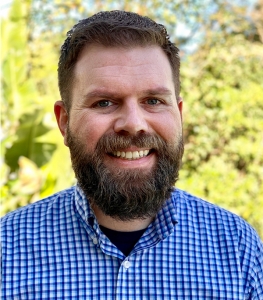 Curt Widhalm, LMFT
Curt Widhalm is in private practice in the Los Angeles area. He is the cofounder of the Therapy Reimagined conference, an Adjunct Professor at Pepperdine University and CSUN, a former Subject Matter Expert for the California Board of Behavioral Sciences, former CFO of the California Association of Marriage and Family Therapists, and a loving husband and father. He is 1/2 great person, 1/2 provocateur, and 1/2 geek, in that order. He dabbles in the dark art of making “dad jokes” and usually has a half-empty cup of coffee somewhere nearby. Learn more at: http://www.curtwidhalm.com
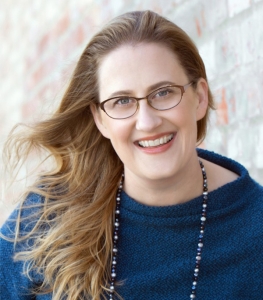 Katie Vernoy, LMFT
Katie Vernoy is a Licensed Marriage and Family Therapist, coach, and consultant supporting leaders, visionaries, executives, and helping professionals to create sustainable careers. Katie, with Curt, has developed workshops and a conference, Therapy Reimagined, to support therapists navigating through the modern challenges of this profession. Katie is also a former President of the California Association of Marriage and Family Therapists. In her spare time, Katie is secretly siphoning off Curt’s youthful energy, so that she can take over the world. Learn more at: http://www.katievernoy.com
A Quick Note:
Our opinions are our own. We are only speaking for ourselves – except when we speak for each other, or over each other. We’re working on it.
Our guests are also only speaking for themselves and have their own opinions. We aren’t trying to take their voice, and no one speaks for us either. Mostly because they don’t want to, but hey.
Join the Modern Therapist Community:
Podcast Homepage | Therapy Reimagined Homepage
Facebook | Facebook Group | Instagram | YouTube | LinkedIn | Substack
Consultation services with Curt Widhalm or Katie Vernoy:
Connect with the Modern Therapist Community:
Our Facebook Group – The Modern Therapists Group
Modern Therapist’s Survival Guide Creative Credits:
Voice Over by DW McCann https://www.facebook.com/McCannDW
Music by Crystal Grooms Mangano https://groomsymusic.com
Transcript for this episode of the Modern Therapist’s Survival Guide podcast (Autogenerated):
Transcripts do not include advertisements just a reference to the advertising break (as such timing does not account for advertisements)
… 0:00
(Opening Advertisement)
Announcer 0:00
You’re listening to the Modern Therapist Survival Guide, where therapists live, breathe, and practice as human beings. To support you as a whole person and a therapist,ere are your hosts, Curt Widhalm and Katie Vernoy.
Curt Widhalm 0:15
Welcome back, Modern Therapists. This is the Modern Therapist Survival Guide. I’m Curt Widhalm with Katie Vernoy, and this is the podcast for therapists about the things that go on in our practices, the ways that we relate to this profession, and there are two kinds of therapists in this world. Actually, let me stop right there because if I even try to start this episode out with a binary, today’s guest is going to rightfully call me out before we even get started. So we all remember grad school, right? They handed us a little stack of check boxes for gender, sexuality, identity, patted us on the back, and sent us out into the wild. And then we met actual human beings. So today we are thrilled to welcome Alex Iantaffi for our clinical depth series to help us unlearn the binaries, understand gender trauma, and have a substantive conversation. So, thank you so much for joining us, Alex.
Alex Iantaffi 1:14
Thank you so much. Now I’m intrigued to know what the two kind of therapists are, and we can deconstruct it. But that might take us, off course, but..
Katie Vernoy 1:23
I am so excited about this conversation. I love the work that you’re doing, Alex, and I totally fangirled when I met you at a conference recently. So I’m so glad that you agreed to come on and have a conversation with us. But before we jump into it, I want to ask you the question we ask all our guests, which is, “Who are you, and what are you putting out into the world?”
Alex Iantaffi 1:40
I love that question. It could go so existential, but I’m gonna keep it to on point. Given that this is a podcast for therapists, so I am a licensed marriage and family therapist, also known as a systemic psychotherapist, and that’s really important to me because I really chose kind of the systemic lens. I’m also an ASEC certified sex therapist and sex therapist supervisor, as well as a somatic experiencing practitioner and an AMFT approved clinical supervisor and supervisor mentor. I’ve been doing this a minute. Oh, I’m also WPOC certified gender specialist and mental health mentor. I think that’s all the clinical qualifications, like why I’m here, but I’m also somebody who you know operates in a second language all the time because my first language is not English. I’m also somebody who has lived in different countries and operated as a therapist in different countries because I was trained in the UK and then I moved here to Turtle Island on the colonial and known as the United States, and I’m also so many other things, right? I have lived experience as a multiply marginalized person. I am a dancer, and I love dancing. I’ve done dance movement therapy training, even though I never became board certified. And I think that we bring all of that into the therapy room, which is why I’m naming it? I’m like, yes, there’s definitely the clinical qualifications. I got them. I’ve been doing this work for over a couple of decades now. You know, and I’ve been an educator for even longer. But I think that often as therapists, we kind of hold ourselves just to this professional realm, and we don’t always talk about all the lived experiences that we bring with us that are also important to the work, if that makes sense.
Curt Widhalm 3:25
From your perspective as a systems therapist or a systemic therapist, what is the most significant clinical blind spot you see in how new therapists are trained to conceptualize gender and sexuality?
Alex Iantaffi 3:38
That’s a great, I love that question. You know, I think the main thing is what you caught yourself doing right at the beginning. It was like that binary, right? I think that we place gender and sexuality very much in binaries often, right? There are straight people, and then there are queer people. There are cis people, and then there are trans people, right? And I think that that does a few things that don’t work very well from my point of view, from a systemic lens. One is set some folks aside as kind of like a special population, right? So we often think of working with like trans, non-binary, gender expansive folks as like a special population. We often think of lesbian, gay, bisexual, queer folks as a special population, and not that we don’t have specific issues, but that sets up this idea that there is the baseline, which is the norm, which is cisgender people who are heterosexual and by and large monogamous. That’s the norm, and then any other gender, sexuality, or relational orientation is outside of the norm. And so, I think if I could do anything in terms of how those things are trained systemically, is that gender is complex because it’s not just about identity; it’s also a you know it’s a biopsychosocial construct, but it’s also a cultural construct. There is power, you know, and relationships to power that we have depending on our positionalities when it comes to gender as well as to sexuality, right? And so I would love, you know, for those things to be approached, kind of the way that my writing partner M. J. Barker and I approach them in our in our books: How to Understand your Gender, How to Understand your Sexuality, and How to Understand your Relationship. Let’s look at this whole idea of gender. Let’s break it wide open. Where does it come from? Is it the same across time and culture? And how do you relate to it? Same with sexuality. What does sexuality even mean? Right. It’s like how do we distinguish between identity, behavior, cultural norms, sexual scripts? Right. All things that a lot of our clients experience in their day-to-day life and impacts them, but that we often approach in this very identity-based way and very individualized base. Whereas I think that approaching them as systems would also help us move away from this false binaries of like you know straight and queer, cis and trans, because you know where do you draw that line? It’s definitely not a line in my experience. So I don’t know if that makes sense, but that’s kind of where I’m coming from when it comes to teaching gender and sexuality in our programs.
Katie Vernoy 6:11
It’s interesting because I feel like there is a lot that has been done to move away from a very specific binary. There is there have been more conversations. There have been I don’t even know the right word. There’s there’s there’s been a lot of movement towards understanding and information. And in your book about Life is Not Binary there’s the idea of even how we think about the fact that gender isn’t binary, for example, has become binary. That we shift to this binary constantly. That there’s polarization that happens in almost every conversation. That debate becomes this element of how we try to understand and sort things out, and to to use the thought process of moving away from a binary to think non-binary, it’s very expansive, and I feel like it can be overwhelming for folks who don’t have any any background in that level of nuance or critical thinking, and and being able to expand beyond these very rigid constructs, and so when we’re when we’re looking at you know clinicians in the room or or therapists supporting their clients as a whole, or even just humans in society, what can we do to help ourselves recognize when we’re getting into that binary? Because it’s it’s insidious.
Alex Iantaffi 7:41
It is so so insidious. I completely agree. I have so many thoughts on this one, so I’m going to take a moment to figure out which thread do I want to pull out first. I think that in there is one one way in which those constructs are really vast, and that can feel really overwhelming, right? Sometimes I talk about gender as a landscape, and so I’m imagining what it’s like to be in a landscape where you could only maybe see a little bit of the landscape, and you thought that’s all there was, and then all of a sudden, right? It’s like you come out of a, I don’t know, a cave, or you come out of like a much more confined ecosystem, and you’re finding yourself into this like expansive landscape that is very unknown, right? So I can I can see that, and it is really overwhelming sometimes for folks. And I think as therapists, we have a way in which we can walk alongside people as they explore the vastness of the landscape, and there are ways in which we can ask questions that invite people to think about gender a little bit differently. So, for example, when I work with young people, there can be a lot of anxiety from parents that they no longer know their child, right? Because they are in this vast new landscape, and they feel a little lost. And so, sometimes I feel it’s not out of malice, but the parents or caregivers just want to pull the child back into the landscape that is known to them, right? And so often, as a family therapist, I feel like my job is to bridge that gap, to be like, you know, I get it. This is like this is what you know. This is a comfortable landscape for you, and your child is inviting you to explore something that can feel really uncertain, overwhelming, unknown, and so how can we do this together so that you feel supported and cared for as you explore this new landscape, and so does your child, right? Because this is an invitation into getting to know what that landscape is like beyond what you have known, right? If we want to go with that metaphor, and I think that you know, as therapists, we can do that not just with trans people, but also with like cis people. You know, I’m also a couple and relationship therapist, and a lot of the relational dynamic I see are very heavily gendered, and so I think that when we can bring a little bit more expansiveness, especially if the gender schema, so to speak, or the way the way we think about gender is very rigid. When we can bring a little bit more breadth, when we can bring a little bit more expansiveness, there is also more room for relationships to thrive and for people to thrive within them, right? But that does require some skill in, you know, not alienating people, not understanding when maybe what might seem like prejudice, and sometimes it’s prejudice. Don’t get me wrong, but sometimes it’s just fear of the unknown. And as humans, we tend to want to stay with what is known, even when what is known is not good for us or not comfortable, it doesn’t feed us any longer, right? As a systemic therapist, a family therapist, we talk about systems like to stay homeostasis, right? Let’s keep the same balance even when everyone is unhappy. And often, as therapists, we’re the ones who come in and shake the snow globe, and we’re like, “Look, we can we can rearrange things. We can rearrange the furniture. We can explore new landscapes. We can do hard things.” Whatever metaphor we want to use. But yes, I don’t know if I’ve been too far off trail there with that answer. But that’s what I got for that one other moment.
… 11:14
(Advertisement Break)
Curt Widhalm 11:16
Before people come into therapy, and a lot of these conversations being shaped by the systems, the world around us at large. I imagine that there’s a lot of space for that to have created gender trauma before it even shows up in the office. What are some of the things that clinicians should be looking out for? Maybe some of the subtle ways that it disguises itself that a clinician might miss or might misdiagnose.
Alex Iantaffi 11:45
Yeah, I love that question. You know, when we talk about gender, even when I do trainings, I often say we are not talking about gender and/or sexuality in kind of a neutral container, right? There’s already a historical context, a cultural context, a social context and all of that, and especially when it comes to gender and sexuality, more often than not, we have been shaped by colonial thinking, in particular in so-called North America, and and in other places too, of course. But a lot of the ways we think about gender as kind of a rigid binary and as kind of being laid on top of biological realities in airport is actually very much of a colonial construct and a kind of which is also bound into Christian supremacy. But that could be a big conversation, you know, that we don’t need to necessarily go into. But I think the way in which that comes up then in the therapy room really varies, right? It can come up as the way in which people parent, for example, the expectations they might have of themselves as parent and of their children as well, right? I often see with family therapy if anybody is stepping out of gendered expectation, right? If you and we can make some really common examples that I think a lot of people can relate to. I think in society, some cis men still feel emasculated if they’re partnered with a woman who makes more money than them, for example, or if they’re a stay-at-home parent. I think that you know where there is kind of more of a biplas, so bisexual, pansexual, fluid sexuality. Often, if people are in a monogamous relationship, there’s a different value that people put on same gender relationship versus opposite gender relationship because we’re so immersed in queerphobia, for example. There’s also moments in therapy where we might feel more aligned with somebody because we have a shared gender identity or experience, right? And especially when we work with a family or a relational system, part of our job is to really nurture our capacity to empathize, even when we cannot relate. If that makes sense, and if we’re not careful as therapists, we might make really unhelpful assumptions that are very much driven by misogyny, or you know, including internalized misogyny. Right? We might give a different weight to what people say, or we might not be willing to listen to somebody because we’ve already made our mind of who has the most power in the relationship or in the room, and and therefore it was a fault, right? In our quote, said I think it goes back to this idea of life now being binary, not just being about gender and sexuality, but also about the way we think, right? And in therapy, and this is a delicate topic, but if we’re not careful, especially with relational therapy, it can be very easy to get sucked into thinking, “Oh, there is a victim and a perpetrator. There is an abuser and abused. There is an oppressor and an oppressed.” And not that the oppression, the power, or the harm is not real. It is, but if we’re so locked into those two things always being clearly separate, then we’re missing a lot of opportunities for supporting our clients in the ways they need to. And to get really concrete in that example, right? If we come from a point of view where you know cis white man can only ever be the oppressor and the abuser, right? And now, don’t get me wrong. A lot of oppression and abuse, including intimate partner violence, does come at the hand of cis white man. But if we are then missing the person in front of us, we’re missing things like the fact that cis white men often are really not protected from violence as boys, because a lot of parents and caregivers and even educators approach you with boys will be boys, right? When they cannot, when they’re actually facing real violence on the playground or from older kids, right? And so, and then we can perpetuate as therapists this feeling of feeling unseen of the what they’re experiencing not being validated in the room or not being heard because we’ve already made our mind up that oh I see that you’re not I don’t know carrying the your fair share of labor in the family and you’re showing up in this way they’re misogynistic so you are the you know the person was at fault in this relationship, and here is the partner who’s like trying to do their best with like somebody who’s like not, you know, being an equal partner. And again, not saying that that’s not true. That is a pretty classic dynamic of over functioning women, under functioning men in a lot of sis-straight couple. Let’s not lie. That is real. And if I’m approaching you with like, while you are kind of being oppressed by the patriarchy in this relationship, yes, you are being oppressed by the patriarchy, and you’re also choosing like this relationship with this man. And are there any opportunities for growth? Can he be held in kind of stepping up if he wants to, right? And again, this is a really maybe stereotypical example, but not an uncommon example that a lot of relationship therapists deal with. And I think if we get too locked into kind of the gender binary and don’t think about the bigger picture, we’re missing a lot of moments and possibilities. We’re also missing the fact that, for example, a lot of cis people might be carrying pain that is deeply gendered, that is not being seen because they haven’t been given space. For example, I remember giving a training, and I feel more comfortable giving examples from training than therapy for obvious reasons, but just asking people, everybody in the room, just some very simple questions around how did you know you wear the gender you wear? You know what aspects of your gender are comfortable for you but uncomfortable for other people, right? Basically, just questions to reflect on gender, and I remember this older man just like crying and and talking about how restrictive their identity as a man had felt throughout their lives, and now this was the first time they’d been asked questions where he could actually explore a much more expansive inner landscape, right? And so we, I think, if we are not mindful that this colonial supremacist kind of way of thinking about gender as a rigid binary, if we’re not mindful of the fact that it impacts everybody, even the people who seemingly benefit in air quote from it, and we’re missing opportunities, especially in relational therapy. I would say we’re often missing opportunity, and this is such a common topic of conversation, even with clinical supervisees. Right? It’s hard to empathize with this person, or it’s hard to like be able to see their point of view, right? And and I think that when we don’t take into account that we’re all impacted by the system of gender that we are immersed in, then we are kind of really missing the full picture, so to speak, right? And we might even do things like label adolescents as having, you know, oppositional and defiant disorders when actually what they’re trying to do is kind of respond to systemic oppression that they’re experiencing, right? And trying to find some agency, which is often what people are trying to do: is find some agency, find some personal agency, some personal power, and I think we’re seeing it on a really big scale with the whole manosphere discourse. How that’s how some of the young men are being taken advantage of and kind of red pilled on the internet is looking for some agency and some sense of identity. Some sense of agency, some sense of belonging, and again, not to say I wish they would look elsewhere rather than the manosphere, right? But is it’s a symptom of our culture, if that makes sense. I don’t know, maybe a year or two too, of course, but I think that’s such a good example of like collective gender trauma that we’re seeing at the moment.
… 20:20
(Advertisement Break)
Katie Vernoy 20:21
It’s interesting because I think frequently when folks think about gender trauma, they think very specifically to folks in marginalized identities.
Alex Iantaffi 20:30
Yeah.
Katie Vernoy 20:30
And so I really appreciate you pointing out the gender trauma that’s led to the proliferation of the manosphere and and all of those things. When we’re looking at gender trauma more broadly, how can therapists recognize that it’s gender trauma versus some other part of of a you know kind of all of the the intersectional identities, all the different pieces? Because it’s we are all so unique and different, while we also have a lot of commonality, and so I think it’s it’s sorting through how can a clinician start looking through and piecing through what it is that’s going on here that’s coming out as a type of trauma. What’s gender trauma? What’s what are all the different pieces? Right? How do how do you sort through it? I guess is what I’m asking.
Alex Iantaffi 21:18
Yeah, that’s a great question. You know, and that’s the tricky part is that also we cannot neatly separate systems, right? Oppression, and so for example, we can’t talk about gender without talking about racialization, right? We can’t talk about you know gender without talking about disability, without talking about colonialism, right? And obviously, we’re not necessarily always talking about those things explicitly in the room. Sure, some clients will want to deconstruct their colonial understanding of gender, but a lot of clients are just like, you know, I’m always fighting with my spouse, and we don’t have any intimacy anymore, right? But there’s still gender stuff there, right, and so one piece is like my little pet peeve vent for a moment. I think therapy, in its desire to be recognized by the medical industrial complex, have really neatly separates humans in kind of little chunks, just like the medical industrial complex does with our bodies, right? And so, in a way, I understand this period of the question of how do we sort and categorize, right? And I’m less interested in sorting and categorizing, and more interested in understanding the patterns, the relational patterns, whether it’s individual therapy or relational therapy. And so, for me, what that looks like is can I see how who this person is and how they’re positioned in the world impacts them, given all the different systems in which we’re immersed all the time, right? Which does include gender, includes racialization, includes you know language, citizenship, indigeneity includes spirituality, right? They’re all the systems. So when I look at the person or people in front of me, can I recognize who they are, where they’re located, and of course, this is a process that unfolds as trust grows in the therapeutic relationship and how they’re impacted by those systems that we are all immersed in, And so, one of the models I use in practice, I was trained in the UK, and one of the things we did in our systemic training that I love because my first degree is in linguistics is we looked at coordinated management of meaning, which is actually a linguistic communication theory. It’s actually kind of cross disciplinary in a lot of ways, and what that did is invited us to look at the interaction, whether verbal or nonverbal, and kind of deconstruct it. Right? What is really happening here? I remember an example we were given is like you’re, you know, a couple is in the car, and it’s a cis straight couple, and she asks, “Are you hungry?” And he goes, “No. And they keep driving. And then an hour later, she’s like, “You don’t care about me. You didn’t even stop when I asked you if you were hungry, and now I’m like starving, and there’s nothing for like another two hours while we drive,” right? And he goes, “Where the hell did this all come from,” right? And then when we broke it down, we were thinking about the relationship that often folks have to food because of their gender, right? Are women allowed to say, “Hey, I’m hungry. Can we stop and eat?” Even though we have so much policing around body size and appetite, right? Our appetite can only be satisfied if it’s in service to somebody else’s appetite. And so the question, “Are you hungry?” is not really just saying “Are you hungry,” which was taken literally, right? Is implying, “I would like to stop, but I don’t feel I have the agency to ask this outright.” Right? This was over 20 years ago. I think that example is still valid, but for some people.
Katie Vernoy 24:45
I think it probably is.
Alex Iantaffi 24:57
Right? That was one of the lenses through which we were encouraged to look at things, and the other lens that kind of went in hand in hand, we used this kind of graces model, which was basically looking at like gender, race, age, ability, you know, citizenship, culture, education, sexuality, spirituality, which spells graces with like multiple, and and so all through my systemic training, I was always invited to think about what are the positionalities of the folks in the room. What are my positionalities? What are the positionalities of the client? How are they impacted by all of these larger systems? And so, it’s less about sorting. Is it more about gender? Is it more about race? Is it more about sexuality? Is it more about wanting different type of relationship here? But more about what is the client bringing to me? What is their desired outcome? And how can I bring what I know as a therapist, not just in terms of tools, but also in terms of cultural, social, historical, political analysis of how all of those things impact the relationship, and it is much more complex because then it’s not just about individual psychology; it’s also about having a sociological understanding of the world. And a lot of grad programs don’t teach sociology, you know, and so that’s really where a lot of, and I would say especially white therapists are at a disadvantage because therapists of the global majority don’t really need a degree in sociology to understand oppression. Most multiply marginalized folks, you know, not saying that facetiously, but there is something about the more privileged positionality somebody has, the more they can move through the world without awareness of anything else. Right, that’s part of privilege, if that makes sense. And so I think it is a bigger challenge sometimes for kind of cis white therapists with more privilege to be able to have this kind of socio-political cultural analysis, which is not necessarily always explicit in the therapy room, but I think we should always have, at the very least, at the back of our minds. I hope that answers your question, Katie.
Katie Vernoy 27:15
It does. It does, and I think it it brings up something that’s very interesting to me. Which, thank you for so gently calling me out on the the binary of the question that I asked, and the…
Alex Iantaffi 27:25
I didn’t even realize I was doing that. Sorry.
Katie Vernoy 27:28
I didn’t realize in in how I asked the question. It really did bring forward this idea of is it gender or not, right? So if we if we get really simple with the binary that I presented, and I think I feel like I’ve I’ve got a pretty good handle, especially after almost 10 years of podcasting and talking with many many folks and working in many different communities and learning a lot, that I can do what you’re describing to the best of my ability, right? Like I’ve I’ve done some of that education, and I still am getting caught in this binary. And so I think I would love to to be able to talk through how can a therapist make sure they’re not being caught in their own binaries or in their own bias because it feels like this element of the work is something where what you’re talking about I do to be clear and I don’t know that I’m I’m it’s always at the conscious level I’m always looking at how do I expand? What other opportunities are there? What what else is there? How can I look at this beyond the binary? I do that by nature, just because I, I see so many different opportunities. So so to be clear, and maybe I’m I’m feeling like I need to defend myself here, which I don’t feel like I actually have to do. But but I think with someone who’s worked very hard at it is still doing it in a conversation where we’re actually talking about thinking non-binary, it it’s intrinsic. And so, what are some ways that therapists, or maybe even you know, you can work with me here to move past some of that indoctrination that we’ve gotten? Especially, I think about how divided and binary our society is right now. It’s so hard to step outside of that. And so, what are some what what are some piece of advice I’ll just say for me that I can use in this moment to make sure and and identify when I’ve slipped back into that that idea of categorization or binary?
Alex Iantaffi 29:25
That is such a great question, and yes, I have no doubt that you’re an excellent therapist, Katie. And…
Katie Vernoy 29:32
Oh, I don’t know about excellent. I’m okay.
Alex Iantaffi 29:35
Well, that’s usually a sign that you’re a really good therapist. Really good therapist. Like, yeah, I don’t know. It seems I seem to be doing okay, right? Like I get that feeling. I think the thing it’s like it’s a practice. I fall into it too. Like it’s we live in a world that’s so deeply steeped in binary, and then we’re in a profession where we’re encouraged to sort people into binaries all the time. Is this like, you know, “Does this person make criteria for this mental health diagnosis?” again in air quotes because diagnoses are both useful and shaped right by cultural history and that’s a whole other conversation. But you know we live in a world that’s very binary. We are in a profession where those kind of categorizations into binaries are actively encouraged right, and also even the binary therapist client, right? Which yes, it’s a good binary, and also it’s like human to human with different roles and different kind of ethical imperatives, to be clear, and you know, sometimes when we think about it in this dichotomous ways, the humanity is lost, right? Then we get into things like should therapists even drink in session? And I was like, water? Like I was like, I literally my disability means I have to drink water and electrolytes or tea. I was like, what even is this conversation? I’m like, we’re not robots, right? And so anyway, aside my frustration of like how the binaries then can become ridiculous. Honestly, at some point, I was like, “We got much bigger fish to fry. That if therapists should take a sip of water, tea, or coffee in session.” But I think it’s a practice, and it’s the practice of like exactly what you describe. Oh, look! I didn’t even notice I was like calling you in or calling you out or whatever I was doing. But noticing, like, oh yeah, that is a binary. Let let’s bring myself back to my values, right? And I don’t know because when you were asking that question, I was like, oh yeah, how did I’ve been thinking a lot about how did I learn to do what I do? Some of it was training for sure, but I think some of it was also living in so many liminal spaces when it comes to identities and experiences, that that living in the liminal kind of in itself kind of became a teacher, right? And I was also always very attracted to more non-dualistic philosophies and religion, including Buddhism. You know, my best friend is a Buddhist, and so I started learning. You know, mindfulness meditation through kind of Buddhist teachers at least three decades ago, and so that’s another big influence. I think not only having liminal identities, but also being very, always been very attracted to the both/and and always very averse to dogma. I have foundational values in my practice, like well, life is sacred. We are interdependent, you know, and those are kind of values that I want to operate from. But besides kind of some um, oh, change is the only certainty in life, and the fact that we’re going to die at some point, right? I was like, that is like the foundation. Everything else can get questioned in my world, right? And so, for me, that non-binary thinking is also a practice of not becoming dogmatic in our thinking and not thinking that there is one truth, I’m very adverse to the idea of one truth, one narrative. Maybe because I was brought up by like a grandparent who lived through fascism, right? So I have this like aversion to the one narrative, one truth. Even when I was a very devout Catholic and wanted to be a nun, one thing that got me into trouble was always I didn’t want to proselytize. I was like, other people’s religions are beautiful. Why do we need to convert people? Didn’t go great with Catholicism. That attitude. I think I sell that. And I was like, right. I’m like, I’m really not into proselytizing. And so to go back to your question, I think it’s a practice in our everyday life, not just in therapy, but just noticing “Oh, when I where am I getting caught into is this or that,” right? Right or wrong? There are only two options, and that happens all the time. I catch myself being caught in those all the time. It’s we’re humans, right? And then the practices we bring ourselves back to our values, because I think trying to like have it, whatever having it means, it’s another kind of false product of binary thinking in a way. And it’s also the characteristics of you know in the characteristics of white supremacy culture. How do I master this? How do I get perfect at this? How do I get like right? And I’m like, it’s a practice. I don’t know that I’m good at it all the time. My kids call me on my shit all the time. Can we say shit on this podcast?
Katie Vernoy 34:27
You can say whatever word you want.
Alex Iantaffi 34:30
My kids call me on my incongruences all the time. Let me say that in therapist speak, right? But the reality is that it is a practice, as far as I’m concerned. Sorry, that was a really long meandering answer.
… 34:44
(Advertisement Break)
Curt Widhalm 34:48
For a lot of people who are new to this work or are wrestling with this, a lot of this can seem very, very heady, and I think that there’s several options that people have; one is ignore it completely, but a lot of what I see is just kind of being paralyzed in working with this kind of a conceptualization. So, to maybe make this a little bit more practical, what are some of the shifts that you can recommend to people to start doing immediately in their practices to start incorporating this work.
Alex Iantaffi 35:27
I love that. Yes, and I know we got pretty heady, but I don’t think it needs to be super complex in practice. If that makes sense. I also kind of wanna say caveat from area which I had in mind that I didn’t say that even though we are all impacted by gender trauma, some folks are absolutely more impacted than others. So, for example, you know we know that like Black trans feminine folks, really Black and Brown trans feminine folks, and Indigenous folks really bear the brunt in terms of systemic violence, including murder. So I just really want to be clear that I’m not minimizing what some folks in our communities are experiencing, and also I think that part of gender liberation is really taking this kind of broader view of gender.
Katie Vernoy 36:14
Can you expand on that a little bit? Because I think that is a really important point before we get to Curt’s practical question. Because I think it is something where I’ve been hearing more and more about kind of gender liberation across the board, and I think it would be really important to include that in this conversation.
Alex Iantaffi 36:30
Yeah, thank you. And I know I’m very chatty today, so I’ll try to keep it tight. So this is a really good example of both/and. It’s not either or, right? So when I’m talking about gender liberation, I’m not. There’s also gender abolition, which is a different thing. And although I’m an abolitionist, I like to use the language of gender liberation because I don’t ever want somebody to feel that their gender identity or expression or experience is not valid, and that’s why I use the term liberation. You know, for example, my daughter has always been very feminine, and when I talk about her, it’s with her consent. You know, very feminine and also incredibly smart, which is something that is often seen at odds, right? So I don’t want people to feel like we all have to turn into some sort of genderless blob as humanity. When I’m talking about gender liberation, I’m not talking about that. I’m talking about everybody being able to be really authentic to themselves and their communities, right? And and that is everybody’s work. At the same time, you know, just like racial justice and black liberation is everybody’s work, because anti-blackness hurts everyone. But obviously, the folks who are most impacted-not to draw a parallel, but because we can’t talk about gender and race separately-you know-we know the kind of misogynoir, so misogyny is against black folks combined with trans misogyny, so the transphobia towards trans feminine folks is the most lethal cocktail. And what I mean by that is that often systemic violence, both from individuals in terms of like murder, for example, from intimate partner violence, but also from systems like the police or the state. You know, some sections in our communities are the ones that are most impacted by this kind of colonial racialized gender trauma. We see it with the you know movement to increase awareness of missing and murdered indigenous women, girls, and spirit folks all across kind of America. Right, that’s a very real crisis for indigenous communities, and we see how it impacts trans community, and like I said, especially black and brown and immigrant trans femme folks, and also we see it like in cis community too, right? In the rates of mortality that black women who are gestating and birthing are experiencing, right? The way that black men are kind of approached and killed by the systemic violence of the police, and so those are very real things that are happening. And so when I’m talking about gender liberation and all of us being impacted by gender trauma and having work to do, it’s also with the awareness that we are not all impacted in the same way, and so we move in and out of our relationship with privilege to kind of hopefully to really bring this larger agenda of liberation for everybody, like everybody, not just for a part of the community. Because until we see that collective liberation benefits us all, we’re going to approach it from a saviorist perspective rather than I’ve got a skin in the game accomplice perspective, right? Indigenous activists call us to be accomplices, not allies, in the work of liberation. And accomplices have skin in the game. Allies are like I can act in alliance with you, but I can also not be in alliance with. Right by forming a complex, I’m in this with you, and so my dream is that everybody will feel like gender liberation and collective liberation in general from all systems of oppression benefits all of us, and of course, you know, making sure that this leadership by those who are most impacted, if that makes sense. So I don’t know if that’s what you were thinking about.
Katie Vernoy 40:23
Yes, exactly, exactly. So maybe maybe we get back to to Curt’s practical question so we can close up because you and I are are we could talk all day.
Alex Iantaffi 40:32
I know I was like I could talk about this for like six hours straight. I am so sorry. So back to our designated agenda, please, Curt.
Curt Widhalm 40:40
So what are some practical steps that people can do to start incorporating?
Alex Iantaffi 40:45
Absolutely, I think in terms of practical steps, I often talk to folks about how presence is a really underrated skill when it comes to therapy, and so often we’re worried about like diagnosing and interventions. I mean, those things can be important. Diagnosing is necessary in a lot of ways. Treatment plans can be a beautiful guide that gets negotiated between therapists and client. But I think that presence is so important. Like, am I here with this person? Because then it moves into relationality, right? Am I here as resourced as I possibly can be in this moment, and do I see this person or this persons, if it’s more than one client in the room, for who they are, kind of clearly from my own groundedness, and can I really take in the complexity of their humanity? I think those are the two skills that I would really encourage therapists to start from like how present am I, and if I’m not, what else do I need to be present and resourced, and what does it mean to be present and be in relationship and hold this kind of therapeutic relationship as this very sacred relationship when another human is willing to let us see them in their messy humanity, and just take it from there, rather than think about like only through this very limited kind of pathologizing lens of diagnosis. Right? What is this person? Why is this person here? What is their suffering? And what tools do I have to support this person in relieving the suffering they’re experiencing, hopefully, on a good day.
Katie Vernoy 42:28
I like the caveats.
Alex Iantaffi 42:29
You know, no guarantees.
Curt Widhalm 42:34
Where can people find out more about your work and your books?
Alex Iantaffi 42:38
So go to my website alexiantaffi. com. That’s where you find pretty much everything. I have several books for the general public as well as gender trauma is more for educators, therapists, counselors. But I’ve had folks read it from the general public. I have a YouTube channel. I post to infrequently a transforming perspective. I also have a Substack A Transforming perspective and on Instagram at xtaffi x t a f f i and then yes I have some books out I have some upcoming books and I’m also you know very active member of the American Association of Marriage and Family Therapy and the American Association of Sex Educator Counselors and Therapists, so people can also find me through AMFD and AFIC directories, and that’s all the places. Thank you. I can send you links. Thank you.
Curt Widhalm 43:32
And we will include those links in our show notes over at mtsgpodcast.com. Follow us on our social media. Join our Facebook group, the Modern Therapist Group to continue on with this and other conversations. And until next time, I’m Curt Widhalm with Katie Vernoy and Alex Iantaffi.
… 43:48
(Advertisement Break)
Announcer 43:49
Thank you for listening to the Modern Therapist Survival Guide. Learn more about who we are and what we do at mtsgpodcast.com. You can also join us on Facebook and Twitter. And please don’t forget to subscribe so you don’t miss any of our episodes.




SPEAK YOUR MIND