

What This Work Asks of Therapists: Integration, Not Knowing, and the Capacity to Stay – An Interview with Juliane Taylor Shore, LMFT, LPC, SEP
We collect modalities like trading cards. We are taught to be the expert in the room. And most of us have sat through a session nodding with what looked like profound empathy while some quieter part of us was thinking, I have absolutely no idea what to do next.
What if not knowing is a normal condition of the job rather than a gap in your training? And what if the thing that determines how much you can actually do in the room is not which model you reach for, but how integrated you are while you reach for it?
Curt and Katie talk with Juliane Taylor Shore, LMFT, LPC, SEP, about what it means to work as an integrative therapist with a neurobiological theory of change, why compassion has to be added to empathy for a clinician to stay available, and how therapists build the capacity to remain in the room through their relationships with power, of-courseness, not knowing, and self. Jules is the author of Setting Boundaries That Stick and the creator of the STAIR Method.
Click here to scroll to the podcast transcript.Transcript
(Show notes provided in collaboration with Otter.ai and Claude AI.)
About Our Guest: Juliane Taylor Shore, LMFT, LPC, SEP
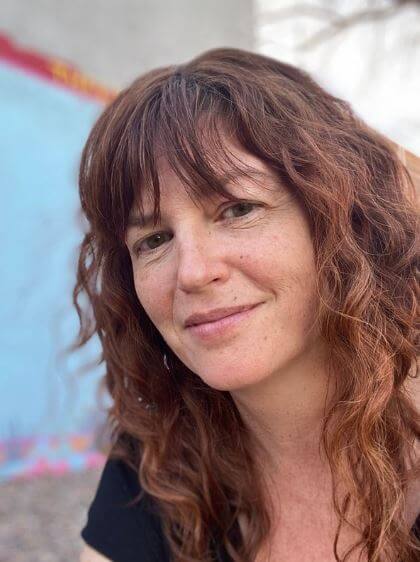 Juliane Taylor Shore, LMFT, LPC, SEP, is a therapist, author, and teacher who is creating spaces where people can move into more self-compassion, self-trust, empowerment, and integrity. She regularly teaches and speaks to people from all around the world and translates new understandings in neurobiology into practices that can support brain change.
She came into the therapy world as a client who argued that feelings didn’t matter only to find herself all these years later having followed neuroscience to the obvious conclusion: we are really feeling and meaning making beings driven by our interdependence. She believes that embracing that reality is key to finding purpose and deep joy.
She is the author of Setting Boundaries that Stick: How Neurobiology Can Help You Rewire Your Brain to Feel Safe, Connected and Empowered. She is an associate Instructor with the Coherence Institute and a core faculty member with Therapy Wisdom.
She lives in Austin, Texas with her husband, Adam, their daughter, Stella, and their rescue pointer mix, Layla and cavapoo, Maggie. When she isn’t thinking about therapy or reading the latest neurobiology research, she can be found watching the British Baking Show while creating art shoes for her dear friends.
In this Podcast Episode: Therapist Integration, Presence, and the Capacity to Stay in the Room
Jules opens by drawing a line between eclectic practice, where a clinician reaches for whichever trained model seems to fit the moment, and integrative practice, where a single theory of mind and theory of change organizes which tool gets used when. Hers is neurobiologically based, and it sits above modality rather than replacing any of them. The brain, in her account, is an open, dynamic, complex system that is most stable and most flexible when its parts stay differentiated and cross-share information, and change requires activation and regulation present at the same time.
The turn in the conversation comes when she names what she thinks training got wrong. Many of us learned to read our clients’ comfort as the measure of our own therapeutic presence, which is a poor gauge when most of the people we serve arrive in a threat state, and which quietly moves us into managing the client rather than attending to ourselves. Her alternative is to build the therapist’s own integration, because that is what produces the capacity to connect, bond, and stay creative when a session gets hard.
Curt and Katie work through this live, including an experiential practice Jules calls color shifting, and press her on what happens when a clinician tries to hold compassion for a client they genuinely find difficult. The conversation also covers the neurobiological difference between empathy and compassion, the four relationships Jules abbreviates as PONS, why presence and skill have to be trained in the same state, and the grief this job asks therapists to hold and rarely names out loud.
Key Takeaways for Therapists: Integration, Not Knowing, and Therapeutic Presence
“I think we got taught to manage the relationship with them, instead of attuning to the relationship with us, with the role of power we hold in the room, with how healing feels, with not knowing, which is a huge part of therapy.”
— Juliane Taylor Shore, LMFT, LPC, SEP
- Integrative is not the same as eclectic. Eclectic practice pulls tools from many trainings based on instinct or client preference. Integrative practice runs those same tools through one coherent theory of mind and theory of change, which is what tells you which tool belongs in this moment. Jules is trained in many models and is emphatic that she values all of them.
- Integration means differentiated and cross-sharing. An open, dynamic, complex system is most stable and most flexible when its internal systems stay distinct from one another and share information across. Integration is not merging or smoothing out, and the brain moves toward it on its own when conditions allow.
- Change requires activation and regulation together. Too much regulation and the brain conserves and stays the same. Too much activation and it moves into defense. Both have to be present at once, which is also why experiencing something in session does what talking about it cannot.
- Client comfort is a poor measure of your effectiveness. If most of your clients arrive in threat state, their felt safety is not a reliable signal that you are showing up well. Jules names the expectation that we control how a client feels as closer to a psychological boundary violation than a clinical standard.
- Your own integration is what creates capacity. Referencing research on therapist self-doubt and self-compassion, Jules argues that clinicians holding accurate humility alongside real kindness toward themselves have more room for connection, bonding, and creativity, and that this is what shows up in client outcomes.
- Compassion is what keeps empathy survivable. In empathy the lower brain mimics the other person’s state, which is metabolically expensive and eventually pushes a clinician toward distancing or managing the client. Adding compassion toward yourself and toward them introduces a settling response. Jules describes this as a combination move, not a replacement for empathy.
- Power with is the position that lets you stay. We hold an up-power role either way. Power over pulls us toward getting the client to change; power under pulls us toward helplessness and fear of judgment. Clinicians who cannot access power with tend to flip between the two.
- Presence and skill have to be trained in the same state. Taught separately, they get filed separately, and you end up either using a skill and losing your presence or being present and unable to recall what might help.
“I call it PONS – P, O, N, S: Power, Of coarseness, Not knowing and Self. So I mix those four relationships: my relationship with power, my relationship with “of courseness,” my relationship with not knowing, and my relationship with myself. And I mixed all of those to help me show up easier in the room and burn out way less.”
— Juliane Taylor Shore, LMFT, LPC, SEP
PONS: The Four Relationships That Build Capacity
Rather than a technique to deploy when a session gets hard, Jules describes four ongoing relationships she mixes together so she can show up more easily and stay in her seat longer. She abbreviates them as PONS.
- Power. Separating the up-power role you actually hold from the emotional learnings you carry about power, so you can occupy authority with power-with thinking rather than sliding into power over or power under.
- Of-courseness. The working assumption that there is no way this client could be doing anything other than what they are doing, because they are doing it. Jules describes this coherence stance as the thing that lets her relax considerably.
- Not knowing. Treating uncertainty about why a client is doing something as accurate rather than as a deficiency, and letting the job become helping them discover it.
- Self. Your relationship with yourself in the room, including how you talk to yourself while making sense of a session that did not go the way you hoped.
She also walks Curt through color shifting, a short practice for locating felt compassion rather than the intellectual version of it. Curt tries it live, finds it holds easily for his daughter and for himself, then watches it collapse in about half a second when he pictures a client he is currently struggling with. Her response is to couple of-courseness and not knowing to the compassion before returning to the image, which is worth hearing in the episode itself.
Why Presence and Skill Have to Be Trained Together
Jules brings in the salience network, the system that filters what we notice based on what is personally relevant in our history and what we have been paying attention to recently. It is why a weekend training makes every client on Monday look like a candidate for that modality.
Her argument for therapist education is that presence and skill are usually taught in separate containers, and the salience network does not file them together when they are learned apart. She describes being able to use a skill and feel she had lost her presence, or being deeply present and unable to recall what skill might help, until she started training the two at the same time. Trained together, she says, they end up available at your fingertips without much deliberate thought.
Getting there is slow work. When clinicians treat this as a checklist, Jules sees a lot of longing for the job to be faster and easier than it is, which she treats as entirely understandable rather than as a failing. Her alternative is deliberate practice: taking yourself out of the clinical situation and replaying a specific moment when you lost your seat, then wondering what came up about power, coherence, not knowing, and how you were feeling toward yourself.
The Grief This Work Asks You to Hold
Katie raises a topic she and Jules had traded emails about before recording, and it is the clearest statement of what the job actually demands. Jules says she never knew going in how much grief she was going to have to be with.
She names several kinds. The grief of bearing witness to things that are genuinely unchangeable, where the work is sharing a nervous system so the client does not hold it alone. The grief of seeing what is possible for someone who is not there yet. The grief of seeing that same gap in yourself, knowing your skills are still growing while people need you now. And the grief that arrives with learning something new, when you look back at years of clients who would have benefited if you had known it sooner.
Katie adds her own: not being able to make everything okay, and the pull toward rescuing when a client is in a power-under position. Both of them land in the same place. Sitting with the grief, rather than activating to avoid it, is what makes it possible to stay present and stay in the facilitator role.
Jules also names grief avoidance as a cultural inheritance she has been breathing since birth, and describes the relief clients often feel when a therapist is willing to say plainly that a situation is terrible and nothing happening in this room right now is going to change it.
What Capacity Produces
Asked what changes when clinicians actually take this on, Jules reports two things. Therapists tell her they did not know the work could be this fun, that they feel better at the end of most days, and that the work is as healing for them as it is for the people they serve. They describe feeling more creative, more themselves, and more skilled.
On the client side, she hears people saying they trust themselves more and find themselves resilient in situations where they were not resilient before, sometimes concluding they are done with therapy. For those who continue, she describes the work moving out of the day-to-day and toward questions of purpose and meaning.
Resources on Integration, Therapeutic Presence, and Neurobiology in Therapy
We’ve pulled together resources mentioned in this episode and put together some handy-dandy links. Please note that some of the links below may be affiliate links, so if you purchase after clicking below, we may get a little bit of cash in our pockets. We thank you in advance!
Juliane Taylor Shore
- Website, trainings, and consultation groups: julianetaylorshore.com
- Book: Setting Boundaries That Stick: How Neurobiology Can Help You Rewire Your Brain to Feel Safe, Connected, and Empowered (New Harbinger)
- The STAIR Method, Jules’s brain-based therapeutic approach
Research and Concepts Discussed
- Nissen-Lie, H. A., Rønnestad, M. H., Høglend, P. A., Havik, O. E., Solbakken, O. A., Stiles, T. C., & Monsen, J. T. (2017). Love Yourself as a Person, Doubt Yourself as a Therapist? Clinical Psychology & Psychotherapy, 24(1), 48–60.
- Tania Singer and colleagues, Max Planck Institute for Human Cognitive and Brain Sciences, on the neural distinction between empathy and compassion and the case for naming the problem empathic distress rather than compassion fatigue
- Open, dynamic, complex systems, differentiation, and brain integration
- Activation and regulation as paired conditions for change
- Power over, power under, and power with
- Of-courseness, not knowing, and deliberate practice
- The salience network
- Somatic Experiencing, EMDR, IFS, IFIO, Relational Life Therapy, and the Developmental Model (Ellyn Bader), among the models Jules is trained in
Curt and Katie
Relevant Episodes of MTSG Podcast
- The Clinical Depth Principle: Why Therapy Cannot Be Reduced to Tools, Hacks, and Sound Bites
- The Person of the Therapist: An Interview with Dr. Harry Aponte
- Which Theoretical Orientation Should You Choose?
- What is Our Fascination with Anything Vaguely Neuroscience?
- Reigniting Therapy, An Interview with Dr. Daryl Chow
- How Do Therapists Develop?
- Therapists Are Not Robots: How We Can Show Humanity in the Room
- Is This My Stuff? How therapists can sort through countertransference: An Interview with Dr. Amy Meyers, LCSW
- You Can’t Trust Your Gut
- Somatic Therapy, Nervous System Regulation, and Expanding Capacity for Rest: An Interview with Linda Thai
- The Balance Between Boundaries and Humanity, An Interview with Jamie Marich, Ph.D.
- Compassion Fatigue, An Interview with Jennifer Blough, LPC
- Choosing Yourself as a Therapist: Strategies to address burnout, compassion fatigue and vicarious trauma, An Interview with Laura Reagan, LCSW-C
- Managing Vicarious Trauma: An Interview with Laura Reagan, LCSW-C
- What the Grief Just Happened? An Interview with Sonya Lott, Ph.D.
- What Can Therapists Do When Clients Don’t Get Better?
Meet the Hosts: Curt Widhalm & Katie Vernoy
 Curt Widhalm, LMFT
Curt Widhalm is in private practice in the Los Angeles area. He is the cofounder of the Therapy Reimagined conference, an Adjunct Professor at Pepperdine University and CSUN, a former Subject Matter Expert for the California Board of Behavioral Sciences, former CFO of the California Association of Marriage and Family Therapists, and a loving husband and father. He is 1/2 great person, 1/2 provocateur, and 1/2 geek, in that order. He dabbles in the dark art of making “dad jokes” and usually has a half-empty cup of coffee somewhere nearby. Learn more at: http://www.curtwidhalm.com
 Katie Vernoy, LMFT
Katie Vernoy is a Licensed Marriage and Family Therapist, coach, and consultant supporting leaders, visionaries, executives, and helping professionals to create sustainable careers. Katie, with Curt, has developed workshops and a conference, Therapy Reimagined, to support therapists navigating through the modern challenges of this profession. Katie is also a former President of the California Association of Marriage and Family Therapists. In her spare time, Katie is secretly siphoning off Curt’s youthful energy, so that she can take over the world. Learn more at: http://www.katievernoy.com
A Quick Note:
Our opinions are our own. We are only speaking for ourselves – except when we speak for each other, or over each other. We’re working on it.
Our guests are also only speaking for themselves and have their own opinions. We aren’t trying to take their voice, and no one speaks for us either. Mostly because they don’t want to, but hey.
Join the Modern Therapist Community:
Podcast Homepage | Therapy Reimagined Homepage
Facebook | Facebook Group | Instagram | YouTube | LinkedIn | Substack
Consultation services with Curt Widhalm or Katie Vernoy:
Connect with the Modern Therapist Community:
Our Facebook Group – The Modern Therapists Group
Modern Therapist’s Survival Guide Creative Credits:
Voice Over by DW McCann https://www.facebook.com/McCannDW
Music by Crystal Grooms Mangano https://groomsymusic.com
Transcript for this episode of the Modern Therapist’s Survival Guide podcast (Autogenerated):
Transcripts do not include advertisements just a reference to the advertising break (as such timing does not account for advertisements)
… 0:00
(Opening Advertisement)
Announcer 0:00
You’re listening to the Modern Therapist Survival Guide, where therapists live, breathe, and practice as human beings. To support you as a whole person and a therapist, here are your hosts, Curt Widhalm and Katie Vernoy.
Curt Widhalm 0:16
Welcome back, Modern Therapists. This is the Modern Therapist Survival Guide. I’m Curt Widhalm with Katie Vernoy and this is the podcast for therapists about the things that go on in our profession, the things that we do as therapists to get along with our clients. And let’s be honest for a second: we love to feel like we have it all figured out. We collect modalities like they’re Pokemon cards, like they just try to get them, get them all. We study neurobiology. We secretly hope that our clients don’t notice those moments where we’re sitting there thinking, “I have absolutely no idea what to do next, but I’m nodding with profound empathy.” And even though we’re taught to be the expert in the room and trying to carry all that, our own nervous systems, our own grief, all of that-it’s a fast track to burnout. And we are joined today to figure out how to put all of this together even better. We’re joined today by Juliane Taylor Shore, and thank you so much for joining us in being able to put this all together.
Juliane Taylor Shore 1:19
Oh, thanks for having me. I’m so glad to be here.
Katie Vernoy 1:22
I am so excited for this conversation. I have to admit, I am in your stair training and loving all of it. I’ve also had a couple other ones that I’ve looked at, and everyone has all of these great nuggets that I’ve used that have really helped my clients and me. So I will stop gushing, but I just wanted people to know I do I do know your work somewhat, and so I want to just have a great conversation highlighting that. But before we jump in, I want you to to want to ask you the question we ask all our guests, which is, who are you, and what are you putting out into the world?
Juliane Taylor Shore 1:58
Oh, I am Jules. I am a therapist, and I’m a teacher, and I’m putting out into the world ways to work with our brains to make loving each other easier and loving ourselves easier.
Katie Vernoy 2:15
I love that.
Juliane Taylor Shore 2:16
Yeah. Well, you know, a lot of times I think we’re taught things that work against how our brains naturally flow. So working with our brains makes it a lot easier to show up in ways that we can be creative and super kind.
Curt Widhalm 2:32
So to help frame the discussion today, I know over the course of my career there have been a lot of people who first described how they work as eclectic, I pull from a lot of different theories, and then I think that that got kind of passe and kind of overused, and then a lot of people started saying, “I’m integrative,” and I don’t know that they always mean that in the same way, or if it’s kind of the same way that it was kind of before, where it was just an excuse to pull from whatever seems to work in the moment. So, maybe to help frame the discussion here a little bit today, you talk about integrative and experiential therapies. So, can you give us your working definition of this?
Juliane Taylor Shore 3:15
Totally, I love that we’re starting here, and like lots of us, I also am trained in lots of models, EMDR and IFS and somatic experiencing and a bunch of couples models, Ellen Bader and relational life therapy and IFIO and and and. And I think of integrative therapy as a little bit different than eclectic therapy. So eclectic, I think, yeah, we we are trained in bunches of models, and we’re kind of using our gut, or maybe what we think our client might like, as as ways to figure out how to what what different models should I use that I’m trained in in the room right now. And I think of integrative therapy a little differently than that. That integrative therapy is a single theory of change, theory of mind that then supports how we are choosing which tools from which models. So I use all the different models I’m trained in, and I’m an integrative therapist, meaning I have a theory of mind and a theory of change. For me, that’s neurobiologically based, and so this is a way of understanding. Oh, how does how does the brain change, and can I utilize that knowledge to help me organize which tools I should be using when in the room, and there are lots of different kinds of integrative methods out there, and mine happens to be a neurobiologically based one.
Katie Vernoy 4:53
So I know that you have hours that you talk about with this. So this I’m asking for a very high level…
Juliane Taylor Shore 4:59
Yeah.
Katie Vernoy 4:59
…answer here, but what is your theory of change and your theory of mind, so that we can also ground ourselves there?
Juliane Taylor Shore 5:07
Right, totally. So, oh, I’m about to throw some big vocabulary out for us. Brains are an open, dynamic, complex system. So, think complexity theory, and then under that umbrella, there’s a bunch of different types of complex dynamic models. Open dynamic complex systems is one of those theoretical orientations towards oh, how do systems work? Now, an open dynamic complex system takes in information from the outside and takes in information from the inside, and we have influence on the outside of us, and we are influenced by the outside of us, and we have influence on the inside of us, and we are influenced by the inside of us. So that gets complicated really fast. So when we think about this, we go, “Oh, okay. So what does health mean when we’re talking about an open dynamic complex system? So, ant hills, beehives, clouds, our brains-all of these are open dynamic complex systems, and an open dynamic complex system is most stable and most flexible when it’s integrated. All that means is that we keep all the little systems inside us differentiated from each other, and they cross-share information. So when I say theory of mind, what I mean is I believe a brain is an open dynamic complex system, and will move towards more integration when possible. Theory of change: Ooh, how do brains change? There’s a mix of different things about how brains change, but one simple way to understand it is that we have to have both activation and regulation simultaneously present. Too much regulation and our brains save all our calories and don’t change at all. Too much activation and we move into defense. So we have to have a balance of both of them at the same time. That’s that’s a very high level basic way of understanding it. How’s that landing, Katie?
Katie Vernoy 7:18
Oh well, I mean I’ve heard the hours of conversation about it, so I want. I’m actually curious how Curt’s how it’s landing with Curt.
Juliane Taylor Shore 7:24
Yeah.
Curt Widhalm 7:26
I am sitting here and I’m thinking, how would I try to explain this to a client in a five minute like initial consultation call. And…
Juliane Taylor Shore 7:34
Yeah.
Curt Widhalm 7:35
I’m trying to maybe put this into the terms of there’s internal regulation and there’s external regulation of how we fit into the world around us, and those two things need to kind of work towards getting into sync.
Juliane Taylor Shore 7:50
Yeah, and you know what I would add into there. So if I’m talking to a client about it, I say, “Well, I’ll tell you what’s going to make therapy weird and hard. In order for your lower brain to change, we’re going to actually have to experience what’s happening, and we might even need to experience if stuff’s hard in your life the hard stuff that’s happening. So we need that activation of, and we need to greet it in a different way than you’re greeting it at home, and I’m going to greet it in a different way, and you’re going to greet it in a different way. And in that way, we’re hoping that these neural networks in the very lower part of your brain start learning brand new stuff. But just talking about it is going to be really hard to make that change happen in the networks in the lower brain.
Curt Widhalm 8:44
So when you’re seeing therapists practice, when you’re seeing them get ready to kind of implement stuff with clients, as we’re trying to get all of these things put together, I’m not looking to shame anybody, but if there’s a collective wisdom here to maybe prevent some people from making these same mistakes. What do you see therapists getting wrong when they’re preparing to do this kind of work with clients?
Juliane Taylor Shore 9:10
Oh gosh, well I’m I’m I’m with you in the no shame zone. I think we’re taught to do something really weird. I think we’re taught to monitor how our clients are feeling and whether they’re feeling safe as a main guide of whether or not we’re showing up well. As a trauma therapist, that’s actually a really hard gage. Most of my clients are in threat state. Them feeling safe is actually not something that’s likely to happen right away, so it’s actually not a good gage for me to know whether or not I’m available for connection and bonding, whether or not I’m available to be with you and and and support you in your voicebeing an empowered part of our space. It’s really hard for me to say, “Oh, I don’t know. Were you all taught this?” I was. I was taught that therapeutic presence means my clients feel safety.
Curt Widhalm 10:16
I’ve heard versions of this. Yeah.
Juliane Taylor Shore 10:19
That’s really weird. How am I supposed to control what my client feels?
Katie Vernoy 10:24
That’s fair.
Juliane Taylor Shore 10:26
It actually feels like a little bit of a psychological boundary violation. I think I got set up when I was in grad school to be a little bit manipulative in a way that doesn’t align for me from a value system perspective. I’d much rather meet you where you are, and I’d love to teach you to meet you where you are. And if I’m trying to get you to change, I’m secretly telling you something’s not okay with how you’re doing. That’s how it feels to me. And so I think we got taught to manage the relationship with them, instead of attuning to the relationship with us, with the role of power we hold in the room, with how healing feels, with not knowing, which is a huge part of therapy. We actually don’t know what’s happening all the time. And so I’d rather us have deep relationships. This is how I I teach people to prevent burnout is we can have deep relationships with ourselves and with our role in the room and with not knowing and with coherence, I call it “of coarseness.” Like, of course, this thing is happening. It’s the only thing that could be happening because it’s happening right now, and that lets me relax so much. Yeah, Curt, what’s happening for you? I’m watching. I’m watching your face try to make sense of what I’m saying.
Curt Widhalm 12:02
I’m thinking about all of the sessions, I work a lot with teenagers, so I’m thinking of all of the sessions where I have a traumatized teenager. I have parents who are both wanting therapy to happen as fast as possible, but also telling their teenager, I don’t want you to feel any discomfort at all. I I want to clear the world for you. And the other parent will say, I want to clear the world for you. And then I turn to them and I say, I want you to feel the right amount of uncomfortable. And just being able to kind of say that you know being uncomfortable is part of change.
Juliane Taylor Shore 12:43
Yes, this is the activation I’m talking about. I think you and I are really aligned on this, and I think that a lot of times we actually did get the message that our clients are supposed to feel comfortable, or like a therapy session goes well when someone feels really settled and calm at the end of the session, and they feel like, oh yeah, we’ve done great work, and now I’m doing great. When a lot of my really good sessions, we’ve let we’ve even left inside that discomfort. But it was an essential part of the growth, and I think being comfortable with that and not knowing necessarily where it’s going to go, like how can how can we get more comfy with not knowing in our jobs?
… 13:26
(Advertisement Break)
Katie Vernoy 13:27
Well, I think that is is a dynamic that maybe it’s taught in grad school, but I feel like it’s also just inherently human that we want to be comfortable, and so even if we are taught that okay, clients need to be uncomfortable, we can end sessions before we’ve resolved or or gotten them into a more integrated space, it doesn’t feel good.
Juliane Taylor Shore 13:48
Oh no, it feels really hard, right? Yeah. And how do we treat ourselves when that hard happens? I’m regularly asking therapists, how are you talking to yourself as you make sense of this session? Did you all ever hear about the meta-analysis that was put out in a study called “Doubt Yourself as a Therapist, Love Yourself as a Person” I will…
Katie Vernoy 14:21
I do not know that research. Yeah, tell us all about it. This is a research. This
Juliane Taylor Shore 14:25
This is a research. This is a piece of research came out in 2012, and I am dyslexic, y’all. So please forgive me if I flipped the title. There is it “Love Yourself as a Person, Doubt Yourself as a Therapist, or vice versa? Now I can’t remember, but it’s one of those two. So here’s the premise: is the best outcomes over a bunch of different modalities came when a clinician had a lot of doubt about whether or not their interventions were successful. That they held quite a lot of not knowing about how effective they were being and were deeply kind and self-compassionate. And what was interesting about this is that their clients’ outcomes were so significantly better if that combination was true. I think what’s happening there is that there’s so much regulation. I bet that that therapist has a pretty high level of brain integration, where they have a lot of capacity for connection and bonding and creativity because they’re holding accurate humility. Of course, we don’t know if this intervention is, what’s going to happen. I’m going to do this intervention, and maybe I’m hoping for a particular outcome, but it’s just as likely that five other things might happen. So there’s an accurate humility that’s settled and okay, and there’s a lot of compassion on board. There’s a lot of kindness, and I don’t know if you all know this, but neurologically speaking, kindness soothes. It sends GABA out in your subcortical brain, so that means it it sends neurochemicals go everything’s all right out to your lower brain, which is not the same as empathy. Empathy lights your brain on fire.
Curt Widhalm 16:24
Can you say more about empathy lighting your brain on fire?
Juliane Taylor Shore 16:27
Yeah. So when we’re in an empathy space, I’m not. I’m not anti empathy at all, y’all. I just have a combo move instead of instead of only sitting in empathy. When we’re in empathy, we’re in a feeling with, and what’s happening is your lower brain is attempting to mimic what’s happening in the other person’s lower brain, so you can feel something similar to them. So if you have a client with high anxiety and you’re in empathy with that anxiety, what’s going on is your lower brain is mimicking that fear state. If you have a client who’s in deep, deep depression, really deep sadness, or deep anger that’s suppressed, and so it shows up as depression, which can happen, and then my brain goes into empathy. My lower circuits are attempting to mimic what’s happening over there. Best guess, right? And some of us have a lot of resonance, and so we can really do that really well. Some of us have a more mild form of resonance, and so it’s it feels like a guessing game. I’m I’m in that second category. And if I just leave it there in empathy, ooh, the excitatory neurochemicals that are happening in my lower brain are huge. It’s a big dump, and it just keeps going. It’s why empathy fatigue is how we ought to be naming it, rather than compassion fatigue. What ultimately is going to happen is my brain is going to start searching for the source of why I’m in this much distress, and the source is empathy. I’m going to start pushing back from the client, or I’m going to start trying to manage the client, get them to change in order for me to feel more okay. When we add compassion to that empathy, so of course I feel the empathy with my people, and then I go, “Oh wow, Jules, it’s hard to feel this much. I add a little self compassion, and oh, I have compassion moving towards them. Oh my gosh, what a hard space to be in! Now I added GABA, and that inhibitory neurochemical starts calming everything down, and my brain will not light on fire. So this leans into the research of Tanya Singer out of Germany, she found out that actually compassion people didn’t get fatigued at it at all. It was only when they were in empathy.
Katie Vernoy 18:51
That’s so interesting.
Juliane Taylor Shore 18:52
Right? Yeah, yeah, Katie, what were you thinking?
Katie Vernoy 18:55
Well, just it’s it’s something where I’m I’m just reflecting on some sessions recently where I’ve been working very hard to sit more in these emotions with my clients.
Juliane Taylor Shore 19:06
Great, and that experiential work.
Katie Vernoy 19:08
Yes, yes, and to dig deeper and to to focus in and to try to get into that the the lower brain states and and pictures and all the things and you know I won’t I won’t go too deep into it because I know that’s that’s some of the foundational stuff in your training that’s amazing, and at the end of the session, I am noticing that when I when I’m able to do the compassion or the internal boundaries that you talk about the pictures of you know kind of…
Juliane Taylor Shore 19:35
The psychological boundaries, like to keep separated from our clients.
Katie Vernoy 19:40
That it often feels less. There’s less weight. There’s less fatigue.
Juliane Taylor Shore 19:44
Yeah.
Katie Vernoy 19:44
And when I don’t, when it’s a client that I’ve been with in a longer standing relationship, I I feel maybe more of a vested interest in their outcomes, and it’s it’s something where the work has had a lot of twists and turns, and the relationship is strong, many many years long. There are times when I feel like I’ve been kind of hit by a bus after the session when they’ve had a really hard, whether it’s a hard session or just they’re in something that’s very hard. And and I think in looking at building that that, I hate the word armor, but that’s what’s coming to me right now. But in building that, the capacity to sit with some of these harder things. How do you recognize therapists think about it? Because it’s it’s, I can say okay. I can have compassion for myself. I can have compassion for my client. But it feels like some of those things. If we don’t, if we just check the box, it doesn’t necessarily get to the root of what we’re actually doing in the room.
Juliane Taylor Shore 20:42
You mean like checking the box of trying to have like intellectual compassion?
Katie Vernoy 20:46
Yes.
Juliane Taylor Shore 20:47
Versus a felt sense of compassion. Yeah, yeah, yeah. I I wonder if it’s if it’s helpful even for me to go a little experiential here with everyone who’s listening, and feel free, of course, listeners, to be gentle with yourselves and see if this is a good moment for you to go. I think there’s such a different felt sense between thinking that thought, “Oh, I feel for you, and actually experiencing loving energy, loving energy towards, and that’s where the GABA is going to come in. So sometimes when I teach this, I teach it with a technique I like to call color shifting. So think about it like this: think about somebody in your life who’s easy to love. Anybody, could be a child, could be a best friend, could be a partner, could be a niece or a nephew, an animal, a dog, a cat, right? Think about somebody in your life who’s easy to love, and then imagine them having a hard time, and just imagine, oh, what does that feel like in your body? And then just notice if that feeling had a color, what color would it be? Some people will have one color. Some people will have a rainbow of colors or a mix of a couple different colors. Whatever’s coming to you is right. Then we can take that into one of those cases, Katie, and we could go. Okay, can that color move towards Katie the Therapist? And can that color move towards this client? Can it equally cover both of them, and then what happens inside when we end that session? And by the way, Katie, we have precedents here. So if you’ve been sitting with empathy for a really long time with that person that you’ve taken all those twists and turns with, everything in your brain is trying to do it the way you’ve always done it, so it’s super hard to add. I just want everybody to know it’s super hard to add. I’m curious, Curt, did you try that out with me?
Curt Widhalm 23:11
I did. Yeah.
Juliane Taylor Shore 23:12
Yeah. What happened for you?
Curt Widhalm 23:14
So I started with my intentionality with my daughter, and lots of warm, loving colors, and then as you’re describing moving it towards myself in session, I’m like, check, got that, feel feels good. I can love myself, but I imagine myself with one of the clients that I’m having some of the most difficulty with, and…
Juliane Taylor Shore 23:40
Well, yeah.
Curt Widhalm 23:40
…that that color lasted for approximately about half of a second.
Juliane Taylor Shore 23:45
Half of a second, great. Good tracking Curt, are you all seeing what he’s doing, paying attention to these moves? Great work. Go ahead.
Curt Widhalm 23:54
And I imagine you know, kind of this deep caring and understanding for how this particular client shows up and where even some of their challenges and our dynamic ends up coming up, and it all vanished when I imagine this client just went right back into some of the difficulties that they end up showing up. So.
Juliane Taylor Shore 24:21
Of course,
Curt Widhalm 24:21
I I’m picturing myself doing this, you know, very easily, and then just kind of the moment that some of these difficulties arise in session. How do you keep coming back to this while….
Juliane Taylor Shore 24:32
Totally.
Curt Widhalm 24:33
…paying attention to a client and…
Juliane Taylor Shore 24:35
Right.
Curt Widhalm 24:35
…not just staying internally focused the whole time?
Juliane Taylor Shore 24:38
Totally. Here’s what I do: is I couple what I like to call “of coarseness” together with the compassion. So what I tell myself in that moment is that there is absolutely no way for this client to do anything other than what they are doing, and I believe now I’m going to weave in my not knowing. I believe I actually do not understand why, and I actually believe they don’t understand why. And now my only job is going to be to help them discover why this move makes so much sense right now, and then I move back into the color. So I wonder, Curt, if you think about that with this, imagine this client, and go, “There’s no way they can do anything other than this thing,” and then move into mystery. I bet neither one of us actually understand why this is. My bet, though, this client could discover it and then move the color towards them again. What happens this time?
Curt Widhalm 25:53
I really like this feeling that I’m getting that is not rising to responding to the client, but actually being able to sit with them, and then my mind is also expanding to couples where this is listed by one partner or families where it’s one particular member of the family, or there’s multiple family members doing it in their own different directions. That…
Juliane Taylor Shore 26:20
Right, and they’re all pulling on you in all the different directions. Right, exactly. And then, as a as a way of really holding it, and over time, I’ll think about what my role is inside the room. So I’m in an an up power role, but I can be inside that with power with thinking, so I want us to separate out. Oh, yeah, I have an up power role, just like a parent would have an up power role and a child would have a down power role. We as clinicians have up power role, and our clients are in a down power role. Now, we also have separate that role power from emotional learnings about power. We live in a world where there’s a lot of power over thinking, and a lot of power under thinking, and not so much power with. That part’s a little harder for lots of people, like we don’t get exposed to as much power with thinking. So when I when I separate those out, what I mean is there’s an emotional knowing in power with thinking that power is infinite and increased when shared. So if I’m holding up power roll with power with thinking. Oh, I can help you watch what’s going on, but I don’t have to fix what’s going on because I don’t have control over you. I believe you have control over you. Let me help you discover that. Versus power overthinking, I have to get you to change, or power under thinking. Oh no, there’s nothing I can do. I’m totally helpless.
… 28:05
(Advertisement Break)
Katie Vernoy 28:08
Or you’re judging me, or you’re going to fire me, or…
Juliane Taylor Shore 28:10
Right. And for most of us, power over feels a little bit manipulative and bad, right? And and power under can burn us out really fast because we might go helplessness or feel a lot of judgment, and so a lot of times what I see is clinicians flipping back and forth. I’ll go power over, then power under, and power over, and then power under, in the ways we’re trying to help our clients, just because we don’t know how to do power with, or we can hold that separation of you have a role in this room and I also have a role in this room and inside of my role I have power and inside of your role you also have power. So I mix I call it PONS – P, O, N, S: Power, Of coarseness, Not knowing and Self. So I mix those four relationships: my relationship with power, my relationship with “of courseness,” my relationship with not knowing, and my relationship with myself. And I mixed all of those to help me show up easier in the room and burn out way less.
Katie Vernoy 29:21
What are the biggest differences you see when folks actually embrace PONS and and and show up in this different way?
Juliane Taylor Shore 29:29
Yeah, I can tell you the feedback like directly just from what people have been saying, and then I’ll also talk about what’s happening with clients. What clinicians are saying for people who have embraced it is: I did not know my work could be this fun. I didn’t know I could feel better at the end of most of my days doing this work. I feel like my work is as healing for me as it is for the people I’m serving now. When people are embracing it, I’m finding they feel more creative and like they can add themselves in to all these really good skills they already have. See, I love all the models. I’m so glad I got trained in all the models. I think they’re all really, really good, and there are great skills from all of them. I think that your humanity and your creativity is as much a gift to the people who you serve as any model you will ever train in, and I want us to feel both free to bring that in and clear about how to hold that with a lot of responsibility in our up power role, and so people are talking about feeling more creative and more themselves, and more skilled and less burnt out, and what clients are saying about it, well, a lot of clinicians I work with keep graduating clients a little faster because they’re they’re getting better, and so that feels good. I mean, that’s challenging because we then we have to figure out what do we do marketing wise. But okay people are like, “oh wow, I trust myself more, and I’m resilient in all these different scenarios where I wasn’t resilient before. I actually think I’m done with therapy. Thank you.” So that’s great. And then the other piece that keeps coming up is their therapy clients coming back and saying, “Oh, if we can do that, what else could we do? And so the work is getting deeper and more existential, I think. Ultimately, like it leads out of the day to day. Oh, I’m I’m having a problem with my boss, or I wish I was getting along with my partner, or I wish I felt prouder in parenting my kid. Right? We’ve solved those problems. Then moves into what do I really want for this one wild and precious life, and the discussions move towards purpose and meaning. So I hear a lot about that as well.
Curt Widhalm 32:14
With the PONS, it seems like this could be something that people who are, or maybe dipping their toes into it, can try to bypass into this. This okay checklist, you know, power checklists. Of course, you know, there’s, you know,
Juliane Taylor Shore 32:32
Sure.
Curt Widhalm 32:33
What is it? What is it when you see kind of the people hesitating to fully embrace this. How does that end up looking in their work?
Juliane Taylor Shore 32:43
Yeah, I think that a lot of times we can do it surface if we don’t practice. So what I love to do is something called deliberate practice, and that’s where we we slow the work way down, take ourselves out of the clinical situation, and replay a moment where we can actually slow down and wonder, like you did, Curt. Actually, when we were doing that that work, oh, the feelings are shifting as I’m slowing myself down and imagining this client. What I find is that once people slow down and do that, where we slow down, think of that particular client, think of exactly the kind of thing they say when you lose your seat, right? When you’re when you’re out of your chair for a minute, and wonder, oh, did you have something funny, some emotional, old emotional knowing about power come up? And we can slow down and just wonder about that. Oh, is there anything about coherence? Is there anything about not knowing? Is it scary not to know what to do in this moment, or are you having a really integrated brain response to not knowing what to do in this moment? What’s really feeling towards yourself? Is there a teeny tiny judgment voice coming up. So once people really slow themselves down, I think they can utilize this in in ways that it starts to become an integrative part of how you see the job. And when people are in more of a surfacy way with it, I see a lot of longing of I want it to work faster, or be easier than it really is, which is so understandable. Our job is hard enough as it is, y’all. Of course, we want it to be easier and faster. And if I had a way, I would give it to you, and I don’t. I think it actually takes a little bit of slow and a little bit of wondering about what’s stirring for you. So in my trainings, I like to actually have people slow down and and practice where we could. Oh, here’s the skill I want to use in this kind of moment, and here’s what’s actually happening inside me while I try to use it. I don’t know. Do you all know what the salience neural network is?
Katie Vernoy 35:12
Well, I do because I’ve listened to you talk about it.
Curt Widhalm 35:16
For for maybe the one or two audience members who are out there who haven’t heard of this.
Juliane Taylor Shore 35:20
Right? Definitely.
Curt Widhalm 35:22
Including Curt, including Curt.
Juliane Taylor Shore 35:24
Yeah. So salience neural network is a network that automatically filters what we pay attention to. So if you have ever searched for a new car, and you and you, yeah, right. And you decided, oh, I’m going to buy a Honda. I’m going to buy a Honda CRV. And then all of a sudden, you notice Honda CRVs are everywhere. That was your salience neural network going. Oh, are we paying attention to this brand of car now? I will show you all of them. Right. That’s your salience neural network. So, what does it do usually to help you decide what to pay attention to? Two factors. One is what is personally associated in your history to this moment, like what’s relevant personally for you, and what have you been paying attention to recently. That’s why if you ever like go to a training over a weekend, like oh, I went to a brain spotting training and then I went back to work on Monday, and I swear all my clients need brain spotting.
Katie Vernoy 36:31
Yeah.
Juliane Taylor Shore 36:31
That was your salience neural network going: Oh, are we paying attention to this technique now? Cool. I’ll show you all the different ways this could be used in this moment. So, if we can train our salience neural networks to know that you weave a ton of self-awareness and welcoming of the job together with your skills when you are in this seat and doing this work, then your salience neural network will not do its default mode and pull from your history and whatever you trained in last. It will pull from oh, what skills relevant for brain change? What is how do we weave presence and skill together, and we can do them at the same time? I see a lot of trainings out there talking about presence, and I see a lot of trainees out there talking about skill, but if we train them separately, y’all, they’ll actually enter different states. Our salience neural network will not put them in the same state. I used to not train them together, and you know what happened is I could use a skill and feel like I lost my therapeutic presence, or I could be really present, and I couldn’t remember what skill might be helpful. It wasn’t until I started training them together that they were there at my fingertips. What’s really cool, though, is your salience neural network does it for you. And so, if you can treat, if you can teach that neural network how to treatment plan, then it’s going to be right there at your fingertips without you having to have a lot of thought about it.
… 38:07
(Advertisement Break)
Katie Vernoy 38:07
Before we close up, there’s yeah there’s a a topic that you brought up when we were emailing back and forth a little bit before this interview, and I think it’s really important because the work that you’re describing is more intense. I feel like I’ve been much more emotionally available, which is both amazing, but also more of more of a burden in some ways.
Juliane Taylor Shore 38:29
It’s hard. Yeah.
Katie Vernoy 38:30
And and you brought up the concept of grief, and so maybe you can talk a little bit about the grief that is very part of the role of of being a therapist.
Juliane Taylor Shore 38:41
Yeah, I don’t think we talk nearly enough about this in our jobs. I never knew going in how much grief I was going to have to be with. There are so many different kinds too. So there’s the grief of just bearing witness to really hard stuff that is unchangeable. I have a client who lost someone. I have a client who’s scared because ICE raids are happening in their neighborhood. I have a client who is dealing with a really hard work bullying situation, but leaving the job is untenable. They can’t do it, right? So sometimes we’re bearing witness to really hard, unchangeable things, and sharing that grief with our people, and sharing our nervous systems with them, so that they don’t hold the grief alone. I think that’s sometimes part of what’s happening. I also think there’s that grief of witnessing what you know is possible for them, but they’re not there yet. The gap between where we are and what’s possible. Oh, that one breaks my heart.
Katie Vernoy 39:47
Yeah.
Juliane Taylor Shore 39:48
Or the one where I have that same thing in me, where I see where I am skill wise, and I see what’s possible, and I bear witness to the gap between where I am and where I want to be. And I know, I know, with all the humility, that that I wish I could serve my people better than I can while I’m growing. That one’s so hard.
Katie Vernoy 40:14
Super hard.
Juliane Taylor Shore 40:15
Super hard. And what about where I do learn something new and I have got it, and then I look back for the last 10 years, and I go, “Oh my gosh, that would have helped so many people, and it didn’t because I didn’t know how to do this yet.” There’s that one where I I look at I I have to face the grief of what I haven’t been able to give in order to really learn something deeply. What griefs do you all carry that I’m not even naming yet, as we do this work?
Katie Vernoy 40:50
I think for me, the the grief that has that’s not one of the ones that you’ve already described because I think there’s many of those things, especially I think the last one of the grief of not being where I want to be. But one of the griefs that I think has been really present for me is, and I guess it’s just a iteration on one of the ones that you already described, but the not being able to make everything okay.
Juliane Taylor Shore 41:16
Oh.
Katie Vernoy 41:16
The grief of of my client’s pain or the grief of my clients’ journeys.
Juliane Taylor Shore 41:22
Yeah, yeah. And where do you have power to shift things, and where do you not?
Katie Vernoy 41:29
Oh, for sure. Yeah, I think the sitting in the in the power with scenario sometimes is very very challenging, especially if the client’s in a power under situation, and I I’m coming in as the rescuer, wanting to make everything okay for them. So I have to I have to do a lot of consultation about those cases. But I I feel like when I’m able to sit with the grief of it, it allows me to to sit more in that that space of being present with my clients and in the role more of facilitator, you know. I think there’s there’s so many things we could talk about with PONS, but I think there’s there’s a lot that’s available there. But it does mean it means acknowledging and sitting with the grief versus activating, trying to avoid it.
Juliane Taylor Shore 42:15
Yeah, and I think it’s helpful too to note that we are in a relatively, I’m I’m speaking, I can speak for myself. I’m a American white lady. Was raised in lots of different places around America. So I’m speaking from that Western lens. And I’ve lived in the West Coast, East Coast, South, North. I’ve lived. I’ve lived in a lot of different areas, and they all have their own flavor of grief avoidance. But they all have grief avoidance. So, talking about like as an American, oh my gosh, grief avoidance! I’ve been breathing it since I was born.
Katie Vernoy 42:50
Yeah.
Juliane Taylor Shore 42:50
In a variety of ways, and I think we hold that inside of our jobs of wanting to get away from the grief, and so of course, there’s so many different moves I might make as my own grief enters the room, as their grief enters, might hedge it a little bit, and I won’t even be conscious. I won’t even be conscious of doing it. It’s just what we all got taught to do, right?
Katie Vernoy 43:19
Yeah.
Juliane Taylor Shore 43:19
But there are so many times when there’s been deep relief in the people I work with, and I say, “You’re right. This is terrible, and there’s nothing we are doing in this moment that’s going to change it.” “Oh my God! Thank you for saying that. Nobody will just face this with me.” There’s so there’s so much relief that can come when we face grief together. I I want people to get better. Of course I do. I care about them. I don’t want them to be in pain.
Katie Vernoy 43:51
No.
Curt Widhalm 43:52
This has been a fascinating conversation. You have a book. Where can people find you and your work?
Juliane Taylor Shore 44:00
Oh sure. You can find me at juliannetaylorshore.com. I have a book called Setting Boundaries That Stick that talks about four different types of boundaries and how to work with grief within boundary work, which I think all boundaries have grief in them. If you’re interested in consultation groups or training with me, JulianneTaylorShore.com is a way in, and you’re welcome to come and find me.
Curt Widhalm 44:30
And we will include links to those in our show notes over at mtsgpodcast.com, and make sure that you follow us on our social media. Join our Facebook group, the Modern Therapist group to continue on with this and other conversations. And until next time, I’m Curt Widhalm with Katie Vernoy and Juliane Taylor Shore.
… 44:48
(Advertisement Break)
Announcer 44:50
Thank you for listening to the Modern Therapist Survival Guide. Learn more about who we are and what we do at mtsgpodcast.com. You can also join us on Facebook and Twitter. And please don’t forget to subscribe so you don’t miss any of our episodes.




SPEAK YOUR MIND