

Skill Issue or Systemic Reality? Systems, Platforms, and What Therapists Are Still Responsible For
A payer cuts reimbursement by 12 percent and adds a six page renewal form. A platform runs your credentialing, your marketing, and your client matching, and keeps the client relationship if you leave. You are seeing 35 people a week, your notes are behind, and underneath all of it sits a question nobody trained you to answer: which parts of this belong to the system, and which parts are still yours to carry?
Curt Widhalm, LMFT, and Katie Vernoy, LMFT open a new sprint with two of the principles that hold up this show: systems shape practice, and the profession has to evolve with the world around it. Either one on its own turns into a trap, which is why they keep insisting the two have to be held together.
Nobody wins this argument, and that is most of the point. Curt and Katie work through familiar scenarios, translate some of the marketing language showing up in platform and AI pitches, and make the case that business decisions have been clinical decisions all along.
Click here to scroll to the podcast transcript.Transcript
(Show notes provided in collaboration with Otter.ai and Claude AI.)
In this podcast episode: How Systems Shape Therapy Practice and Where Individual Responsibility Still Lives
Curt and Katie take a higher level look at the systems therapists practice inside: training, licensing, reimbursement, workplace structure, and the venture backed platforms reshaping how clients find care. They test one scenario after another against a single question, is this a skill issue or a systemic reality, and keep landing on both. From there they run a corporate translator on the marketing language aimed at clinicians, follow the fee into the treatment room, and look at the business preparation gap the profession creates and then hands back to each clinician to cover alone.
Key Takeaways for Therapists: Systemic Pressure, Personal Responsibility, and Sustainable Private Practice
“Systems are real and you’re still fully responsible, both at once.”
— Curt Widhalm, LMFT
- Systems shape clinical work whether you name them or not. Training, licensing, reimbursement, and workplace structures show up inside treatment decisions long before anyone notices them.
- Most scenarios are both and. A payer cutting rates and adding paperwork is a systemic reality. What you do next, whether that is negotiating, shifting your payer mix, or restructuring your caseload, belongs to you. Collapsing the two in either direction keeps you stuck.
- There is a ceiling on how much of the system you can absorb. Stepping in where crisis lines are underfunded and access is thin comes from something real and good in you. It also has a limit, and burnout is often what hitting that limit feels like.
- A 40 client caseload will not fix an access problem. When people in your community cannot find care, taking on more of them makes complete sense. It also tends to cost the clients you already have, which puts caseload size squarely in clinical territory.
- Joining a platform can be a reasonable choice, and it is still an opt in. Not everyone has six months to credential on their own or a referral network built over 20 years. The platform still holds the credentialing, the marketing, and the client relationship.
- Responsibility lands on the license holder. Boards do not discipline platforms or investors. When a company’s process points you toward something noncompliant, the consequence arrives at your license.
- Marketing language aimed at therapists deserves a close read. Underneath pitches about working at the top of your license, or letting a platform handle everything so you can focus on what you love, the live question is usually who keeps the revenue and who keeps the client.
- Business decisions are clinical decisions. Your fee, your scheduling, your billing, and your paperwork all reach the client, and each one shapes trust, attunement, and continuity of care.
- The business preparation gap is structural. Grad school is arguably not where that education belongs. That leaves you covering it yourself, on an ongoing basis, and redoing the work every time the conditions change.
“I don’t want to just be fighting for not losing. I want to actually have a profession where people can come in and thrive and enjoy the work and be appropriately compensated and have work life balance and do really good clinical work and really help people.”
— Katie Vernoy, LMFT
Resources for Therapists Navigating Systemic Pressure and Practice Decisions
We’ve pulled together resources mentioned in this episode and put together some handy-dandy links. Please note that some of the links below may be affiliate links, so if you purchase after clicking below, we may get a little bit of cash in our pockets. We thank you in advance!
- Bring your exceptions and arguments to the Modern Therapist Facebook Group
- Key & Peele, “Luther, the Anger Translator”, the reference behind the corporate translator segment
Relevant Episodes of MTSG Podcast
- The Private Practice Pivot: How Therapists Are Adapting to Platforms, Agency Work, and the Changing Therapy Economy
- Is Independent Private Practice Sustainable? Data on Caseloads, Insurance & Income – An Interview with Lindsay Oberleitner, PhD
- Burnout Recovery in a Failing System: ACT, Moral Injury & Reclaiming Agency – An Interview with Shaina Siber, LCSW
- The Business of Therapy: Surviving Economic and Industry Disruptions
- Clinical Versus Business Decisions
- Why Therapists Shouldn’t Be Taught Business in Grad School
- Making Sense of Insurance Billing and Client Referral Services for Therapists
- Should Private Practice Therapists Take Insurance?
- How Do Therapists Get Paid?
- Why YOU Shouldn’t Sell Out to BetterHelp: An Interview with Jeff Guenther, LPC
- The Sky is Falling: How Therapists Can Protect Our Industry, Patient-Centered Care, and Our Businesses, An Interview with Dr. Ajita Robinson
- What Should Not Be Normalized in Our Profession?
- Training Therapists in the Age of AI: Preventing Deskilling and Teaching Clinical Judgment
- The Burnout System
- What It Means to Be a Modern Therapist: The Principles That Guide Our Work
Meet the Hosts: Curt Widhalm & Katie Vernoy
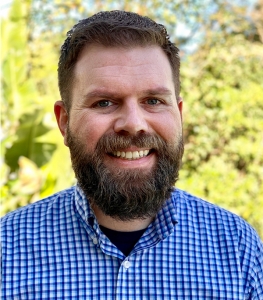 Curt Widhalm, LMFT
Curt Widhalm is in private practice in the Los Angeles area. He is the cofounder of the Therapy Reimagined conference, an Adjunct Professor at Pepperdine University and CSUN, a former Subject Matter Expert for the California Board of Behavioral Sciences, former CFO of the California Association of Marriage and Family Therapists, and a loving husband and father. He is 1/2 great person, 1/2 provocateur, and 1/2 geek, in that order. He dabbles in the dark art of making “dad jokes” and usually has a half-empty cup of coffee somewhere nearby. Learn more at: http://www.curtwidhalm.com
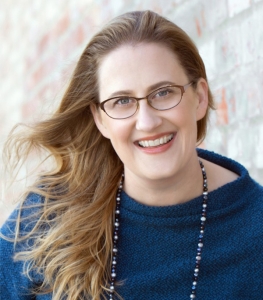 Katie Vernoy, LMFT
Katie Vernoy is a Licensed Marriage and Family Therapist, coach, and consultant supporting leaders, visionaries, executives, and helping professionals to create sustainable careers. Katie, with Curt, has developed workshops and a conference, Therapy Reimagined, to support therapists navigating through the modern challenges of this profession. Katie is also a former President of the California Association of Marriage and Family Therapists. In her spare time, Katie is secretly siphoning off Curt’s youthful energy, so that she can take over the world. Learn more at: http://www.katievernoy.com
A Quick Note:
Our opinions are our own. We are only speaking for ourselves – except when we speak for each other, or over each other. We’re working on it.
Our guests are also only speaking for themselves and have their own opinions. We aren’t trying to take their voice, and no one speaks for us either. Mostly because they don’t want to, but hey.
Join the Modern Therapist Community:
Podcast Homepage | Therapy Reimagined Homepage
Facebook | Facebook Group | Instagram | YouTube | LinkedIn | Substack
Consultation services with Curt Widhalm or Katie Vernoy:
Connect with the Modern Therapist Community:
Our Facebook Group – The Modern Therapists Group
Modern Therapist’s Survival Guide Creative Credits:
Voice Over by DW McCann https://www.facebook.com/McCannDW
Music by Crystal Grooms Mangano https://groomsymusic.com
Transcript for this episode of the Modern Therapist’s Survival Guide podcast (Autogenerated):
Transcripts do not include advertisements just a reference to the advertising break (as such timing does not account for advertisements)
… 0:00
(Opening Advertisement)
Announcer 0:00
You’re listening to the Modern Therapist Survival Guide, where therapists live, breathe, and practice as human beings. To support you as a whole person and a therapist, here are your hosts, Curt Widhalm and Katie Vernoy.
Curt Widhalm 0:15
If an app dictates your fee, your client, and your notes, you don’t own a private practice; you own a shift. Welcome back, modern therapists. This is the Modern Therapist Survival Guide. I’m Curt Widhalm with Katie Vernoy, and this is the podcast for therapists about the ways that we are as professionals, ways that we work, and we’re introducing another sprint in our work here as podcast hosts. Thank you for joining us. This is about how Katie and I go about our our podcast. This sprint is really about how systems shape practice and how the profession must evolve with the world around us. And as we go through this episode, we’re going to talk about these very principles, and we’re stating six firm beliefs. You know, there’s going to be exceptions to them, and if we clarify every edge case, we will probably have a three week long episode. So we’re going to try and keep this kind of timely. Take what fits. Come and argue with us in our Facebook group, the Modern Therapist Group. If you want to dole out those exceptions, but Katie, we can’t operate solely as everything’s just a systemic problem. You know, we we can you know all huddle together in any online space and just complain about the system while the system just continues to run people over, so I want to just lay that out there as as what this episode is because we are getting into our principles.
Katie Vernoy 1:50
Yes.
Curt Widhalm 1:50
Principles that really make this episode and really make our podcast altogether. So I’m going to let you introduce the first one.
Katie Vernoy 2:00
Okay, systems shape practice. We commit to therapists don’t operate in isolation. Training, licensing, reimbursement, and workplace structures shape clinical work. We analyze systemic influences on therapist behavior and client care. We discuss policy, ethics, and regulatory change, and we challenge structures that create harm or limit effective practice. And shared with this is that we don’t ignore systemic realities, we don’t reduce complex professional challenges to individual responsibility or self care alone. And I think that it’s important to to pair that together because we are we’re in a revolutionary time. There’s some really awful stuff that’s coming through, but there’s also stuff that I think should we influence it, we might be able to improve our profession with, and so we are not solely responsible for what’s happening. And the systems themselves are potentially we’re able to advocate and shift things if we if we want to. But I digress. Did you want to do principle number six, or the profession must evolve with the world?
Curt Widhalm 3:26
Yes, I do. The profession must evolve with the world. We commit to there will be cultural shifts, technology, and changing client needs, and all of this is transforming therapy. And we engage these changes thoughtfully and proactively. We explore emerging tools, AI, telehealth, any kind of digital stuff. We address the evolving clinical populations and societal issues, and we support innovation in private practice models and therapist roles. We don’t do uncritical technology narratives, we avoid both fear-based rejection of innovation and unexamined enthusiasm for new tools. And really, you know, I hear a lot of discussion about wanting to go back to the old ways. You know, even a lot of the ways that our grad schools are taught are these outdated models that barely address business at all, but they harken back to a wonderful system that doesn’t exist anymore, even if it did ever exist. And it’s kind of like holding out for a practice model that is like protesting refrigerators because real cold only comes from frozen lake water cut with a saw and delivered to your wooden ice box by horse cart. These are stupid arguments that our whole profession just kind of wistfully wishes for the ways that things were, and it continues to push us further and further behind of actually having any kind of means of control, unless you’re jumping into some kind of bougie private practice that you’re able to just magically make all of those things just go away. In the manifesto episode, I kind of briefly said that system shape practice and it means working wherever possible to change them, not just sitting around to complain about them.
Katie Vernoy 5:31
Yeah.
Curt Widhalm 5:32
The principle that you read is a trap. Principle six alone is a demand to keep up. We, like you said, we do have to keep those two things together. You can’t have one without the other. I’m thinking about one of the things that most frustrated me as a young child learning science was learning about the principles of mass and matter. You know, anything mass is anything that has matter and matter is whatever has mass was kind of what it boiled down to, and I’m like, this is such circular reasoning, but you can’t have one without the other, and that’s the same thing that we’re talking about here, is…
Katie Vernoy 6:11
Okay.
Curt Widhalm 6:12
You can’t have just in isolation blaming system stuff. You can’t just have individual reality things. This episode is not going to tell anyone how to make those decisions. That’s what the rest of this month is for. But we’re really here to highlight how these things end up coming up, and the things that we believe kind of our principles or or ideas that you hopefully will be able to take to heart and be able to maybe do something with, and as we get into further episodes in the sprint, hopefully that gets down into more and more practical things. But this is a little bit of a higher level episode here.
Katie Vernoy 7:01
When we first started the podcast, you and I would have this argument all the time: Is it systems? Is it individual responsibility? If we’re working within a system, are we holding it up? Are we to blame for something that’s a systemic problem? We went round in circles, and sometimes, like not even on the podcast, we would have these conversations where we would get pretty heated around “what do we do about this?” and “how do we how do we navigate this?” and we came down to this kind of uneasy balance of I’m in the system. The system is broken. I’m going to try to advocate for it to change. I’m not going to burn it down, and I’m going to recognize what is my responsibility and how I take care of my practice. Because even though the system is broken, I still have some personal responsibility, and so it’s it’s really hard to hold all of that, especially when things can get pretty egregious as far as how messed up the systems are, and so I think it’d be a good idea to sort through how do we how do we talk through is this a systemic thing that we can do something about or is it a systemic thing that we can’t? Is it something that we’re blaming on a system that is actually our own responsibility? And so you suggested potentially putting almost like a game show together here, where we try to talk through some typical scenarios and get down to is this a skill issue or or an individual responsibility or is this a systemic reality? So where do you want to start with that?
Curt Widhalm 8:43
Actually, I want to start with my initial reaction to how you’re framing this, which is I’m going to take the very yeah rock in America kind of answer to this to your questions here, and that is anything that goes easily and benefits me is obviously my own individual issues and is not systemic, and anything that is a problem is something that is systemic holding me back, and I should be outraged about that.
Katie Vernoy 9:10
Of course, of course, I think that’s I think that’s a that’s a common trap.
… 9:14
(Advertisement Break)
Curt Widhalm 9:16
Well, and I think it does just kind of point out that there is you know, a lot of individual, unique factors that go along with this because what might be appropriate for my practice might not be appropriate for yours, and so there do have to be kind of just personal, I guess, rather than individual, but personal things that go along with this, but I want to throw out some scenarios here, and we can kind of quickly break down: Are these individual issues, or are they systemic realities? Are they personal skill issues, or systemic realities? So, scenario one: a therapist accepts midnight crisis texts from clients because local crisis lines are underfunded and unsafe. I have a DBT practice.
Katie Vernoy 10:04
Yeah, I was going to say clinically you do coaching calls, and that might be at midnight. So it’s not about the underfunded crisis lines. For me, it would be, but I still don’t answer the midnight crisis texts because that’s not how my practice works.
Curt Widhalm 10:21
And we don’t do it because the crisis lines are underfunded. We do it because it’s part of good treatment. So, in this scenario, this is a personal skill issue.
Katie Vernoy 10:33
And it also might be a clinical business decision too.
Curt Widhalm 10:38
And anybody who is taking on the failures of the system entirely on themselves as somebody who’s rapidly going to be approaching burnout.
Katie Vernoy 10:48
Sure, I think that the the one the scenario that’s similar to this that resonates more for me is when I talk to clinicians and they have caseloads of 40 or 35, and they’re exhausted, and they’re, you know, either low sliding scale or 100% insurance base because access is so low, and so they’re personally trying to solve the access issue by themselves. For me, I see that as a potential boundary issue. It is a systemic reality that we can’t fix, but it is a clinical boundary if you’re trying to see a million clients and you’re not providing quality clinical care to those 35, 40, clients that are on your caseload. So this is a little bit more complicated than maybe we were thinking initially.
Curt Widhalm 11:45
Scenario two: A major payer cuts reimbursement rates by 12%, stops reimbursing 908 37 at a different rate, and introduces a mandatory six-page outcome tracking form for session renewals.
Katie Vernoy 12:02
Yeah. So that’s clearly a systemic reality, and what you do with it is individual, right? I mean, someone could try to negotiate higher rates. They can shift off of insurance reimbursement. There’s there’s things that you can do individually that potentially address this. I think there’s not a lot of great choices, so I don’t want to dismiss this systemic reality. But I do feel like there are are a mix of things that could be playing a part here.
Curt Widhalm 12:43
If anybody is looking at this as a personal skill issue, congratulations for your seat on a corporate board someplace that is making decisions for everybody. Because I don’t think anybody who’s actually worked as a therapist would see this as anything other than a systemic reality.
Katie Vernoy 13:02
Sure. The I’m saying the payer cutting reimbursement is a systemic reality. What you do with it is a separate piece.
Curt Widhalm 13:10
Absolutely.
Katie Vernoy 13:11
Okay.
Curt Widhalm 13:13
Scenario three: An early career therapist works 32 clinical hours a week on a gig platform to afford rent, but feels too exhausted to write compliant notes.
Katie Vernoy 13:24
Ooh, I feel that, and and whether it’s a gig platform or a community mental health or group practice or whatever it is, that is that is really rough because the system is set up to only allow for a certain level of pay, and so you have to do these 32 clinical hours because that’s where you make your money. But then you are responsible for your notes, so I think it’s both.
Curt Widhalm 13:57
Get a roommate, and then kick that roommate out because you need to have private space to see all of your clients in a gig platform. Then it’s the roommate’s fault for not being. No, I mean you’re right. This is both that there. I mean, cost of living has gone up. I I feel like my grandfather. You know, I remember when snickers bars cost, I mean, 50 cents when when I was growing up, not the five cents that he referred to. But
Katie Vernoy 14:28
Yeah.
Curt Widhalm 14:29
Everything is more expensive. Everything continues to get more expensive. We as Americans are taking home less and less wages of the gross domestic product than ever, maybe since the Great Depression.
Katie Vernoy 14:45
Yeah.
Curt Widhalm 14:45
Corporate profits are higher than ever. There are lots of things that are out there about systems, but kind of like our scenario too, there’s also issues that at what cost do you continue to stay in this? So…
Katie Vernoy 15:00
Yeah.
Curt Widhalm 15:02
Hopefully these are illustrating that we are having a both and debate rather than an either or in a lot of these scenarios.
Katie Vernoy 15:10
I think the the challenge for me, and I know that we’re going to argue about this later, so maybe I should save this. But the challenge for me is if I’m a therapist and this is the system, and I don’t have a bougie sixth floor office, I don’t have, you know, healthcare from a spouse, I don’t have generational wealth, whatever it is. If I I’m not in a privileged position to ride the waves of this systemic injustice, basically, if we’re looking at unsustainable employment or all of the nonsense that insurance payers are doing, I feel stuck. I feel that I can’t actually do this profession unless I somehow navigate these broken systems, and that oftentimes leads to such horrible burnout, to such horrible clinical outcomes because I can’t even show up for my clients because I’ve got 40 of them, and all of these things, and sure, I’m fully liable for my documentation. But it feels like, and my professional conduct. But it feels like, how do you win when the systems are so stacked against individual clinicians?
Curt Widhalm 16:41
If this episode so far feels like it’s leading you down into some kind of moral injury about our profession, you…
Katie Vernoy 16:49
You are not alone.
Curt Widhalm 16:50
…are not alone. This leads to really being able to state our second belief here just directly: is that systems are real and you’re still fully responsible both at once.
Katie Vernoy 17:03
Yeah.
Curt Widhalm 17:04
You have to interact with this, and you know I might be sidestepping your question about how do you win. I mean, some of these scenarios are how do you not lose?
Katie Vernoy 17:15
Yeah, I don’t like it though. I don’t want to just be fighting for not losing. I want to actually have a profession where people can come in and thrive and enjoy the work and be appropriately compensated and have work-life balance and all of those things and do really good clinical work and really help people, and it feels like the systems are just not there. They’re just making us turn into something that the profession wasn’t before.
… 17:52
(Advertisement Break)
Curt Widhalm 17:56
Well, we can be all doom and gloom about this, but the reality is you can’t be just stopping and complaining about the systems. You you know you can’t ask the system to be you know hey I want a living wage and I want a puppy and I want time off and and and. That’s not the reality of the world that we’re in anymore, and or ever have been, and I think to maybe try to to put this out there is the the gig workers, the the ones on on the platforms, the VC based platforms, and at the risk of not having them reach out to us to sponsor the podcast, and we probably wouldn’t take them anyway.
Katie Vernoy 18:43
We we actually have turned them down, Curt.
Curt Widhalm 18:45
We actually have turned them down, everybody. There there is a a whole pile of sponsors that we have turned down. But
Katie Vernoy 18:59
And ones we’ve actively offended, so we’ve we’ve made our choices.
Curt Widhalm 19:06
But there, you you can’t win when you don’t own your practice. When when you’re on one of these platforms and they do your credentialing and they do your marketing and they get you all your referrals, part of this is okay. You, you are not only on the system; you are actively in the system. And what do you think that you own there?
Katie Vernoy 19:37
I hear you. I think getting credentialed on your own, which probably about this time you’re going to have some sort of an ad from SimplePractice talking about how to do that. It’s good, and if you have your own private practice and you don’t want to be credentialed going on one of these platforms can provide you an additional source of revenue that keeps you able to pay your rent and to sustain. There’s, there truly is a privilege of choice that I think it’s understated when people say, “Don’t go to the gig work, don’t go to the platforms,” because not everybody has a podcast and 20 years in a community and tons of private pay referrals. Sometimes you get referrals by getting on a platform that will help you build a caseload, and then those clients refer clients that come in private pay or whatever, right? So there’s there are reasons that people will choose this, and unfortunately, will end up holding up some of these platforms because they’re providing the the skilled labor that keeps them running. But it’s it’s something where I can choose to opt in to an employer, which is what these are, even though they don’t claim to be. That’s a whole other conversation that we’ve had, and still build a private practice at the same time. So, I don’t want to get too judgy around this. Now, would I opt into one of these platforms? No, I I know how to get credentialed. I’ve been credentialed before. If I need to take insurance, I can do that on my own. Not everyone has the the bandwidth or the capacity to go through the six month long process and then start building your your caseload that you and I have, given that we have solid practices and other sources of income.
Curt Widhalm 21:43
And maybe not everybody gets to do all of the things. I mean, it’s unfair, but I think to say that everybody should have a complete private pay practice that has only cash pay, there’s no insurance, is not a reality for everybody.
Katie Vernoy 22:04
No.
Curt Widhalm 22:05
And it’s about being able to look at what maximizes the most number of areas for yourself, but having the responsibility to step back and look at these are the things that boil down to me, boil down to my license, because as I’ve said before, the responsibility always falls down to the individual clinician. You know, licensing boards-they aren’t going to punish the tech platforms. They’re not going to punish the VC investors. When things go wrong, it’s going to come down to the individual. Even if the platforms are telling you to do things incorrectly or wrong or illegal, and I think the same things applies to where we put our labor. And you know, everybody might not have the privilege right now to sit down for that six months time, but it doesn’t mean that they’re that’s the only way to level up, and it doesn’t mean that people should stop looking at ways to level up because otherwise they’re just defaulting into the system and becoming part of what we’re very much railing against here.
Katie Vernoy 23:14
So we’ve continued to argue and decide that both…
Curt Widhalm 23:21
There are no winners in our arguments in this episode.
Katie Vernoy 23:25
So we’ve both decided that it’s both individual responsibility and systemic problems, and I don’t know that there are great answers, and we’re not going to get to them. So we’re going to move forward into two beliefs I think that are are related, and that’s that, our profession does not get to opt out of the world. We’re not in this bubble. Client needs, technology, and the economy change. The field either moves or holds on to a world at which has still existed, and not all of it is a threat. Some is ordinary progress, and some of it is some of it is threats. We have to sort through that. But really, I think the the bigger piece is that critical thinking needs to be on the forefront. We want to make sure that we’re evaluating the choices that we’re making, whether it’s the tools that we use, the clinical practices that we operate within, all of that stuff. It’s it’s our responsibility to do the due diligence, and we do due diligence on the you know as we’ve talked about on the sponsors that we partner with, on the the the things that we recommend, and the stuff that we like isn’t stuff that everybody likes, and it’s not right for everyone, and so it’s really important that we all make our own calls and we sort through them. Given that, and this ties a little bit to the previous argument that we were just having, it is really hard to sort through marketing language, corporate speak. It’s really hard to know what you don’t know when you’re entering this when you’re entering the field, and especially when you’re starting a private practice. When when you’re within systems, they teach you. Maybe then you learn from your peers if what they’re teaching you is actually fair.
Curt Widhalm 25:20
I’m just imagining this really weird game of therapist business telephone, where we learn business practices from other people who heard about it from somebody else,
Katie Vernoy 25:29
Which is, I think, a lot of what happens, unfortunately. And so, I think it might be interesting to do a little bit of a corporate translator here, and and sort through what do it what do they mean when they’re saying these things? So I want to start with one that is not on the list that you put together, Curt, because I think it’s so heavily used both in AI and in insurance platforms. I heard this a lot at the behavioral health tech conference that I that I had gone to before. “We want therapists working at the top of their license.”
Curt Widhalm 26:08
We haven’t figured out how to work with the hardest, most difficult clients yet, and we need you as humans to actually come in and do the work that we’re not sucking up from the easy clients.
Katie Vernoy 26:20
I think that’s pretty accurate. I think another translation might be: We want you to only do the hardest stuff and do a lot of it because we make more money off of you when you do that.
Curt Widhalm 26:37
Yeah.
Katie Vernoy 26:39
Because then you can see more clients, so you get to not have any downtime at all doing easy stuff. You just work with the hardest clients all the time.
… 26:46
(Advertisement Break)
Curt Widhalm 26:48
Lobbing this one to you, and unfortunately, I gave you all of the ones that I came up with. So, marketing speak. “We leverage automated care pathways and AI diagnostic assistant to help clinicians maximize therapeutic efficiency.”
Katie Vernoy 27:05
So we are going to make sure that you only get clients that are too hard for our AI, and we’re going to keep as much of the revenue as we can by not paying for services that don’t rise to a higher level. We are going to cap client care at a certain number of sessions to save money, and we’re going to use a shiny new AI therapist to take all the easiest cases from you, and keep clients from your practice.
Curt Widhalm 27:46
Yeah, that pretty much sounds like that.
Katie Vernoy 27:50
All right, I’ll send this one back to you, even though you brought it up, or you put it on our list. “Our platform handles credentialing, marketing, and client matching, so you can focus entirely on doing what you love.”
Curt Widhalm 28:02
This is kind of like that Key and Peele sketch of Luther, the anger translator, and yeah, here’s our translation for what this what this means. We retain full ownership of your client relationship. We pay you half of your market rate, and we leave you with zero practice assets if you leave.
Katie Vernoy 28:20
Yep, absolutely.
Curt Widhalm 28:22
And then the last one on the list is “empowering clinicians through data-driven outcome tracking.”
Katie Vernoy 28:32
So the translation you put here is: fill out this uncompensated software metric, or we won’t process your claims. I think it’s also we want to have an excuse not to pay you.
Curt Widhalm 28:42
Yeah.
Katie Vernoy 28:43
So if you don’t do all this extra paperwork, we’re not going to pay you.
Curt Widhalm 28:49
But this all comes, you know, courtesy to you, our listeners, as this stuff didn’t really sit out in in the reimbursement space and the interaction space 10 years ago. It might have had its sprinklings out there, but you have to actually use some critical thinking to look at how corporations put out some of the language that they want and what it actually means for you in your practice.
Katie Vernoy 29:20
So before we get too long on time, we probably should move on to one that we’ve talked about. I think we have a whole episode on it that business decisions are clinical decisions. I’ll link to you know well the whole business section in our show notes over at mtsgpodcast.com. But I’ll look for the business decisions or clinical decisions because I think, or maybe that was a blog. Anyway, whatever it was, I’ll link to it in our show notes because I think there’s a lot there. But when you think about business decisions versus clinical decisions, or business decisions being clinical decisions, where does your head go?
Curt Widhalm 29:56
First and foremost, session fee rates. That if you’re not charging what it costs to run your business and what it costs for you to pay yourself and to be able to live, that’s going to affect how you go about your business. If it means that you’re taking on 35 clients rather than 20 because you’re not charging enough, then you’re going to have shoddier business systems. You’re going to be less able to attune to client needs. That’s where my mind goes.
Katie Vernoy 30:30
My mind goes to the systems we set up that might even be client facing. How we set up our scheduling, how we how we actually bill, how we have the conversation around fee setting with our clients. So much of what we do, I think, whether it’s quote unquote strictly business or not, it impacts the client, and so we have to think about it clinically. I don’t know that we have time to go into it more than that, but I I feel like when therapists get really overwhelmed and they don’t think about how they’re operating, they’re kind of cobbling together things and they send out random forms and they, you know, they’ve not really thought about what their systems look like from the client perspective. It’s it’s a bad business model, but it also decreases trust in the clinician if there’s no paperwork or the paperwork’s a mess. It decreases connection if you’re constantly, you know, charging or not charging. Like it’s it’s one of those things where all of the things that we do that is client facing, I think we need to think about the clinical ramifications and try to really set up systems that are sustainable and aligned, which we have an episode that we talk about that. So we can move on, I think.
Curt Widhalm 31:50
Last belief that we’re going to talk about is the profession creates the business conditions and then does not equip anyone for them. You weren’t taught how to run businesses in grad school, grad school arguably isn’t where that education belongs. That’s the point. Gap is structural; it’s not a missing course. The field, you know, has enough influencers, including us, who talk about what you didn’t learn in grad school. The metaphor that I’m going to use is spending $100,000 in grad school, 50,000 if you’re finding a more cost efficient one, whatever it is, it’s like going to the car dealership, spending that amount of money on a car, and then going out on the highway not knowing how to drive it, and then blaming the dealership for not preparing you how to drive a car. This is where the the gaps are there. It’s not necessarily the dealership’s fault, and you know we don’t necessarily want dealerships teaching us to drive cars. Otherwise, they’re only going to teach us to drive the cars that are the most expensive ones. I could run away with this metaphor, but it is a structural hole, and to cover that gap, you’re going to need to put in some extra work as it applies to you. These are the realities of the world that we’re in, and it is ongoing work, and it’s work that we have to continue to do and continue to reinvent. I mean, you and I both worked in agencies, and then we had to invent how our practices work, and we had to fill in some of that gap and some of that knowledge. And then the world changed, and then the world changed again. And we continue to pivot. We continue to share what we learn, and thank you to all of our audience for listening through these things. But at least my takeaway on all of this is, it’s a both and. We’ve got systemic problems. We have individual responsibilities in it. Don’t confuse the two, and really be able to lean in where you can actually do things that maximize the benefits for you as the individual.
Katie Vernoy 34:07
I think you’ve said it very well.
Curt Widhalm 34:10
So this sprint this month we have some great guests on. We are welcoming back Dr. Ajita Robinson, and we are also being joined by Nicol Stolar-Peterson, as well as Bibi Goldstein, talking about various things that we can do, the ways that the systems can operate, both you know, as a larger society, all the way on down to some of the things that can better help you in your practice, so thank you for listening. You can find our show notes over at mtsgpodcast.com and argue with us in the Modern Therapist Facebook group. Follow us on the rest of our social media. And until next time, I’m Curt Widhalm with Katie Vernoy.
… 34:54
(Advertisement Break)
Announcer 34:56
Thank you for listening to the Modern Therapist Survival Guide. Learn more about. Who we are and what we do at mtsgpodcast.com. You can also join us on Facebook and Twitter. And please don’t forget to subscribe so you don’t miss any of our episodes.




SPEAK YOUR MIND