

When Good Intentions Lead to Bad Policy: Why the BBS Needs Therapist Feedback – An Interview with Dr. Benjamin E. Caldwell, LMFT
Curt and Katie chat with Dr. Ben Caldwell about the California Board of Behavioral Sciences’ newly proposed regulatory changes and why even well-intended policies can create significant problems for therapists. We explore how CE credits may shift away from structured learning and toward passive activities—including a proposal to award up to 18 hours of CE simply for providing supervision. We examine concerns about reducing meaningful education, issues with licensing vendor codification, and the BBS’s upcoming fee reduction. We also discuss how therapists can meaningfully engage in the public comment process to help the Board course-correct before these proposals become regulation.
Click here to scroll to the podcast transcript.Transcript
(Show notes provided in collaboration with Otter.ai and ChatGPT.)
About Our Guest: Dr. Benjamin E. Caldwell, PsyD, LMFT
 Benjamin E. Caldwell, PsyD is a California Licensed Marriage and Family Therapist and Adjunct Faculty for California State University Northridge. He is the author of Basics of California Law for LMFTs, LPCCs, and LCSWs, and lead author of AAMFT’s Best Practices in the Online Practice of Couple and Family Therapy. He has published and presented around the country on issues related to ethics, technology, supervision, and professional development. His company High Pass Education provides exam prep and continuing education courses for mental health professionals.
In This Podcast Episode: Proposed California BBS Regulatory Changes
We invited Ben back to the podcast because he has deep, unmatched knowledge of California law, BBS procedures, and the real-world impact of regulatory decisions on therapists. With the BBS currently seeking public comment on a new package of proposed regulations, we break down what’s being suggested, why some of these ideas—though well-intended—may produce unintended consequences, and how therapists can speak up before these rules are finalized.
One of the most concerning proposals is the idea that licensed supervisors could earn up to 18 hours of continuing education merely for providing supervision, regardless of whether any new learning occurs for the supervisor. We explore how this change could reduce meaningful education in the field. We also discuss the risks of awarding CE for other passive activities, concerns about vendor-specific codification, and the unusual reason BBS fees will be cut for four years.
Episode Topic Timestamps
00:00 – Intro & Why This Episode Matters
01:35 – Meet Dr. Ben Caldwell
02:08 – How Public Comment Periods Work
07:50 – Minor Regulatory Updates
10:23 – CE Waivers & Pre-Licensee Questions
14:06 – Professional Development Activities as CE
21:57 – Supervision Hours Counting Toward CE
27:57 – What CE Should Actually Be
36:11 – BBS Fee Reductions & Budget Surplus
40:55 – Closing Thoughts & Call to Action
Key Takeaways for Therapists: When Good Intentions Lead to Bad Policy
“You cannot keep up the pretense that responding to a survey about what you do in practice educates you… call it something else.” – Dr. Ben Caldwell
- Why therapists must weigh in on the BBS’s 2025 proposals
- How CE waivers work and why excluding pre-licensees may be inconsistent
- Why codifying Pearson VUE in regulation may create unintended constraints
- The risks of awarding CE for activities that are not genuinely educational
- Why the proposal to award up to 18 hours of CE simply for providing supervision may reduce meaningful training and undermine supervisor competence
- How these changes could dramatically reduce the amount of true CE professionals complete
- Why the BBS will cut fees by 50% for four years—and why this solution is imperfect
- How California’s regulatory decisions often influence national standards
“If you start awarding so many of these other behaviors, you reduce the amount of structured education people are actually doing.” – Dr. Ben Caldwell
Resources on Proposed BBS Regulatory Changes
We’ve pulled together resources mentioned in this episode and put together some handy-dandy links. Please note that some of the links below may be affiliate links, so if you purchase after clicking below, we may get a little bit of cash in our pockets. We thank you in advance!
High Pass Education: https://highpass.com
- BBS Proposed Regulations & Public Comment Instructions: (www.bbs.ca.gov/pdf/forms/ceer_text.pdf)
- Comments should be sent to: BBS.Rulemaking@dca.ca.gov
- The proposals are available at https://www.bbs.ca.gov/about/law_reg.html under “Regulations” then “Pending Regulations”
Basics of California Law for LMFTs, LPCCs, and LCSWs
Curt’s letter on Proposed BBS Regulations (Public Comment on Proposed BBS Regulation pdf)
Relevant Episodes of MTSG Podcast
- At Least 3 Reasons Continuing Education Sucks
- What to do when supervision goes bad? A guide to supervision ruptures and repair
- Giving and Getting Good Supervision
- Getting the Supervision You Want
- Clinical Supervision and Workforce issues (blog post)
- The Clinical Supervision Crisis for Early Career Therapists: An Interview with Dr. Amy Parks
- Supervision in the Real World: Understanding what makes an effective supervisory alliance
- How Virtual Clinical Supervision is Changing the Field: An Interview with Rachel Ledbetter, LMFT
- Bilingual Supervision: An Interview with Adriana Rodriguez, LMFT
- Reacting to Regime Change: How Therapists Can Advocate for our Clients and Communities
Ben’s episodes:
Meet the Hosts: Curt Widhalm & Katie Vernoy
 Curt Widhalm, LMFT
Curt Widhalm is in private practice in the Los Angeles area. He is the cofounder of the Therapy Reimagined conference, an Adjunct Professor at Pepperdine University and CSUN, a former Subject Matter Expert for the California Board of Behavioral Sciences, former CFO of the California Association of Marriage and Family Therapists, and a loving husband and father. He is 1/2 great person, 1/2 provocateur, and 1/2 geek, in that order. He dabbles in the dark art of making “dad jokes” and usually has a half-empty cup of coffee somewhere nearby. Learn more at: http://www.curtwidhalm.com
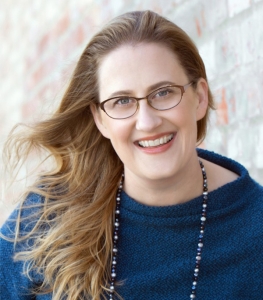 Katie Vernoy, LMFT
Katie Vernoy is a Licensed Marriage and Family Therapist, coach, and consultant supporting leaders, visionaries, executives, and helping professionals to create sustainable careers. Katie, with Curt, has developed workshops and a conference, Therapy Reimagined, to support therapists navigating through the modern challenges of this profession. Katie is also a former President of the California Association of Marriage and Family Therapists. In her spare time, Katie is secretly siphoning off Curt’s youthful energy, so that she can take over the world. Learn more at: http://www.katievernoy.com
A Quick Note:
Our opinions are our own. We are only speaking for ourselves – except when we speak for each other, or over each other. We’re working on it.
Our guests are also only speaking for themselves and have their own opinions. We aren’t trying to take their voice, and no one speaks for us either. Mostly because they don’t want to, but hey.
Join the Modern Therapist Community:
Podcast Homepage | Therapy Reimagined Homepage
Facebook | Facebook Group | Instagram | YouTube | LinkedIn | Substack
Consultation services with Curt Widhalm or Katie Vernoy:
Connect with the Modern Therapist Community:
Our Facebook Group – The Modern Therapists Group
Modern Therapist’s Survival Guide Creative Credits:
Voice Over by DW McCann https://www.facebook.com/McCannDW/
Music by Crystal Grooms Mangano https://groomsymusic.com/
Transcript for this episode of the Modern Therapist’s Survival Guide podcast (Autogenerated):
Transcripts do not include advertisements just a reference to the advertising break (as such timing does not account for advertisements)
… 0:00
(Opening Advertisement)
Announcer 0:00
You’re listening to the Modern Therapist’s Survival Guide, where therapists live, breathe and practice as human beings. To support you as a whole person and a therapist, here are your hosts, Curt Widhalm and Katie Vernoy.
Curt Widhalm 0:13
Welcome back, modern therapists. This is the Modern Therapist’s Survival Guide. I’m Curt Widhalm with Katie Vernoy, and this is the podcast for therapists about the things that go on in our professions, the things that happen that affect us. And I got a bee in my bonnet. This is enough to where we are throwing in a whole extra episode because we recognize that the California BBS is putting out a public comment period on some proposed regulation changes, and there’s some stuff in there that’s concerning to me. Now, if you’re not in California, this still is an episode that you should listen to. This has the potential for looking at some of the echo effects that this can have across the country. This is something where you might also just learn kind of how we think about things and how it ends up affecting our profession. So we’re talking about this California proposal. We’ll include a link to it in our show notes over at mtsgpodcast.com. But it’s not just Katie and me talking. We brought along our good friend, Dr. Ben Caldwell. He attends a lot of the California BBS meetings. He is incredibly knowledgeable about how all of these processes work, and he’s just a good guy to hang around with. So thank you very much for joining us, Ben.
Dr. Ben Caldwell 0:13
Well, thank you for having me. It’s always good to talk with you both.
Katie Vernoy 0:59
Yeah, I was just laughing because you were shaking your head about the knowledgeable part. You are very knowledgeable, and it’s always fun talking with you. You’re quite the smarty pants. But before we jump into our conversation, we want you to answer the question that we’ve had you answer, like four or five times maybe more than that in the past. But who are you and what are you putting out into the world?
Dr. Ben Caldwell 1:57
I’m Ben Caldwell. I’m a licensed MFT in California, and I’m the president of High Pass Education, which does continuing education, courses and exam prep, along with other resources for clinicians.
Curt Widhalm 2:08
As many public boards do, as many organizations do when they are coming up with some ideas about changing the laws, in this case, changing the regulations, how a board’s going to implement things, most public boards do a very good job of putting out a public comment period, and this allows for people who are not necessarily able to attend the board meetings or engage in a lot of the committee discussions that goes into making stuff, for the public, to be able to actually say, Hey, have you considered this? Have you considered how this might actually be implemented? It’s something that I think is a wonderful part of being in a democratic society that allows for lots of people to do this. And there will be a call to action for California therapists, at the urging of Curt and Katie and by extension, Ben, in his participation in this episode to talk about some of the concerns in the most recent proposal and public comment period. This comment period ends, January 20, 2026, so there is a little bit of time for you to do this. We will also make available the comments that we are going to be talking about in this episode, so that way, you have at least a starting point to be able to send this in. And lastly, they have to at least acknowledge response of comments that are brought in at some point or another, whether they accept them or not. I think my record is I had three comments rejected at one meeting at some point in the past. So.
Katie Vernoy 3:50
Why do comments get rejected? I don’t understand that.
Curt Widhalm 3:52
Sometimes they just say, we’ve already considered this and we disagree with you. Sometimes they don’t agree with my reasoning, sometimes I think they just want to get rid of me. So.
Dr. Ben Caldwell 4:05
While all that stuff may well be true, but I will point out here that it’s also the case that in any public comment period where they have to acknowledge all the comments that have come in and provide some kind of a response to every comment, there tend to be at least a few where the response from the board is, you know what? You’re right. We hadn’t thought about that, or we hadn’t thought about that in quite that way. And so we’re proposing to adjust the language of this proposal on the basis of this public feedback, and that’s the whole reason why they do the public comment period.
Katie Vernoy 4:37
Who are, who are the people on the board? Let’s just give for folks who are really naive to this process, who are the people on the board, who are who are the folks that are going to make this decision?
Dr. Ben Caldwell 4:45
That’s a great question. So the BBS is, if I’m remembering correctly, currently a 15 member board of which half minus one, so seven are licensees themselves, two MFTs, two Clinical Social Workers, two Professional Clinical Counselors and an LEP and the other eight, so a slight majority are what are considered public members, meaning they are not licensees themselves. They are appointed through either the governor’s office or the legislature, with the idea being that the board is a public protection agency, so it should be mostly the public who is represented there. That way you can avoid the board being sort of captured by professionals who might act out of self interest. Also, let me just step back a second. I had the math wrong. The board is 13 members. It’s still half minus one licensees, but I forgot that right now there’s only one LPCC member of the board, so it’s six licensees, seven public members.
Katie Vernoy 5:42
Okay, so that’s who we’re talking to. Why are we concerned? What’s going on in this proposal?
Curt Widhalm 5:47
I will kind of go from the top down of there’s a couple of proposals here. I’m going to start at one, and I think the very first one is an incredibly easy suggestion, because it is kind of odd. And the oddity in this one, to me is in the licensing process. The California BBS utilizes a vendor named Pearson VUE to implement their testing process, and I find it incredibly odd that they are codifying that Pearson VUE is needing to be part of the regulation listed here, rather than simply stating it’s a vendor. Somehow, in my line of thinking, this locks in that this is going to be a forever vendor, a private entity that is not run by the California government, and therefore should not be listed by name.
Dr. Ben Caldwell 6:45
Totally agree with that. It’s just an odd choice. It’s okay to put in regulation. You know, we need to include in some forms the name of the vendor, how to contact them, etc. It is unusual to list a vendor by name, because what happens then, if you change the contract, right, it becomes somebody else. Somebody else, then your regulations become out of line with what you’re actually doing, and that can become problematic for other reasons.
Katie Vernoy 7:07
So why would that happen? The Pearson VUE thing that sounds like lobbying by a particular private company. I mean, this seems weird.
Dr. Ben Caldwell 7:17
Oh, I don’t think it’s that. I don’t think it is, Pearson VUE is not showing up at board meetings, trying to get themselves locked into regulation wherever they possibly can. They’re a vendor. They want the board’s business. I think this is more just a matter of the board trying to codify what they are already doing in practice. That’s not nefarious. It’s just, I think, an oversight. I don’t think they’re intending to lock in Pearson VUE as the forever vendor. I don’t think Pearson VUE is lobbying for this. I think this is most simply a mistake.
Katie Vernoy 7:50
Okay, so we just need to point that out so that folks recognize that when you put stuff into law, it ties your hands unless you’ve created the intent, not the outcome.
Dr. Ben Caldwell 8:01
Correct.
Katie Vernoy 8:03
Okay.
Curt Widhalm 8:04
And this is seemingly pretty minor and not the bulk of this episode here, but this is one of the very simple things that people in the public pick up on that say, Hey, rather than listing this vendor by name, why not just change the language to the testing vendor? So that way, if the vendor ever changes, you don’t have to go in and change the law.
Katie Vernoy 8:29
Yeah.
Curt Widhalm 8:30
And this would be something that I could see the board taking feedback like that, especially if it comes from the millions of listeners that could potentially take action from this episode, to flood the email inboxes at the California BBS to say, You know what? Maybe we should do this. There’s a lot in this pending legislation here that is kind of insignificant. It’s a lot of clarifying some language around when a renewal period might end, or some very specific attestation language that unless Ben, you have picked up anything on this, I find rather inconsequential in the larger picture of things.
Dr. Ben Caldwell 9:18
Yeah, a lot of it’s just just mundane. It’s the ordinary business of policy making.
Curt Widhalm 9:25
There are a couple of things that do seem to be rather beneficial to therapists, and some of the clarifying aspects of what they’re doing is clarifying continuing education waivers that licensees are eligible for, which I largely support. And my only criticism with this aspect is that the proposed regulations specify that it’s only for licensees. In California the move from having to take a law and ethics test and you if you are not able to pass it to take a 12 hour CE course on law and ethics, was replaced several years ago by taking three hours of CES every single year. But it just strikes me as odd that if people fall under the disabilities or caretaking waivers that a licensee would it’s conceivable that pre licensees would also have to do this?
Dr. Ben Caldwell 10:23
Yeah, and I think it’s, it’s a debatable question, right about, should pre licensed folks, should registrants be eligible for a CE waiver if something like what you’re talking about happens to them? You know, circumstances beyond their control? My impression is that part of the consideration on the board level was that the continuing education burden overall is significant for licensees when you’re talking about 36 total hours, whereas that requirement for pre licensed folks is just three hours a year. That is a pretty darn light burden, and it also raises some questions if you start to apply CE waivers. Do do those waivers mean that somebody could essentially get out of doing other licensure requirements that are often done by CE, like the three hour telehealth requirement, six hours in suicide prevention? Are those things for which a waiver would apply or would not? It’s probably cleanest just to say associates can’t qualify for CE waivers. But it is a debatable question, and it’s sort of the same question that’s come up time and time again with the board about you know, you have six years to complete your hours of supervised experience, you have six hours for which a registration can be renewed. Is there some way, or should there be some way to stop the clock? And the board has consistently said, No, creating a way to stop the clock would be really too messy. They’re working on a proposal now that would make those six year rules into seven year rules instead, but still with no way to stop the clock. So how do you account for disability, deployment, other circumstances beyond somebody’s control? What the board has chosen to do so far is try to keep their rules really clear and consistent. But then there’s this waiver for CE for licensees, which does at least open the possibility of a pathway of saying, I don’t know we we understand this other stuff happens in your life. Why they would do that there and not necessarily in other places, is a reasonable question.
… 12:36
(Advertisement Break)
Katie Vernoy 12:37
Is the opportunity to waive CEs, is that new for licensees in this proposal, or is this something that’s been available all along, for a very long time?
Curt Widhalm 12:47
There have been ways for people to apply for continuing educational waivers in the past, and this seems to expand those opportunities which I’m in generally support of, that I think that there are life events that tend to happen. And in particular, what these proposals are talking about is in the event of a disability that can include either physical or mental health, that would take somebody outside of their work, and it does require certain documentation that I think is supportive of life events do happen for people, and it shouldn’t necessarily end up being something that hinders their ability to remain as a professional once that disability no longer interferes with their ability to work. So in general, I support this. My only real consideration on this is that it limits it just to licensees, and does not extend some of the same considerations to pre licensees.
Dr. Ben Caldwell 13:54
Yeah, I don’t have a, a, bee in my bonnet, so to speak about this. But it is an interesting point that you raise about, should it be consistent to associates as well as licensed folks?
Curt Widhalm 14:06
Now, where the bees really exist? We’ve got a whole hive of bees coming up. This is the important piece of things, that in some pre discussion with Ben, I will give him credit for, the BBS is proposing that there are things that people should do, as far as being involved in their profession, ways of enticing people to become more involved. And Ben used the words professional development activities. And the board is suggesting that many of these professional development activities could now be credited for continuing education hours towards someone’s renewal period. Now a lot of these have existed for some time. I’ve earned some of these continuing education credits by being a subject matter expert in creating the California law and ethics and clinical exams. That’s going and spending several hours on days on end, going through lots of books and writing questions crafted for what should beginning level people have to take on their licensure exam, I can attest that at some of those workshops, that is some of the most that I have ever learned about theories that I don’t implement in my day to day practice. And I do believe that those kinds of activities are good professional development that does require learning. Katie and I both earn continuing education by serving on the California Association of Marriage and Family Therapist’s ethics board, and that is a lot of application around how do the ethics codes apply to people? Those things have existed and are good, actual learning activities, because we are engaging with material and actively using it. However, some of the suggestions that are in this proposal, I’m having a harder time with. We have episodes in the past, and we’ll include links to them in our show notes about continuing education not really being beneficial in its current setup. But I have some problems with some of the recommendations here, such as attending a licensing board, the California Board of Behavioral Sciences meeting, just attending it live or online counts as an hour for hour continuing education, up to six hours each renewal cycle.
Dr. Ben Caldwell 16:38
I have mixed feelings about that. I know the board is wanting to get more people engaged in the process. You know, the joke that I and others sometimes tell about those board meetings is that it’s really the same five jerks who show up to each one. I’m one of the jerks. But it’s usually like me and a handful of other representatives from the professional associations, and everybody’s doing good, diligent work, but there are 100 and some odd 1000 clinicians under BBS jurisdiction, and the BBS makes a very compelling argument that it’s not always in the best interest of well informed decision making, that they are always hearing from the same quite small handful of voices. They want more people in attendance. They want more people participating, expressing public comment, asking for items to be added to the agenda. They know that that adds to their workload, but hopefully it makes them more informed. So this was a way that they came up with, of encouraging in a tangible way, people to attend their meetings, and they make the case that attendance, in and of itself, is educational in nature, because you’re going to have to keep up with what the board is doing in terms of laws and regulations and even some of the the other kind of board meeting or committee meeting activities that are not directly about crafting new law that still is very informative in nature. I agree with that. There’s a lot to engage with at board meetings. It is not structured education. It’s not designed to be educational in nature, but it probably does have a meaningful educational benefit.
Katie Vernoy 18:23
If you participate, if you just go and sign your name and stare at the screen, there’s no accountability. You know, a virtual CE requires some sort of a test. I’m assuming they’re not creating tests at the end of board meetings. And the other part that I’m not clear on is, how did they come up with six hours? Do we know that? Because that seems like a lot for I mean, maybe that’s a day. And so people just go and hang out in Sacramento for a day and get six CES. But I think there’s that element of how much CE you can get for going and just sitting and passively learning, potentially learning or…
Curt Widhalm 19:05
Learning by osmosis.
Katie Vernoy 19:07
By osmosis.
Dr. Ben Caldwell 19:09
Well, let me, let me address both parts of that, because the first question is, is there some kind of accountability? No, they’re not going to create a quiz for that particular board meeting, and there is at least that minimal level of accountability now for structured learning activities that you might do through a CE provider.
Katie Vernoy 19:29
Yeah.
Dr. Ben Caldwell 19:29
So the fact that there’s not that accountability, yeah, that does kind of beg the question, could somebody just stare at their screen all day and get credit for that, in a way that they really can’t through even asynchronous CE stuff.
Katie Vernoy 19:44
Yeah.
Dr. Ben Caldwell 19:46
But the other part is, you know, how did they come up with that number? And for about three years, I worked for SimplePractice, one of your sponsors, good company. I was the director of SimplePractice learning, and in that role, I was tasked with, among other things, figuring out or tracking the CE requirements in various states around the country. And listen, there are no villains here, like there aren’t there aren’t bad actors. Nobody’s being nefarious about this. But states land in interestingly different places about how many hours you need of continuing education, how they categorize those hours, what’s acceptable, what’s not acceptable, what particular pieces of education are going to be mandated as CE and by and large, this is not data driven decision making that we are talking about. This is boards, and again, doing their best with their best judgment with the information that’s available to them. This is boards making arbitrary decisions about what should count, what the category should be, how much should count, here and there, and so you see these differences all over the country about how much CE you need as a licensed mental health professional, you know, maybe it’s 18 hours here, 36 there, 35 there, 30 there. There’s no good reason for those differences. It’s just a difference. They put the lines in different places. You see differences in categories of hours, content that’s required, what’s allowed to be asynchronous versus not. Do you need to take courses through an approved provider all of these things? There’s not good, hard data to say this policy is better than that one. And so what you see boards doing is kind of making their best guesses and best estimates, and again, not out of a nefarious place, but six hours is as good a line as any. They feel like, Well, we want to give credit for this, but not too much. So I don’t know six? And that’s how you wind up with those numbers.
… 21:55
(Advertisement Break)
Curt Widhalm 21:57
Part of this proposal also is licensees who are supervisors can potentially count up to 18 hours of continuing education by merely supervising and by the bare minimum of needing to document that they have created supervision. But the rationale here is that supervisors are needing to be aware of what’s going on in the world, and by being around, supervisees are therefore engaging in continuing education related content seems to be the rationale on this.
Dr. Ben Caldwell 22:46
We were talking about this or this was a subjective discussion at a BBS meeting. I tried gently to raise the point that, yes, supervision can be very educational. I learn a lot from my supervisees. A lot of supervisors learn a lot from their supervisees. And good supervisors when presented with a question that they can’t answer, might help in going and doing the research, or even if they assign a supervisee to go research on that question and come back to supervision, the supervisor is still learning from that like, that’s great. That’s a good supervisory process that does genuinely result in the supervisor learning, but is that inherent to supervision? Is every supervisor’s supervision automatically educational for the supervisor? And there, I think the answer is no, and I think it’s actually a really important question, because it’s a question about, frankly, the pretense: is this truly an education requirement? Is the intent for us to be learning through these activities for which we get CE credit, or is it really just a mechanism for the board to reward certain behaviors that they want to reward. And let me be clear, if it’s that, if it’s just a reward mechanism, that’s fine. I actually don’t have a beef with that, but call it that. Don’t keep up the pretense that this is an educational requirement. And where I get most worked up about this is actually not something that’s that’s new. I think the supervision issue is an issue, but something that they put in a few years ago where you can get, I think it’s up to six hours of CE credit for responding to an occupational analysis survey. There is no reasonable argument that responding to a survey about what you do in practice educates you. Just none. You cannot keep up the pretense there. And again, it’s fine if you want to reward that I get that they want to increase response rates on that survey, that’s actually a good, reasonable goal, and maybe the CE stuff is the best mechanism to achieve that goal, but it feels like blowing smoke if this board, or any board, is then saying no, but it’s an education requirement. Like, that’s not education. Like, call it something else. Call it professional development. Call it some other thing that makes clear that we’re we’re done with the pretense here, and we are just going to use this as a as a method of rewarding certain board desired behaviors.
Katie Vernoy 25:31
Well, and I get worried with even rewarding those behaviors, especially at that level, it’s 18 hours, 16 hours. What’s the supervisors?
Curt Widhalm 25:41
18
Katie Vernoy 25:41
18, having 18 hours for supervisors to just get CE for doing supervision. Which yes, we need supervisors. We need to have that happen. And then it sounds like it’s from our conversations before we hit record. It sounds like it’s not clear, although I think the board’s intent is not to have that count as supervision CEs. They still need to take six hours of renewal period, so there’s still they need six hours of supervision, six hours of law and ethics. And if they teach, then they’ve got another segment of hours that are counted if they’re a professor or whatever, and it seems like there is very little space to actually ensure that supervisors are adequately trained. And I got to tell you, I’ve seen a lot of really bad supervision happen in my time where boundaries were crossed, which I guess would you would cover in a law and ethics exam, but, but old, old information, not staying up with new models, not understanding new methods of even supervising like there’s so much bad supervision that can happen, and a lot of our listeners are potentially private practice, group practice owners, if they’re supervisors, and they’re not necessarily reflecting on what this can look like in community mental health, where supervisors don’t have any moment to breathe, they’re they probably have their own caseload. They have, you know, probably 10, 15, supervisees. They are doing two group supervisions, or doing all these things they will want to get out of those continuing education responsibilities and potentially learn other things. Like I’m not saying all of them don’t want to learn. It can feel decadent to get any additional continuing education, because you just don’t have the time. And so it seems really short sighted to say 18, half of your continuing education can be just doing your job, and then if you do other stuff, you may not have to get any real continuing education.
Dr. Ben Caldwell 26:27
Yeah.
Katie Vernoy 26:28
That’s scary.
Katie Vernoy 27:17
You raised some really good points there. And I think about employers in community mental health, public mental health, nonprofit kind of settings, where as things are right now, because of the CE requirement to renew one’s license, those employers, if they’re being responsible, and I think most are, they have to give their supervisors time to take courses, to engage in training activities, to do the things they need to do to meet the renewal requirement. And employers would love the idea that supervisors can get CE credit just for supervising, because then that’s less time than I need to give the supervisors at my workplace to go do external trainings and things. I think that that’s that’s great for the employer and for a lot of supervisors, you know, supervisors aren’t going to turn down free free CE, credit, I certainly wouldn’t. It’s just sort of like handing out candy. And I think the the underlying goal that has been expressed, of well, we need more supervisors. This is a way of encouraging people to become supervisors. I think that that’s certainly great intent. What I haven’t seen is any evidence at all that this would actually move the needle. Would somebody who is otherwise on the fence about supervising make the choice to become a supervisor, because now they get CE credit for doing so. I just don’t see a lot of people where that sways their decision. The motivations that people have for supervising or not supervising, I don’t think they are so easily moved from one bucket to the other. And I was talking with my wife, Angela, this morning. You both know her. She’s been on the show before, brilliant MFT. And I was talking about this very thing, the CE credit for supervising. And I think I’m quoting directly that her response was, oh my gosh. That’s the dumbest thing I’ve ever heard. And I will definitely take them up on that. And I think that’s what you’re gonna hear from a lot of supervisors. Is that’s weird, but Okay, right? Is it really going to achieve this goal of having more people supervise, or is it mostly going to have the effect of supervisors doing less education? I really think it’s going to be more the latter.
Katie Vernoy 28:25
Well, and if it does increase the number of supervisors, it’s kind of like saying, I need a garden and you just start planting weeds. I think it’s something where having some mechanism to make sure that supervisors are getting adequate, robust education and potentially putting codifying that, I think, is really important, because I don’t know how many times I’ve heard about bad supervisors, and that’s why someone doesn’t make it through the licensure, or that’s why someone is harmed in some way. And it I just I get very concerned if we’re saying: you’re a supervisor, so you got it, we’ll get you half your CEs just for showing up to work. That seems really concerning to me.
Dr. Ben Caldwell 28:55
I hear that, and I do respect the difficulty of the debate at the BBS level, where they know that for a lot of folks who struggle to reach licensure, they struggle at least in part because it’s hard for them to find a qualified supervisor.
Katie Vernoy 30:01
Sure.
Dr. Ben Caldwell 30:02
And so the BBS is thinking, Well, what mechanisms do we have at our disposal to encourage people to become supervisors and to remain supervisors, so that there’s, there’s as much supervision as possible that is available to help people under supervision get their hours done? I get that it’s a really difficult balance, if you’re sitting on the board, between wanting to encourage people to become supervisors and still wanting to maintain some minimum standard for the quality of supervision. So again, it’s I don’t want, I don’t want this to be heard as as like demonizing the board or anybody on it, like I get the difficulty of the choices that they are making. I just I land in different places on some of these.
Curt Widhalm 32:05
I want to emphasize the point that Katie also mentioned here is that it is entirely possible, if this legislation goes through, that somebody could accrue all of their CE requirements without actually having to take any traditional CE courses. Again, I know that the continuing education system is I’m, I’m no fan of it, but to provide even more outlets for people to be able to not have to engage in any kind of active learning is really, really hard sell to me on this actually being something for public protection.
Dr. Ben Caldwell 32:52
Yeah, I hear that. And you know, I’m an educator and a supervisor myself, so if I can get 18 hours from the classes that I am teaching and 18 hours for being a supervisor. Hey, there’s 36. Good for me. Is it really in the best interests either of me or of the profession as a whole, for me to not be getting educated from more external kinds of voices? I don’t know that that’s in my best interest from the profession’s best interests. I think that’s a real concern. You know, if you start awarding so many of these other behaviors, then you are sort of definitionally reducing the amount of structured education that people are going to be doing. And you guys have talked before, I’ve talked before about how there are real limits to the benefits of continuing education as as it’s currently structured. But I don’t know of really anybody seriously making the argument that continuing education as a concept shouldn’t exist. I think there’s agreement in the field that we need to stay current. We understand that the laws and ethics governing our work change, that the models people are using in practice, those change over time. The science certainly continually advances, and we need to have a way of staying current, and we can debate what the best way of doing that is, certainly, but I think that there’s, there’s no real disagreement that we should do that. And so how do you sort of ensure that you’re providing credit for these other desired activities, but also keeping somebody current on what’s happening in the profession. This is where we get into those arbitrary decisions that happen differently from one state to another. I actually really like as a model, what Colorado does for their master’s level folks, where you have to actually come up with a learning plan that’s based on a self assessment, what you current what you are current on right now, and any potential gaps in your knowledge that you would like to address in the current license renewal cycle. And then you go about engaging in activities designed to meet the goals of the learning plan that you have developed. It really forces a thoughtful process. And there are all kinds of different activities that Colorado will count toward your continuing professional development requirement, and that’s good. It’s good to have flexibility in learning processes, but it avoids, and I think, a really good thoughtful way what happens in California and some other states the way things are structured now, where somebody gets a week before their renewal date, they have that oh crap moment, and then they try to do 36 hours of CE credit in five days and cobble together whatever credit they can from stuff they’ve already done. I think that’s just a better model, and it also does conceptualize it as professional development, as opposed to a quote, unquote education requirement that isn’t really totally about education.
Curt Widhalm 36:11
Maybe one of the things that boards could do, instead of just tossing out CE certificates or professional development credit towards CE is if a board has a budget surplus, they could just use engagement in those activities for fee reductions. And…
Dr. Ben Caldwell 36:31
You know, hypothetically.
Curt Widhalm 36:32
Hypothetically, if you’re looking for more engagement, and oh, by the way, California’s BBS has this problem where they have too much money and…
Dr. Ben Caldwell 36:41
I know, a rough problem to have.
Curt Widhalm 36:43
…and they are implementing this. This is something that I don’t think can be much influenced at this point, but Ben, you are much more familiar with what California is doing in this process, and I will spend our last couple of minutes here talking about how this is the dumbest way possible of handling having too much money.
Dr. Ben Caldwell 37:08
Well, sure, so I know it’s rough, right? You’ve got too much money. What are you going to possibly do with all this extra money that you have? A few years ago, the BBS raised a whole bunch of their fees, and that was understood at the time as a way of helping to support their automation of various processes which they have been making progress on, and also a way of allowing them to hire more staff, which they have been continuing to do as well. Even so, you know, the hiring at the state level is difficult for a whole bunch of bureaucratic reasons, and the board has been taking in these higher fees, which still, by the way, are kind of a bargain compared to a lot of states around the country, but the board now has too much money. There are state guidelines about how much money any licensing board should have in its reserves. The general fund pulled a $10 million loan from the BBS fund not too long ago, but the BBS still has too much money. So in order to stay in sort of the good graces of the state, the BBS has to find a way to spend down some of this reserve. They’re not going to be able to do it all quickly enough, through additional hiring, through additional automation, et cetera. To be clear, they are continuing to work on those things, and they will continue to work on those things, but they can only move so quickly. So what they have proposed is beginning on July, 1 of 2026, for four years, all BBS fees would be cut in half. It would be a 50% fee reduction. And they chose four years because they did some financial modeling about how much this would cost them, and also because that was a way of being fair to people based on different you know, renewal dates. Four years is two license renewal cycles for all licensees. So that’s a way kind of keeping it equal.
Curt Widhalm 39:02
If I’m a listener right now, I’m thinking that is amazing. Go on. Go on.
Dr. Ben Caldwell 39:09
Right? No one is going to complain about this. Everybody is going to be happy about paying less money to the licensing board. I get it. I’ll be happy about that too. I write a renewal check, just like everybody else. So having a fee reduction is a good thing. Should clarify the fee reduction applies to BBS fees. So the fees that you pay to take a national exam, those are unchanged because those are not set by the BBS That being said, there are other ways that they could have approached this, and I personally was advocating for a little more of a nuanced approach, where they would have further reduced, or maybe even entirely eliminated, some of the fees for people early in their career. So initial registration fee, registration renewal fee, initial licensure fee. You know, I’m somebody who is licensed, and while I certainly don’t like paying a renewal fee any more than anybody else does, licensees, in general, or on average, are probably a little bit better positioned to pay the fees that we are paying without it creating severe financial hardship. I think the fees create severe financial hardship more often at those early career levels, so I would have been fine with keeping the renewal fee for licensees close to what it is now maybe knock it off a little bit and then eliminate those fees entirely for people at lower levels, but that was pretty quickly dismissed as an option at a board meeting, they said, No, we want to go with 50% that’s cleanest. Let’s just do that. And so that’s how it’s moving forward. Again, nobody’s going to complain about paying less, but I do think there would have been a better way to do it.
Curt Widhalm 40:56
And I’m calling now on July 1, 2030 there will be lots of complaints about the board raising fees out of nowhere, doubling overnight. Ben, I want to thank you for spending your time and your knowledge and all of the incredible advocacy work that you do, engaging in this licensing process, you’re a wealth of information. Where can people find out about the work that you’re doing? How can people support you and the businesses that you are operating?
Dr. Ben Caldwell 41:28
It’s always a pleasure talking with you both. Thanks again for the invitation. You can find me and my work at highpass.com that’s H, I, G, H, P, A, S, S.com,
Curt Widhalm 41:39
And we will include a link in our show notes over at mtsgpodcast.com and follow us on our social media. Join our Facebook group, the Modern Therapist Group, to continue on with this and other conversations. I will be writing up my letter to the board bringing up some of these points as well. If that’s the starting off point for you, we’ll make it available through some of our outreach places, and until next time, I’m Curt Widhalm with Katie Vernoy and Dr. Ben Caldwell.
… 42:10
(Advertisement Break)
Announcer 42:13
Thank you for listening to the Modern Therapist’s Survival Guide. Learn more about who we are and what we do at mtsgpodcast.com. You can also join us on Facebook and Twitter, and please don’t forget to subscribe so you don’t miss any of our episodes.




SPEAK YOUR MIND