
Rest, By Force or By Choice: Burnout, Self-Care, and Sustainable Practice for Therapists – An Interview with Cecily Moore, PhD
You were trained to hold it together. To be the calm one, the steady one, the blank slate who can absorb whatever a client or a system hands you and keep going, no matter what is happening in your own life or in the world outside your office. That expectation of endless strength and infinite patience was never something a human body could actually sustain, and right now, when so many of us are carrying collective grief and moral exhaustion at the same time as our clients, the cost of pretending otherwise is getting harder to ignore.
Curt and Katie talk with Dr. Cecily Moore about what happens when strength, productivity, and self-sacrifice stop being virtues and start running on survival. As a counselor educator, clinical supervisor, and the researcher behind work on unlearning the Strong Black Woman Narrative, Dr. Moore has a sharp read on how survival-based beliefs about worth get built, who tends to carry them most heavily, and how any clinician can start to question the conditioning underneath. She reframes rest as a clinical intervention rather than a reward, names how self-care gets co-opted and hollowed out, and offers a grounded way to reconcile your relationship with work before your body forces the issue.
Click here to scroll to the podcast transcript.Transcript
(Show notes provided in collaboration with Otter.ai and Claude AI.)
About Our Guest: Dr. Cecily Moore
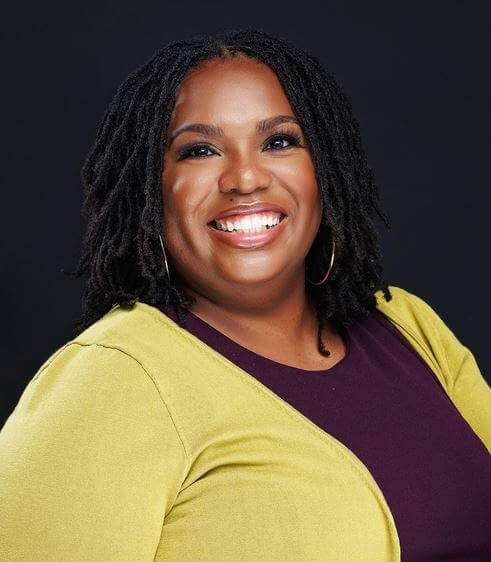 Dr. Cecily Moore is a licensed therapist, counselor educator, researcher, and clinical supervisor specializing in work recovery, burnout, and identity-centered healing for helping professionals. She is the founder of Dr. Cecily Moore & Associates and the creator of the Reappropriate, Redefine, Recover™ framework, which helps Black women unlearn the Strong Black Woman Narrative, especially survival-based beliefs around strength, productivity, and worth.
With over a decade of clinical experience and a PhD in Counselor Education and Supervision, Dr. Moore blends trauma-informed care, nervous system regulation, and culturally responsive practice to support sustainable wellness in the helping professions. Her work challenges hustle culture in mental health and reframes rest as a clinical intervention, not a reward.
In this Podcast Episode: Endless Strength, Rest, and Reconciling Your Relationship With Work
Dr. Moore starts with the expectation many of us absorbed in training, that a good therapist is a blank slate with infinite patience, and names why that ask is both unrealistic and unsustainable, particularly as clinicians and clients navigate collective trauma in real time. From there the conversation moves through the erosion of identity and well-being that happens under systems of oppression, the privilege and responsibility of expanding your awareness of other lived experiences, and why advocacy that runs on depletion is a ticking time bomb. She makes the case for rest as restorative at a cellular level rather than the whitewashed, consumer version of self-care, and she is candid about how heart-wrenching it can feel to choose rest when a client is in crisis or the moment seems to demand more. The back half turns practical and educational: how values work (done deeply, tracing where a value was learned) opens the door to change, how her BS job checklist gives clinicians a concrete mirror for what is draining them, and why the systems will not shift until the people inside them do.
Key Takeaways for Therapists on Burnout, Rest, and Sustainable Helping
“My advocacy is only as good as my well-being. If I’m doing it from a burnout, depleted place, that’s a ticking time bomb.”
— Dr. Cecily Moore
- Endless strength is an unsustainable ask. Expecting yourself to be a blank slate with infinite patience diminishes your own humanity and, over time, your ability to show up genuinely for clients.
- Collective trauma is not only a “marginalized” problem anymore. The erosion of identity and safety that some communities have always known is now being felt more widely, which makes honest, non-defensive learning across lived experience part of the work.
- Self-care has been co-opted. The whitewashed, consumer version (a shopping spree, a spa day) is not the same as restorative practices that actually support your biology and nervous system. Dr. Moore points clinicians back to the basics.
- Rest is resistance, and a clinical necessity. Framing rest and self-care as self-maintenance, the thing that keeps you from harming clients or complying with an unjust system, can make it more palatable when it still feels selfish.
- Advocacy has to be sized to your capacity. Not everyone’s advocacy is a large platform. Sometimes it is the Thanksgiving dinner table. Knowing where and how you can affect change without depleting yourself is part of doing it well.
- Go deeper than surface values work. Ask where a value came from and how it was modeled for you. That narrative work is where the mindset shift actually happens.
- Education and options are protective. Many clinicians and students do not realize how versatile their degree is. Exposing people to alternatives, including entrepreneurship, plants a seed they can return to when they are ready.
“Our bodies are designed to protect us, and so you will either stop by force or by choice. When your body says it’s time, that is by force. Or you can heed this message.”
— Dr. Cecily Moore
Rest as a Clinical Intervention, Not a Reward
One of the most useful reframes in this conversation is the idea that rest is not what you earn after you have given everything away. It is the maintenance that makes the giving possible. When self-care gets flattened into something you buy, it stops doing the restorative work your body actually needs. Dr. Moore invites you back to the basics: sleep, nervous system regulation, the soul-filling conversation, the things that strengthen your immune system rather than just performing wellness. If you struggle to justify it for its own sake, try framing it as the ethical precondition for good care. You cannot hold space you do not have.
By Force or By Choice: Why Sustainability Can’t Wait
Dr. Moore returns again and again to a simple, uncomfortable truth: the endless-productivity pattern works until it doesn’t. Your body is designed to protect you, and eventually it will stop you, either because you chose to slow down or because it made the choice for you. For clinicians who came up being rewarded for over-functioning, and for students still being shaped that way, that message can be a shock to the nervous system. Her approach is to plant the seed early and often, so that when the moment of reckoning comes, people have language and options waiting for them rather than only exhaustion.
Resources on Burnout, Rest, and Sustainable Practice for Helping Professionals
We’ve pulled together resources mentioned in this episode and put together some handy-dandy links. Please note that some of the links below may be affiliate links, so if you purchase after clicking below, we may get a little bit of cash in our pockets. We thank you in advance!
- Dr. Cecily Moore’s website and newsletter: drcecilymoore.com
- Dr. Cecily Moore on Instagram, Facebook, and LinkedIn (@drcecilymoore)
- The “BS Job” checklist Dr. Moore references (a values-and-conditions audit for identifying draining work)
- Rest Is Resistance: A Manifesto by Tricia Hersey (referenced in the conversation)
- Concepts discussed: the Strong Black Woman Narrative, the Reappropriate, Redefine, Recover™ framework, nervous system regulation, values and narrative work, moral injury, hustle culture in mental health
Relevant Episodes of MTSG Podcast
- Burnout Recovery in a Failing System: ACT, Moral Injury & Reclaiming Agency – An Interview with Shaina Siber, LCSW
- Somatic Therapy, Nervous System Regulation, and Expanding Capacity for Rest: An Interview with Linda Thai
- Choosing Yourself as a Therapist: Strategies to address burnout, compassion fatigue and vicarious trauma, An Interview with Laura Reagan, LCSW-C
- How to Stay in Your Lane to Support Diversity and Inclusion, An Interview with Dr. Joy Cox, PhD
- How Therapists Can Support Community-Building in Immigrant and Marginalized Populations: An Interview with Adriana Rodriguez, LMFT
- How Therapists Can Actually Rest During the Holidays: Letting Go of Guilt, Productivity, and Instagram-Worthy Expectations
- The Danger of Poor Self-Care for Therapists
- Designing a Sustainable Therapy Career: Reflections on Burnout, Legacy, and Letting Go
- Suffering Is Collective, and So Is Healing: Belonging, Ritual, and Meaning in Uncertain Times – An Interview with Suzan Song, MD
Meet the Hosts: Curt Widhalm & Katie Vernoy
 Curt Widhalm, LMFT
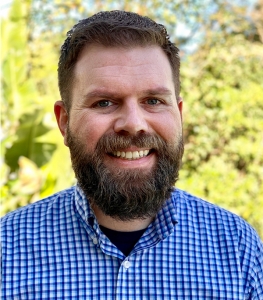
Curt Widhalm is in private practice in the Los Angeles area. He is the cofounder of the Therapy Reimagined conference, an Adjunct Professor at Pepperdine University and CSUN, a former Subject Matter Expert for the California Board of Behavioral Sciences, former CFO of the California Association of Marriage and Family Therapists, and a loving husband and father. He is 1/2 great person, 1/2 provocateur, and 1/2 geek, in that order. He dabbles in the dark art of making “dad jokes” and usually has a half-empty cup of coffee somewhere nearby. Learn more at: http://www.curtwidhalm.com
 Katie Vernoy, LMFT
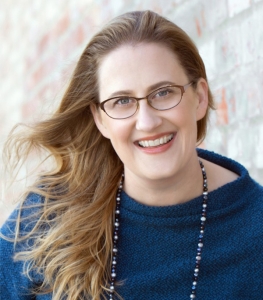
Katie Vernoy is a Licensed Marriage and Family Therapist, coach, and consultant supporting leaders, visionaries, executives, and helping professionals to create sustainable careers. Katie, with Curt, has developed workshops and a conference, Therapy Reimagined, to support therapists navigating through the modern challenges of this profession. Katie is also a former President of the California Association of Marriage and Family Therapists. In her spare time, Katie is secretly siphoning off Curt’s youthful energy, so that she can take over the world. Learn more at: http://www.katievernoy.com
A Quick Note:
Our opinions are our own. We are only speaking for ourselves – except when we speak for each other, or over each other. We’re working on it.
Our guests are also only speaking for themselves and have their own opinions. We aren’t trying to take their voice, and no one speaks for us either. Mostly because they don’t want to, but hey.
Join the Modern Therapist Community:
Podcast Homepage | Therapy Reimagined Homepage
Facebook | Facebook Group | Instagram | YouTube | LinkedIn | Substack
Consultation services with Curt Widhalm or Katie Vernoy:
Connect with the Modern Therapist Community:
Our Facebook Group – The Modern Therapists Group
Modern Therapist’s Survival Guide Creative Credits:
Voice Over by DW McCann https://www.facebook.com/McCannDW
Music by Crystal Grooms Mangano https://groomsymusic.com
Transcript for this episode of the Modern Therapist’s Survival Guide podcast (Autogenerated):
Transcripts do not include advertisements just a reference to the advertising break (as such timing does not account for advertisements)
… 0:00
(Opening Advertisement)
Announcer 0:00
You’re listening to the Modern Therapist Survival Guide, where therapists live, breathe, and practice as human beings. To support you as a whole person and a therapist, here are your hosts, Curt Widhalm and Katie Vernoy.
Curt Widhalm 0:15
Welcome back, modern therapists. This is the Modern Therapist Survival Guide. I’m Curt Widhalm with Katie Vernoy, and this is a podcast for therapists about things that go on in our lives, the things that go on in our practices. And today we are diving into a topic that might be a little bit too close to home for anyone who looks at your color-coded calendar systems and feels a urge to just weep and operating in a space of over functioning and over empathy, and everything that gets asked of anybody in our profession, a special shout out to the black female therapists out there who know this all too well. And we are joined by one of them, who is super awesome to share your wisdom with us about this. So thank you so much for helping us through this, Dr. Cecily Moore.
Dr. Cecily Moore 1:06
Thank you, thank you for having me. Excited.
Katie Vernoy 1:09
I’m really excited to jump into this conversation. I think there’s so much here, but before we get started, I want to ask you the question we ask all our guests, which is, who are you, and what are you putting out into the world?
Dr. Cecily Moore 1:20
Yes, I’m Dr. Cecily Moore, physically located in Jackson, Tennessee, here deep in the South. And what am I putting out into the world? When I think about this question, the word that comes to mind? I hope I’m putting out quality, quality human beings, quality research as a counselor/educator, but also quality services to the clients that I serve in my small practice, and so yeah, my I guess biggest work academically and professionally is my dissertation, and that is around helping Black professional women unlearn the strong Black woman narrative, and kind of unpacking how the narrative, the stereotype, was even created, but how it affects our relationship, both with self and our working relationship, and how that impacts how we engage in life, society, and systems.
Curt Widhalm 2:27
So we ask this question not from a shaming place, but from a learning and collective wisdom place. So hopefully, people don’t have to make this mistake on their own. But what do therapists usually get wrong when relying on endless strength and infinite patience and empathy that helping professionals are supposed to have.
Dr. Cecily Moore 2:49
Yes, I feel like I see this a lot, specifically as a counselor educator, being a part of training the new generation, if you will, of counselors. Something that continues to come up is, I feel like I have to be a blank slate, right? Like I can’t bring my humanity into the room, and what does that look like? Because as we know right now, currently in society, we are having some of the same experiences. We are watching via technology the world change in real time, and we’re humans as well, and so this idea of like endless strength and infinite patience and empathy oftentimes diminishes our human experience, and and with that, we’re not always able to show up fully and authentically, and I like to think about calling and career. I’m a career counselor, and so that has an impact on not just our efficacy, but our ability to serve clients from a genuine and real place, and the rapport building process. And so, I think it’s just an unsustainable, unrealistic ask to expect humans to continue on this this path of endless strength and infinite patience and empathy, especially in this day and time.
Katie Vernoy 4:17
Well, I’m thinking about how things are shifting for society, and we’re we’re all sitting here in the United States. We’ve experienced a lot of violence and terror and trauma, and I think there are communities of folks who are experiencing something new for themselves, and there are communities of folks who are saying welcome to what we’ve been experiencing since the beginning of this country, and so I’m curious with the research that you’ve done on the strong Black woman narrative, and and what you’ve seen on how folks have shown up, like what that looks like in real time when it’s ongoing for folks in that community versus newer from for folks who are are just experiencing that type of…
Dr. Cecily Moore 5:10
Yeah.
Katie Vernoy 5:10
…disaffection and I don’t even know what the right word is the the fear that that maybe the system is not there to take care of them and not there to protect them.
Dr. Cecily Moore 5:21
Yeah, absolutely. I think this is such a powerful question because what I I kind of see happening right, this deterioration of like identity and well being and this like erosion of self, right and so where historically we might have thought that it was just a problem for marginalized identities. Now we’re experiencing it as a collective, and it’s very jarring, right? Yeah. And so people are having to grapple with in real time. Well, what does this mean for me now that it feels so close to home? And so I think as a collective, we are really having to grapple with this is not just a problem for marginalized individuals. This is a collective problem, and I think that is, you know, indicative of systems of oppression. They are designed well, and they have been doing what they have been doing for centuries, but now that we we are seeing it happen in real time, and we have so much access to the violence that is occurring, we’re having to have some truth telling conversations with ourselves because it does feel so close to home.
Curt Widhalm 6:37
In those truth telling conversations, for those of us who have the lack of melanin to be a part of having to have dealt with this all of our lives, many white therapists, many white people in general are dealing with these things for the first time, and there’s a learning curve to this. That for for those who are unfortunate enough to have been facing this all their lives, the the moral injury that comes with this, what what is the being in it and also helping clients through it that your experience can maybe help guide us through?
Dr. Cecily Moore 7:20
Yeah, it’s it’s definitely a tough place to be in. One of the things that I I harp on and I talk about all the time, especially in my work as an instructor professor, is like we have access to awareness, right? And so one place to start is like reading, reading, you know, books and things from marginalized identities, so you can learn about what their lived experience is, and you can start to dissect those things. And so, I think there’s there’s a conversation around comfort, right? When we talk about folks who have not had this kind of in in their face the majority of their life. Well, that is a privilege, and so getting really comfortable with what have I been privy to? What are the privileges that have been afforded to me because of my skin color, because of my proximity to whiteness, because of my demographic location, right? And and starting to expand your awareness around the lived experiences of other folks, like that’s something that’s pretty accessible to all of us. But we have to be willing to do that. We have to be willing to be changed and affected by someone else’s lived experience, and not take it as a personal attack, right? And let that self talk and that criticism get in the way. I am a bad person because I didn’t know. I tell people all the time: you wake up every day with a new chance to start over, and so you have to want to be affected and be changed by this information.
… 9:04
(Advertisement Break)
Katie Vernoy 9:07
I love that, and I think it’s something where, regardless of demographics, regardless of the identities that we live in, I think that’s really good information, and I think it’s something where, in that process, as we we go through our own learning, our own understanding, and how we want to show up, I think it becomes exhausting, frankly. And I’ll I’ll link to in the show notes to some of these other conversations we’ve had around this topic because we’ve we’ve talked about this a lot, and we think it’s it’s very relevant right now, and it’s been relevant for the last you know seven, eight years that we’ve been doing this podcast. And so we’ve we’ve come to this many many times as a profession, although there is still insufficient representation. Obviously, oftentimes we have more diversity than we do in other professions. And so there are a lot of folks for whom, and a lot of our audience for whom this isn’t new, but maybe this perspective on how to address it may be new. And so I really want to make sure we’re we’re looking around for clinicians. How can we, how can we make sure that we’re addressing this so that we’re taking care of ourselves and being able to to provide adequate care to our patients and and understand what they’re going through while we’re also going through things at the same time?
Dr. Cecily Moore 10:29
Absolutely, I think there are a couple of different ways. I’m probably biased because I’m an educator. I do believe that education is the great equalizer. So again, exposing yourself to other lived experiences, educational resources, articles, publications that are fun perspectives of folks who are different than you. I do think that the conversation around self care is a very relevant self care because, in a lot of ways, it’s been co-opted and and and whitewashed in all of the things, and so as clinicians doing this work, you mentioned earlier that it can become exhausting, like constantly being inundated with what is wrong and the problems of the system. Like I also think that that is a trap, and so how do we get out of the the monotony in the trap of this is what’s wrong and start to be solution focused and problem solvers? How do we come together as a collective? And I think that one of the only ways to truly be able to do that is to be able to take care of yourself and practice self care in a way where you’re being honest about your limitations, your boundaries, and knowing like where you can show up, how you can show up, and advocate in ways that are not only meaningful but don’t stretch and deplete you, right? And so we go back to that idea of infinite strength. My advocacy is only good as my well-being. If I’m doing it from a burnout, depleted place, like that’s a ticking time bomb. And so, part of our advocacy is to be well, to be well informed, and and being honest about what does this look like, and how can I make change and affect change? Everybody’s advocacy is not the large platform. Sometimes it’s the Thanksgiving dinner table with our aunts and our uncles, who you know have been a part of our conditioning and and the the harmful mindsets, right? And so knowing where and how you can affect change, being committed to affecting that change, but also making sure that you’re also being a demonstration. We need healthy, well people to fight this fight, and and we can’t do it from a place of desperation and burnout. It’s just not sustainable.
Curt Widhalm 13:07
So, in order to replenish ourselves, it takes rest. And why is that so scary? To actually have to do Not work.
Dr. Cecily Moore 13:20
Yeah.
Katie Vernoy 13:23
Do not the thing.
Dr. Cecily Moore 13:24
That to do not the thing, right? Well, I think because most of us are operating from a survival space, we’re operating from fight or flight, right? And so once that conditioning lives in your bones, the opposite feels uncomfortable. Our bodies are designed to protect us, and so when we think about works from authors like Tricia Hersey, like rest is resistance, right? The manifesto around Rest is Resistance is that we need to be well to be able to continue to resist and and do this cultural work. And so what we know, not just from research, is that when we’re not well, when we’re not rested, it’s it’s hard to continue to sustain all that’s coming at us, and so rest can feel very scary, and I think it goes back to what I was saying earlier about how self care has been co opt. Right, we see self care as getting your hair and your nails done or going on a shopping spree, but there are other forms of self care that are restorative to to us on a cellular level, to our biology, and so I’m telling people go back to the basics, right? Like, what are the things that you can do that allows your immune system to be strong? What are the things that you can do to take care of your vessel that are not just the nice to have.
Katie Vernoy 15:03
I find that framing self care as self maintenance or an important task towards being able to do the work that we set out to do sometimes is more palatable. This is not this selfish, indulgent thing that I’m doing. This is required so that I won’t harm my clients. This is required so I don’t comply with an unjust system. And I think that it, even in framing it that way, though, it still feels very challenging. If if I if I take a day off and I rest and I and I get the deep sleep that I need, or I I have the important soul filling conversation with a member of my community. It can still feel like, but I didn’t stand up and say something at that time, or I didn’t see that client who was in crisis, and it can feel so heart wrenching to make that decision to say I need to stop and I need to sleep. I mean, so much of our healthcare system is is designed on us giving and giving until we burn out and and potentially being mechanisms of of the system. Which that’s a whole other conversation. I’ll link to that one in the show notes as well. But I think there’s this element of how heart wrenching it is to make that decision to put on our own oxygen mask first, for example.
Dr. Cecily Moore 16:27
Yeah, absolutely. And I’m glad that you brought that up because I feel like this is a conversation that I have with counselors in training about the privilege of being in a learning environment and learning how to advocate for your rest, for your needs, for your self care, right? Because once you get that degree, you get out into the system. The system is going to eat you up if you don’t have these skills and tools, right? And so, having those conversations earlier on, and some of us, you know, we’re not afforded the opportunity to have those those conversations in our learning environments. But I think that’s the whole idea of reimagining therapy, reimagining how we do this work, so that we can live, breathe, and practice. And I think that starts with the conversation. And so, having those conversations as often as you can, because I think you know it’s bad that we have to convince people that caring for yourself is a necessity, right? But even in saying that, I joke with my students a lot, and I tell them, you know, therapists are the bigger, biggest liars because it’s it’s do as I say, not as I do, right? Like I want to help you with your self care plan, but am I practicing what I preach? And so, one of the things that I tell students because they’re always hung up on Doctor Moore, like what makes a good therapist? And I’m like, well, you have to be able to practice what you preach first and foremost. But some of your best tools in your toolbox when you think about the self as the counselor is: Can you regulate your emotions? Like, are you well? Can you hold space for this person based on what you have going on in your lived experience, your professional life? Like, can you have an honest conversation with yourself about your capacity and the sustainability of the work that you’re engaging in, and so I think until we’re able to have some of those honest conversations with self, but also some some accountability, right? Do you have accountability, community, and support people that care about you that can say, “Hey, I’m noticing you don’t look well. You haven’t been doing well. Like, what can we do to support you? Like those things matter, and they matter a lot, especially in the work that we’re doing.
… 18:56
(Advertisement Break)
Curt Widhalm 18:58
I’m really glad that you’re talking about the educational environment, because this is an area where, particularly, a lot of very intelligent students who have gone straight through their educational course-you know, high school, undergrad, straight into graduate school-have been rewarded for being overproductive and are phenomenal students that overfunction and do really really well. And then there’s learning how to be a therapist that comes outside of the academic classes. What are you seeing in those students? How well do they take these messages that you’re trying to warn them, because when I was teaching, it was all just like very foreign language. I might as well have been teaching in Greek because there wasn’t some of that practical experience.
Dr. Cecily Moore 19:53
Yeah. Ooh, I love this question because I think when I think about like my pedagogy and how I’m teaching, I open up the space by saying, “I know you’re a good student. You wouldn’t have gotten this far if you were not a good student. Now let’s talk about your humanity. Now let’s talk about your professional identity. Now let’s talk about unlearning some of the things that you’ve been taught that may be hindering your efficacy, right? And that message is not for everybody because sometimes the conditioning is so deep it is overwhelm and shock to the nervous system. But I believe that part of my work is planting a seed because this this ongoing endless strength and productivity, it works until it doesn’t. And in a lot of spaces, it’s validated. That that idea of overwork and over functioning for some people is where they’re receiving validation and acceptance. Right? I’m a firm believer that our bodies are designed to protect us, and so you will either stop by force or by choice. When when your body says it’s time, that is by force, or you can heed this word, this message, and we can begin doing some of that work right now. We can we can be found in preparation of undoing and unpacking some of these ideas that continue to keep oppressive harmful systems alive and running well. Most of the time, people have already had experiences with burnout, and they’re like, “I like what you’re putting down.” I’m seeing more and more people in the educational space who are coming to the counseling profession, and they’re saying, “Dr. Moore, this is a second career for me, or this is a late life career because I’m entering retirement and I can’t afford to stop working. And counseling feels accessible, and so especially for those folks, this idea of being values aligned and reconciling your relationship with work, it hits home, and so I think for more and more people, it’s it’s hitting home. And I think we just have to be advocates and stewards of that message. You don’t have to live like this. There is a way to do this work that allows you to express your humanity and be well while engaging in care for others.
Katie Vernoy 22:49
With the message hitting home, I think about insight versus implementation, and how hard it can be to to do that, and and my thought process is in grad school. It’s it’s sure I will rest as soon as I get through finals, or as soon as I do this, or or do that, or well, if I didn’t have to work full time and go to school full time, sure, that’s a great message. Thanks, Doctor Moore. Right?
Dr. Cecily Moore 23:19
Yes. Yes.
Katie Vernoy 23:20
It’s something where there’s still systemic issues at hand, and so and so maybe even looking at going to the other the other side of it, not the students, but the the folks who are building the systems, and not the not the grand larger systems, but the the work sites, the the educational system, those types of things. Those of us who may be able to either advocate or or create change within the the smaller systems that we that we manage or run. What are some of the things that you see there? Because just one systemic issue is is the shortage of healthcare workers. Right there’s there’s there’s also lack of funding. There’s you know the the kind of constant need and the increased need for mental health care with what’s going on in society, and so how do the systems shift to support this idea that we can be well and be healthcare providers?
Dr. Cecily Moore 24:15
Absolutely, the shifts, the systems can’t shift until the people shift. I think that the the shift starts with the people, and so educating the people is one way. One way that I feel committed to doing this, I’m going to try not to get on a soapbox, but I feel like…
Katie Vernoy 24:33
Get on a soapbox. Get on a soapbox. We would love it.
Dr. Cecily Moore 24:36
Well, education programs, we are, you know, married to the traditional route, you you’re a student. You’re overworked. You’re burnout. You go into community mental health. You become burnout. You’re fighting a system that you can’t win against. And so, I think part of the solution is exposing people to what can I do with the clinical mental health degree? What can I do with a social work degree? Because what I’m finding is more and more students just don’t know how versatile the degree is, right? And so, for our university, I’ve been advocating for two or three years: We need to teach entrepreneurship. People need a return on investment for this degree that they’re paying for, I see entrepreneurship as a healing mechanism. I see it as a way to engage in advocacy in different ways. Do I think that it is beneficial for folks to work in community mental health? Absolutely, but until we start to get serious about addressing some of these systemic issues, we have to educate people and give people options, and that’s one of the ways that I’m committed to to doing this work. When I go out into communities as a clinical supervisor, I am seeing staff who are chronically burned out, and so having these conversations with them around: it does not have to be this way, but also recognizing in that conversation there’s a lot tied to that. What are the consequences of their lived experience of saying like you don’t have to live this way, right? Like how does that affect their quality of life? And so I think that the conversation is twofold. You might have a lot riding on this, so the fear that you have is very real. And so doing that work to help them think about alternative ways to make income to reconcile their relationship with work. Again, some of the work is planting a seed. It doesn’t have to be this way. This is what it could look like. Let’s look at your lived experience and let’s talk through this. They may not be ready to receive that message, but again, you’ll receive it by force or by choice, because your body’s designed to protect you. And so, when that time comes, when you’ve planted that seed, people are like, “Oh, I remember that conversation.” And so then they they crave the knowledge, right? And it may not be working with you. It may be, “Well, let me start to read about entrepreneurship. Let me start to read about alternate ways that you can engage in this work. And so, I think just providing people with not just permission, but like there is a different way. And let’s let’s just look at it. Right? There’s no harm in looking at it, and then you can begin to see yourself in that thing that didn’t feel readily available and accessible to you. You get creative about okay, well then how do I cover my bills, right? But until people are exposed to there’s a different way, sometimes it’s hard to even see the vision, and so my goal is just expose people to a different vision and talk to them about how diversital this degree in this field actually is.
… 28:13
(Advertisement Break)
Curt Widhalm 28:13
You’ve said a couple of times about by force or by choice, and nudging people towards more of the choice end of things. When you talk about sustainability, you know, especially in the educator space, where typically the demographics are going to be more raw, hungry, excitable kinds of people. Not everybody, you know. You’re not one of them. But how do you teach people to make those sustainable choices? That you know, when it does come to systemic change, there’s a lot of loud, uproarious, you know, one-time kinds of actions that didn’t work that can kind of contribute to some of this burnout, some of this buying into the system. Well, I tried, and now it’s over. What do those conversations look like for getting people to say, you know, there’s? Let’s think over the next 40 years as opposed to the next 40 minutes.
Dr. Cecily Moore 29:16
Yeah, for me, the easiest entry point is values work. Looking at a person’s values, but not just for the sake of looking at them. Really talking to them about what does this value look like in action, right? If you were living and working in a way that felt aligned with this value, what would you be doing, and how do you know when you’re out of alignment with whatever the value is? And so then people get in a space where they’re really able to imagine and go there with you and expand upon how they’re wanting to show up in in the world, right? And so values work feels most accessible to me. I also have a checklist because I’m an educator, but a career counselor. And a lot of the conversations that I have, it is around work and specifically work within this field. And it’s a a BS job checklist, and each letter of BS stands for it’s an acronym that talks about like is this job body draining right like there are specific things that are based in colonial ideas white supremacy culture capitalism that align with the acronym of BS and people are able to just go down and check, and so then there’s a visual. There’s something in your face like, oh, this is probably why I’m tired and exhausted and burnt out, right? And so I think the more opportunities that we provide for people to be reflective and introspective. It allows them to have that truth-telling conversation with themselves, and then that desire grows to to learn more and to be exposed to other opportunities and people who are saying, like, you don’t have to live this way. You can engage in this work in a more sustainable way.
Katie Vernoy 31:24
So I think, to me, when you start talking about values work or or even the the BS job thing, which I love, I want to see it. I want to see it. Can we put it? Can we connect to it in our show notes? Okay?
Dr. Cecily Moore 31:39
Absolutely.
Katie Vernoy 31:40
Okay, well, we’ll put that there, but when I’m thinking about that, I I come back to the the strong black woman narrative. I come back to the values of service, humility, of self sacrifice for the greater good, and and culturally, how some of those things are going to continue to support whether it’s capitalism or or service, I think that there’s an element of my my struggling, my exhaustion is for the greater good, and so to to I think go further into this, you talked about the unlearning. I think sometimes morals and values conversations need to iterate and be able to look at: Okay, you want to be of service, but your body’s going to scream at you, and you’re not going to be able to be of service if you continue going on. I think those things can happen, but it seems like that it would be a pretty complex conversation because of of how many messages people of all different identities are getting, especially when we’re in that you know helper space, I think it can be very challenging to say, okay, now I see it. And so I want to before we run out of time, I want to get to some some elements here that might be helpful to to even if you don’t believe that you should take care of yourself and and not self sacrifice, here are some of the the tools that you might use to to make this more sustainable and so that you can fulfill the other parts of those of your mission in life.
Dr. Cecily Moore 33:15
Yeah, absolutely. You hit on something that I think is very important, right? The belief system that people have been conditioned or indoctrinated in, and I think oftentimes when we think about or talk about values work specifically, it’s very surface level. And what I try to encourage people to do is also question where did I learn this value? Where did this come from? So that people can begin to question where the conditioning has come from, and does that feel right and true? I think you know we, especially in like career counseling classes, we don’t spend enough time on values work because our values, you know, they impact our behavior, and so I think it’s a much deeper, more nuanced conversation that we can spend a lot of time and in in conversation unpacking, and so it’s it’s not simply let’s look at your values. It’s also questioning where where does this come from, right? And so how did you learn this? How was this value demonstrated for you? And so then you get into the narrative work. You get into the narrative piece where people are able to tell their stories and connect to that emotion, connect to what doesn’t feel right or feels inherently wrong, and so then you’re able to start seeing some of that mindset shift within the stories that you’re engaging in with your people, and so the, oftentimes, we don’t have time to get into those more nuanced conversations, right? Because it’s harry, harry, go-go outcomes, outcomes, and so your ability to regulate your nervous system, slow down, and understand the depth of this work and the emotional processing is going to help your clients. It’s going to help you in the efficacy of how you show up as a healer, helper, or caregiver.
Curt Widhalm 35:28
Where can people find out more about you and all the wonderful work that you’re doing?
Dr. Cecily Moore 35:34
Yes, from my website, drcecilymoore. com. On the website, you can join the newsletter. I’m also on socials, Instagram and Facebook as drcecilymoore.com as well as LinkedIn.
Curt Widhalm 35:51
And we will include links to all of Dr. Moore’s things that she just listed in our show notes over at mtsgpodcast.com as well as the checklist that she mentioned earlier, and please go support her in all of the wonderful things that she’s doing. Follow us on our social media. Join us in our Facebook group, the Modern Therapist Group, to continue on with this and other conversations. And until next time, I’m Curt Widhalm with Katie Vernoy and Dr. Cecily Moore. (Advertisement Break)
… 36:21
(Advertisement Break)
Announcer 36:23
Thank you for listening to the Modern Therapist Survival Guide. Learn more about who we are and what we do at mtsgpodcast.com. You can also join us on Facebook and Twitter. And please don’t forget to subscribe so you don’t miss any of our episodes.




SPEAK YOUR MIND