
Suffering Is Collective, and So Is Healing: Belonging, Ritual, and Meaning in Uncertain Times – An Interview with Suzan Song, MD
If you have spent the past several months trying to breathe your way through systemic collapse, wondering whether one more bubble bath or slightly more expensive candle might finally take the edge off, you are not alone, and you are not doing burnout wrong. Something larger is happening. The exhaustion so many therapists are carrying right now is not only personal. It is collective, moral, and cultural, and it asks for more than an individual fix.
Curt and Katie talk with Suzan Song, MD, a psychiatrist and medical anthropologist, about why so much of what therapists are feeling right now cannot be resolved inside the four walls of an individual session. Drawing on more than two decades of global mental health work with survivors of war, trafficking, and mass violence, Suzan offers a different frame for healing, one built on belonging, ritual, meaning, and agency rather than symptom elimination alone.
Click here to scroll to the podcast transcript.Transcript
(Show notes provided in collaboration with Otter.ai and Claude AI.)
About Our Guest: Suzan Song, MD, MPH, PhD
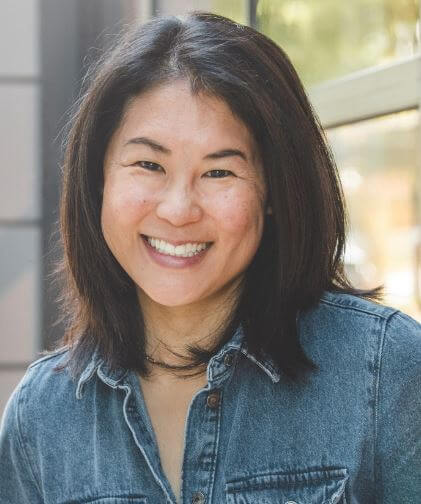 Suzan Song, MD, MPH, PhD is a child, adolescent, and adult psychiatrist and medical anthropologist, and a professor of psychiatry at George Washington University. For more than two decades she has designed and advised on mental health and psychosocial support systems in conflict-affected and humanitarian settings, working with former child soldiers, forcibly displaced families, and survivors of torture, trafficking, and mass violence across sub-Saharan Africa, the Middle East, Eastern Europe, and the United States.
She served for eight years as an adviser to the U.S. State Department’s Office to Monitor and Combat Trafficking in Persons and currently advises the U.S. Department of Justice’s Office for Victims of Crime on mass violence and collective trauma. She is the author of Why We Suffer and How We Heal (Harmony / Penguin Random House, 2026) and has maintained a private practice for more than twenty years, seeing clients that range from executives and founders to young survivors of trafficking. Learn more at suzansong.com.
In this Podcast Episode: Collective Suffering, Moral Injury, and Healing Through Belonging
Suzan reframes the distress therapists and clients are carrying as communal rather than purely individual, and she names what American mental health training often misses when it treats suffering as something bounded inside a single person. She and the hosts explore how narrative, ritual, meaning, and belonging function as healing, why functioning is not the same as healing, and how agency, even in very small acts, protects against demoralization. Along the way, Suzan shares what her work with survivors of war and displacement has taught her about grounding in relationship, and offers concrete, low-cost rituals therapists can use to keep the bleed-over of moral exhaustion from following them home.
Key Takeaways for Therapists: Collective Trauma, Ritual, and Sustainable Healing
“Healing is just not resolving of symptoms. When people come to us, we’re not just looking for an inventory of symptoms and trying to eliminate them, but healing is through a sense of belonging.”
— Suzan Song, MD
- The distress in your office is often collective, not just individual. Much of what clients bring right now, the ambient fear, moral exhaustion, and political grief, is a communal response to unstable systems. Locating it there can ease the pressure to solve it person by person.
- Therapists are absorbing the emotional weight of the world. Naming yourself as the emotional container for society’s moral failings is not defeatism. It is a way to set honest expectations and boundaries about what a single session can hold.
- Healing is belonging, not symptom elimination. The goal is not to inventory and remove symptoms, but to create a shared space where a client feels they belong. That space itself is the intervention.
- Narrative, ritual, meaning, and agency are the working parts. Alongside insight and story, small rituals and small acts of agency scaffold people through prolonged instability, especially when the stressor is social rather than individual.
- Functioning is not healing. Going back to work can be a useful, even protective distraction, but it should not come at the expense of bearing witness to what is happening inside.
- Grounding is relational before it is technical. In place of purely individual nervous-system regulation, Suzan points to grounding in relationship: who you matter to, and who matters to you.
- Agency is protective, and disengagement is corrosive. Small, doable actions, from baking cookies for neighbors to a protected walk between sessions, counter the demoralization that spreads when people feel powerless.
- Sustainability requires limits and permission for joy. Human capacity is finite, and therapists are at their max. Rituals, respite, and play are not indulgences. They are how clinicians stay in this work for the long term.
“Grounding is not so much as techniques, as I see it, but it’s more about grounding in relation. Who do you matter to, and who matters to you?”
— Suzan Song, MD
Why Individual Therapy Isn’t the Whole Story Right Now
American mental health, Suzan argues, is itself a culture, one that tends to locate suffering inside a bounded, individual self and to treat healing as an examination of one person’s thoughts, feelings, and behaviors. That model is valuable, and she is careful not to dismiss it. But it can quietly place enormous burden on the individual therapist to say exactly the right thing, and on the individual client to resolve a pain that was never only theirs. When the stressor is collective, an unstable economy, ambient political fear, institutions that feel like they are crumbling, a purely individual frame leaves out where the distress actually lives. Naming the social and moral dimension of suffering is not an abdication of clinical responsibility. It is a more accurate map, and it puts the blame and the burden where they belong.
Ritual as Emotional Scaffolding
One of the most striking moments in the conversation comes when Suzan describes a survivor of years of captivity who, asked what helped her heal, pointed not to trauma processing but to a single community ritual that allowed her to be received and to belong again. That story anchors a practical idea therapists can use right away: rituals scaffold us through what we cannot resolve. They do not have to be elaborate or expensive. A standing movie night, a bedtime rose-and-thorn check-in, a protected five minutes to mentally clear the last session, a ten-minute walk to reorient before stepping back into personal life. For clients and clinicians alike, these small, repeatable acts offer a steady grounding force when everything around them feels unsteady.
Agency, Respite, and Staying in the Work
Suzan is direct that therapists are at the edge of their capacity, and that neither collapse nor constant over-functioning is sustainable. Disengagement tends to make us feel worse, because powerlessness is corrosive and demoralization spreads. But relentless advocacy without rest is its own kind of unsustainable. The way through is agency sized to what is actually possible: small acts that restore a sense of control, honest limits on how many people one human can hold in a day, and real permission for respite, joy, and play. Even in the aftermath of atrocity, she points out, people still make room for fun, not because the suffering isn’t real, but because it is the only way to keep going.
Resources on Collective Trauma, Ritual, and Sustainable Healing
We’ve pulled together resources mentioned in this episode and put together some handy-dandy links. Please note that some of the links below may be affiliate links, so if you purchase after clicking below, we may get a little bit of cash in our pockets. We thank you in advance!
- Suzan Song’s website, newsletter (The Winter Letters), and speaker series: suzansong.com
- Why We Suffer and How We Heal by Suzan Song, MD (Harmony / Penguin Random House, 2026)
- Concepts discussed: the collective and moral dimensions of trauma, narrative, ritual, meaning, agency, belonging, moral injury, and grounding in relationship
Relevant Episodes of MTSG Podcast
- Sustainability Is a Fundamental Responsibility: Therapist Burnout, Moral Injury, and the Systems We Practice Within
- What It Means to Be a Modern Therapist: The Principles That Guide Our Work
- Burnout Recovery in a Failing System: ACT, Moral Injury & Reclaiming Agency – An Interview with Shaina Siber, LCSW
- An ER Doctor Reflects on Gun Violence, Health Inequities, and Moral Injury: An interview with Dr. Ruby J. Long
- How Conscious Awareness Shapes Leadership, Therapy, and Collective Healing: An interview with Pardis Mahdavi, PhD
- Beyond Coping: Radical Healing in a World Not Built for Us – An Interview with José Rosario
- How Therapists Can Support Community-Building in Immigrant and Marginalized Populations: An Interview with Adriana Rodriguez, LMFT
- Reacting to Regime Change: How Therapists Can Advocate for our Clients and Communities
- Somatic Therapy, Nervous System Regulation, and Expanding Capacity for Rest: An Interview with Linda Thai
- When Crisis Hits Home: How Therapists Can Survive and Support Each Other — An Interview with Jeanine Rousso
- Managing Vicarious Trauma: An Interview with Laura Reagan, LCSW-C
- Choosing Yourself as a Therapist: Strategies to address burnout, compassion fatigue and vicarious trauma, An Interview with Laura Reagan, LCSW-C
Meet the Hosts: Curt Widhalm & Katie Vernoy
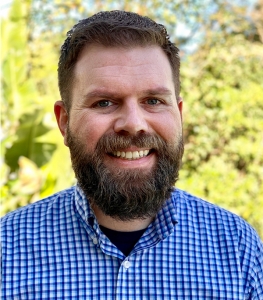 Curt Widhalm, LMFT
Curt Widhalm is in private practice in the Los Angeles area. He is the cofounder of the Therapy Reimagined conference, an Adjunct Professor at Pepperdine University and CSUN, a former Subject Matter Expert for the California Board of Behavioral Sciences, former CFO of the California Association of Marriage and Family Therapists, and a loving husband and father. He is 1/2 great person, 1/2 provocateur, and 1/2 geek, in that order. He dabbles in the dark art of making “dad jokes” and usually has a half-empty cup of coffee somewhere nearby. Learn more at: http://www.curtwidhalm.com
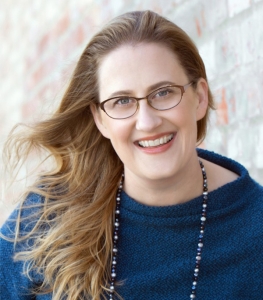 Katie Vernoy, LMFT
Katie Vernoy is a Licensed Marriage and Family Therapist, coach, and consultant supporting leaders, visionaries, executives, and helping professionals to create sustainable careers. Katie, with Curt, has developed workshops and a conference, Therapy Reimagined, to support therapists navigating through the modern challenges of this profession. Katie is also a former President of the California Association of Marriage and Family Therapists. In her spare time, Katie is secretly siphoning off Curt’s youthful energy, so that she can take over the world. Learn more at: http://www.katievernoy.com
A Quick Note:
Our opinions are our own. We are only speaking for ourselves – except when we speak for each other, or over each other. We’re working on it.
Our guests are also only speaking for themselves and have their own opinions. We aren’t trying to take their voice, and no one speaks for us either. Mostly because they don’t want to, but hey.
Join the Modern Therapist Community:
Podcast Homepage | Therapy Reimagined Homepage
Facebook | Facebook Group | Instagram | YouTube | LinkedIn | Substack
Consultation services with Curt Widhalm or Katie Vernoy:
Connect with the Modern Therapist Community:
Our Facebook Group – The Modern Therapists Group
Modern Therapist’s Survival Guide Creative Credits:
Voice Over by DW McCann https://www.facebook.com/McCannDW
Music by Crystal Grooms Mangano https://groomsymusic.com
Transcript for this episode of the Modern Therapist’s Survival Guide podcast (Autogenerated):
Transcripts do not include advertisements just a reference to the advertising break (as such timing does not account for advertisements)
… 0:00
(Opening Advertisement)
Announcer 0:00
You’re listening to the Modern Therapist Survival Guide, where therapists live, breathe, and practice as human beings. To support you as a whole person and a therapist, here are your hosts, Curt Widhalm and Katie Vernoy.
Curt Widhalm 0:15
Welcome back, Modern Therapists. This is the Modern Therapist Survival Guide. I’m Curt Widhalm with Katie Vernoy, and this is the podcast for therapists about the things going on in our world, the ways that we show up as therapists, and if you’ve spent any of the last week, last month, last fill in the amount of time that’s relevant to you trying to deep breathe your way through systemic collapse, or wondering if your exhaustion is just going to be cured by more bubble baths and slightly more expensive candles. Then maybe this is the episode that you should listen to because as we’re dealing with burnout, as we’re playing emotional hot potato in the world that we’re living in, we turn to the people that we like to hear help us be able to process our feelings, and we are joined today by Dr. Suzan Song. She’s a medical anthropologist and psychiatrist, and somebody who’s got kind of a really good big picture view on how we can maybe work our way through this in in our professional lives and our personal lives. So thank you so much for joining us and sharing your wisdom today.
Dr. Suzan Song 1:20
Thank you for having me.
Katie Vernoy 1:22
I’m really looking forward to this conversation. When you reached out to us, I was over the moon because this is something that I’ve been wanting to talk about for a long time, and so I really hope that we have enough time to do this topic justice. And if not, maybe we’ll have to ask you back. But before we jump into the conversation, I want to ask you the question we ask all of our guests, which is who are you and what are you putting out into the world?
Dr. Suzan Song 1:44
Yeah, I am someone who has thought about suffering for a very long time, ever since I was a child, I think, and about why we suffer, about how it shows in all of us, and what healing actually looks like and actually means. And so I’ve put those thoughts into a framework. That’s my book, Why We Suffer and How We Heal, and currently that’s I’m putting out into the world, which is really thinking about ways in which people not just survive. As a psychiatrist, I’ve worked with people across the spectrum of despair, so survivals of torture, trafficking, and hostage to the other extreme of CEOs, founders, and leaders, and finding that the people who are able to find a sense of grounding during all the instabilities and uncertainties are those who have some form of using narrative, ritual, and purpose.
Curt Widhalm 2:43
So you’re a psychiatrist and also have background as a medical anthropologist. Can you explain to us and to our audience how that might change how you sit with people as compared to maybe a traditional psychiatrist?
Dr. Suzan Song 2:58
Yeah, I think when people think about anthropology, or my work is in global mental health, so I work in the humanitarian settings most of the time. So areas of armed conflict, war, post-conflict. People tend to think of anthropology as seeing the other, a culture of the other, and I think if we’re honest, people are thinking normally about the other being a person of color or from the global south, but I think of anthropology as being most useful when we turn the lens on ourselves. So we see that American mental health systems, structures, interventions-the whole approach of American mental health-is a culture in and of itself; the way that we view suffering and the way that we view healing is in itself a culture-bound framework. So psychiatry and the American mental health care looks at culture as being on top of biology. It’s like a layer on top of biology, and that the self is this bounded self, like we think that our minds are internal, that our thoughts and our emotions are also internal, that distress is psychological, and that healing therefore is an examination of our thoughts, our feelings, and our own behaviors, right? That’s kind of our model. Anthropology shows, though, that culture is not just a layer on top of biology, but culture shapes our suffering. Like it, it changes our own experience of suffering. And so, in many cultures, the self is porous, so we can have spiritual or ancestors kind of affecting us, or our suffering is relational, and our healing is within communities and within the sense of belonging. And so, while anthropology helped me kind of realize that global mental health is not about other people, but like I, I really do look at what we’re doing as psychotherapists, as psychiatrists, as American mental health system, and realizing that we’re very focused on our independence, our autonomy, our insights. I’d be clear: I’m not saying that that’s wrong in any way. It’s just that it’s one mode of thinking, one approach.
Katie Vernoy 5:24
When you switch that framework, when you think about mental health or the self even being more collective, how does that shape your work?
Dr. Suzan Song 5:34
It almost shapes everything that I do, because look, the way that you open this, we’re talking about the times right now when people are coming to us in this very moment. They’re coming, we assume, with this individual distress, and the distress that people are carrying right now is collective, right? We have this ambient fear. We have this moral exhaustion. We have this collective, just political exhaustion as well, and there’s a sense of hopelessness when structures and institutions that are meant to protect all of us are kind of crumbling as we see them. That’s a lot to bear, and so when I think about a person coming to me in therapy. I see, of course, their individual distress, but I locate it also within the societies and the cultures and the groups around them.
Curt Widhalm 6:31
In kind of the parallel for us as therapists for our audience, when our clients are coming to us, what do you suggest that therapists do in helping to be able to say something more beyond, yeah, this really sucks for a lot of people, and you’re right there with them.
Dr. Suzan Song 6:47
Yeah, right. I mean, in validation, look, validation is very important, so I can’t underestimate the power of validation. But also, I think we need to remind ourselves that healing is just not resolving of symptoms. When people come to us, we’re not just looking for an inventory of symptoms and trying to eliminate them, but healing is through a sense of belonging. And so many times that applies to us as well. I think therapists right now are so tired and so overburdened because they’re being the emotional container for the entire world in many ways, and that’s a lot to bear. And so the more that they can say for our clients when they come to us, healing is through a sense of belonging, and that sense of belonging can be with that therapist themselves. Like that right there is the intervention, but also for therapists, like we all need a space where we can fall apart. There’s a reason why my two best friends are both therapists. Like one’s a social worker, one’s a psychologist, right? Because we can all just fall apart with each other. Because oftentimes therapists have this unspoken expectation that we put on ourselves to say the right thing, or to be constantly emotionally regulated, or like to be available all the time, and that’s a lot to ask for of one person.
… 8:13
(Advertisement Break)
Katie Vernoy 8:15
There’s a lot of ways I want to go here, but one of the things I’m really thinking about as we started tiptoeing into is this moment, this this political moment, this this moment of discovery of trafficking, of violence in the streets. I think there’s there’s a lot here that feels for some of the therapists in the United States, not all, but some of the therapists in the United States, like it’s new. For some, it’s this is this is old news. This has been going on for a long time. And I feel like there is this collective trauma and turmoil and grief that’s happening. And I’m trying to understand, and maybe you can speak to more the problem rather than the solution, we we we we want to fully understand it. But I’m trying to understand how to even comprehend the grief and the and the the suffering that is occurring. And so, how would you frame the suffering that we’re going through collectively in the United States right now?
Dr. Suzan Song 9:18
I think first we have to understand that our suffering is communal. Many of us are feeling a sense of, of course, moral injustice, but a lot of the suffering also has to do with our feeling a lack of agency, of personal agency, and when we don’t have a clear role or responsibility, it makes it hard for us to find a personal agency to know how to act or what to do. And so, the default then, especially look, humans are not meant to be living in this chronic instability. Or injustice, we’re just not evolved to be chronically living like this, and so it makes sense that people would go towards disengagement and despair, and just not feeling like they have any bandwidth to engage in the world in any meaningful way, and that lack of agency can be corrosive because it leads to demoralization, and demoralization is just contagious. So, I think we have to tune into and remind ourselves that we do have agency. And actually, the more that we disengage, the worse we actually feel because we we don’t have any control over anything, so the more that we can engage in something small, and that could be engaging in putting out goodness in the neighborhood, right? So my kids and I, we now bake cookies and we just walk around to our neighbors and just pass them out. Why that’s not doing anything to fix the turmoil in the country, but it helps ground us in thinking: Okay, there’s some agency that we have that we can control and put out in the world. You know, I work with a lot of people who live in countries that have experienced political violence ongoing, right? And I work with former child soldiers in countries that have had decades-long war. I’m right now working in Ukraine. Like they’re very, very long, protracted wars with institutional instability and failed states. And the way that they get through it and they survive is by breaking down their communities into smaller and smaller modes, so that you have a sense of belonging and a sense of meaning with the people that you’re surrounding yourself with. Because otherwise, life just becomes too hard. Like we’re not meant to do life alone, and that’s what it feels like oftentimes.
Curt Widhalm 12:00
And so, when therapists are trying to help their clients deal with these systemic wide problems in individual sessions, if therapists aren’t recognizing this, this is where that moral injury starts to show up-that disengagement, even from our own lives. Am I picking that up correctly?
Dr. Suzan Song 12:18
Yeah, that’s right. And so, for therapists, I think we have to place the blame is the right word, but maybe the blame and the burden in its rightful place. Which is, one, for therapists to just recognize and validate to themselves that they are the emotional container for the moral failings of society right now, right? Just absorb that. So, like that’s the framework from which they should be operating in, so that when people come to them and they are in distress, there is a set of expectations and boundaries that therapists can place for ourselves. So we say, okay, we know we’re not here to fix. I’m not here to eliminate symptoms. I’m here to create a shared space of a sense of belonging, so that this person feels like they have someone safe that they can, you know, process whatever they need to with me. That’s the goal, right? We’re not trying to do anything else but that, in my mind, because that in and of itself is healing.
Katie Vernoy 13:25
I’m thinking about what that looks like, and I, I, I, I actually think it looks very similar to what I’ve been doing. And I, I know that belonging is only one piece of of the model that you’ve described. When we’re looking at the other the other elements. How does that show up, and is that in the therapist’s job to do, or is it does it belong somewhere else?
Dr. Suzan Song 13:49
Yeah. So, I mean, it’s interesting because, as I mentioned before, around American mental health, it’s very focused on our insight and on narrative, and that’s the first part of my framework is like narrative. So, understanding, of course, our stories, but our backstories and how memories play a role, and I’m very thankful, early on in my training, I was actually doing training, I have a degree in public health policy, and I was working on mental health systems of care with former child soldiers in West Africa long ago, and at the same time, I had-I think I had just finished my training in psychiatry-and I met this woman who was a former child soldier. And let me just back up to explain to people what child soldiering is. So, a child soldier is someone who’s basically under 18 years old, and they’re forced to work in an armed group. Many people think about them as like a child with an AK 47 over their shoulder, like a fighter. But there are many who were porters and cooks and messengers and sex slaves. So this woman that I worked with, she had been a sex slave for a number of years in a country that had a decade long war. So that’s all of her childhood was in this rebel force. So I met her, and she seemed to be doing fairly well. And I asked, like, how did you get through that experience? That was so much of your life. How did you get through that? And because I was trained in the U.S. I was expecting some sort of a narrative insight or processing, and what she said was, it was actually one thing. It was when my village elder got the community together, our village together, and did a body purification ritual for me, and that atoned me of my sins, and it allowed my neighbors to then accept me, and that’s what was the biggest impact for her. That one ritual that connected her to others, and in her mind atoned her ever since. There was no processing of her trauma, and I think we think about that a lot. You know, we always talk about, oh, if we don’t talk about it, it’s going to come up in some other form throughout our lives. But for her, there was no need for that. It was all about this ritual, and so I’ve kind of taken that approach in thinking about how rituals scaffold all of our lives. I mean, think about the pandemic, how much we lost in our ability to do these rituals, but we all have rituals that we do now. We can do those, use them right now to help find a consistent, steady grounding force to keep us going.
Curt Widhalm 16:35
Thinking on one hand here about what many American therapists, our audience typically tends to be American here, as hearing you talk about people who’ve gone through being child soldiers, being sex slaves, and then looking at the relative privilege of having this be after COVID, maybe the second crisis of their lives, at least as adults, And wondering how you’re seeing mental health professionals really kind of struggling to find some of their own rituals in this without really having kind of some of the guidance built into our structural systems that do allow for kind of this own healing to be kind of thought about for the first time.
Dr. Suzan Song 17:24
Yes, so all therapists can right now think about their own ritual. So even in the family, you know, I have young children. We have movie night every Saturday. We do pizzas on Fridays, right? We do like we we have these rituals at every night at bedtime. I don’t know if you’ve heard of rosebud thorn. So we think about something we like during the day, something that we’re working on, something we’re looking forward to, right? Every night we do that at bedtime. These are small rituals that don’t take up time, they don’t cost anything, but they are grounding because they scaffold what we’re going through. And just using this personally, because you know my kids have gone through divorce, and then a year later we had a house fire. It was a total lost house fire. So overnight they have they lost everything, and they were displaced for the year. So they’ve had a lot of disruptions in their lives, and the thing that was very consistent were the rituals. So I kept with those same rituals throughout all of those years to help with this emotional scaffolding and to remind them that we we can do hard things. We do them together, and that’s I think the best that we can do. Again, it’s managing our own expectations, we cannot eliminate a lot of these structural problems that are around us, but we can find small things that we can do. And one ritual that I do as a therapist is, between my sessions with clients, I always have five minutes at least that I protect for myself, and I just imagine myself like draining out the last session, just so I can kind of clear the space and move on to to the next. And at the end of my workday, I’ll go for a walk outside, just like a 10 minute walk around the the street, not thinking about what’s happened, but just reorienting myself so that you can walk into your personal life without the bleed over.
… 19:27
(Advertisement Break)
Katie Vernoy 19:28
At points, it feels like the bleed over is inevitable. The moral exhaustion is inevitable, and it seems like therapists right now are just at their limit, and so maybe we can kind of consolidate some of the advice that you’ve talked throughout this this podcast, and maybe add to it. Is is how can therapists meet this moment without feeling like they’re sacrificing themselves to it?
Dr. Suzan Song 20:00
Yes, that’s so important. Whenever we’re talking about moral injustices, and which I include, I don’t like the word trauma because it’s so overused. I think people, and I mean clearly, this audience knows what trauma is, but when there are these these acts of moral injustice and traumatic events, I think the way that many of us in in American mental health have been trained is to think about these traumatic events as trauma rooted in the individual. But what we’re missing is a social moral dimension of trauma. So let me give you an example. I work with a lot of young people, high school, college kids who have experienced sexual assault, and I think that’s a very difficult population because a lot of times, the burden on healing is on the individual, so we send them to individual therapists to to work with PTSD, and they’re really good modalities, right? EMDR, trauma focused CP, like whatever one is drawn towards. But the thing that we’re missing is a socio moral dimension of sexual assault, which is the problem is not in the individual. The problem is in toxic masculinity, or the culture, or the systems that allow this to happen, or the institutional betrayal when a college doesn’t acknowledge it, let’s say.
Katie Vernoy 21:33
Sure.
Dr. Suzan Song 21:34
So, I think for clinicians to understand and see that yes, we can work with the individual, but again, it’s it’s really understanding that we need to put the blame where it, where it’s rightfully placed, which is in the culture. So when I see some of my survivors and they’re public about their experience, and they speak up towards their college, you know, Title IX people, and that’s a way for them, they feel empowered because now they’re feeling like they’re placing the burden where it’s supposed to be. So, for the therapist, what what is it that people are trying to do with with others’ sufferings, when the assumption behind the question is that we are supposed to be eliminating or taking away suffering, and I would say that’s not our goal. Our goal is to be able to sit with people’s suffering, and also not lose ourselves within that. So this is why it’s important. And I, you know, I don’t know if people have the privilege of structuring one’s day and not seeing, you know, 10 people in one day because I think I don’t know how people do that. I think that’s just a recipe for burnout. I could never do that.
Katie Vernoy 23:05
I can’t either.
Dr. Suzan Song 23:06
Yeah, but we need to have some kind of limits because we are humans, and humans have a certain capacity. And right now, our capacity for all therapists it’s at max. And if we want to stay in this in the longer term, we really have to find ways, either with rituals, either with allowing a sense of joy, right, with allowing ourselves to find play. Like we have to give permission and and invite to ourselves that we can do these things for ourselves, and of course for our clients.
Curt Widhalm 23:42
A lot of the grounding and healing techniques, as you’re pointing out, tend to be more individually focused, at least as taught in kind of Western type therapies. What are some of the things from non Western therapies that might serve as grounding techniques that can work for both therapists, and also to be able to pass along to their clients in the spirit that you’re talking about.
Dr. Suzan Song 24:07
Yeah, grounding is not so much as techniques, as I see it, but it’s more about grounding in relation. So, who do you matter to, and who matters to you? What cultures or communities do you want to matter to? To me, that that’s a sense of grounding. It’s it’s in the relational aspect, and finding people and and groups that you feel aligned with, where you feel, yeah, a sense of belonging to.
Katie Vernoy 24:48
A lot of how we talk about it in, you know, the United States mental health system is these days, anyway, it seems like, is regulating your nervous system. And that is a very individual tactic, and and so if I’m hearing you correctly, it’s it’s about finding the the softer or more philosophical grounding of who am I in relationship to, who do I want to be in relationship to, and how do I hold that? And I think that can be very powerful. I I feel like it can get lost when we we over focus on the individual aspects of therapy that you’re talking about, and so I I think that’s really interesting. I really like that. I think there’s there’s this other piece of meaning making, soul healing, you know, those types of things, and and it feels like there’s potentially dramatic shifts, but sometimes it might be small tweaks that therapists can make to to incorporate these things in. Can you talk a little bit more about that?
Dr. Suzan Song 25:52
Yeah, I mean, and and these things that I’m talking about, they are, I want to be clear that it’s not to replace individual therapy, which is extremely valuable and useful and and healing in of itself. It’s more to add on as another dimension in times like right now, where because the stress is not necessarily individual, it is social cultural. I think we need those sorts of quote interventions. If our healing is through just insight-oriented narrative approaches, that is so much burden on the individual therapist to say the right thing or to make the right observation, and that’s just not fair to the therapist. But the philosophical kind of what we’re calling softer approaches are really because our society really likes us to be efficient and efficient in our emotional processing as well. And what we’re experiencing right now-the collective grief and the moral injury-these are long processes that we can’t just turn off with one intervention or one way of being. So it’s asking about well, what matters to us right now, and what do I need right now in order to move forward with a sense of integrity? Or in moments like this, who do I know myself to be, and who do I want to be? I mean, these kinds of questions, I think, are the approaches we need, especially now, because we’re dealing with such large and complex factors in our lives.
… 27:45
(Advertisement Break)
Curt Widhalm 27:46
So, in these systems where it’s about getting people back to work as quickly as possible, your insurance company is approving 15 sessions with some of these deeper questions, how do you help clients with soul making and meaning making and soul healing as part of this when all of these other pressures are go back to being productive?
Dr. Suzan Song 28:13
Yeah, well, and to remind people that functioning is not healing, and sometimes it’s a good distraction. Like there is a lot of research on the positive force of positive distractions. Like we’re not avoiding, and so if people have to go back to work, like that is just reality. We have to work, but that shouldn’t come at the expense of bearing witness to our own internal struggles, our own suffering that people are going to, because I think when when they’re told essentially your value and your worth is how useful you are, that really reduces people. And so the more that we can encourage them to do what you need to do to function as you are, but also to bear witness to what’s going on inside of you, and how we’re actually feeling, and how oftentimes that will show up with how we’re engaging with people. So, are we isolating more? Are we becoming more annoyed with people? Are we going more towards social media? I mean, I think there’s a false sense of intimacy there, and so people can go there, feel like they’re connecting with each other, and then just come back feeling more lonely. So for those who have to go back to the world functioning, to notice and just be mindful about you know, Am I going to bear, can I bear witness to what I’m experiencing myself? And to infuse coming back to the ritual, just like a ritual of joy, or like these practices that force you to kind of reconnect, and maybe that’s like a yoga practice or pickleball or something. I don’t know, whatever ritual that you find of that’s enjoyable. In moments of distress, we can still have fun, we can still experience moments of joy, and I see that even in. I just was working in post-genocide northern Ethiopia. You can still have fun, and you need to. Like we have to, because that’s the only way to get through. Otherwise, it’s too much despair.
Katie Vernoy 30:22
I think that permission for fun is definitely needed, and I think there are some folks who would see it as a distraction or a privilege or something to look away. And I call it respite. I call it necessary time to give yourself the resources to be able to do what you want to do in the world, and I think that that can be very challenging, but but how do you respond to folks that get into this place of either collapse and despair and feeling completely hopeless, or the the over functioning constant either productivity, but it can also be over functioning advocacy. They’re they’re at every every single moment, you know, whether they’re keyboard warriors, they’re out in the streets, they’re doing something, and they they don’t feel permission to even take any type of respite. How do you how do you frame that? Yeah, because it feels like that can be a big challenge. People don’t know where that sits or how that looks. How to balance those things?
Dr. Suzan Song 31:24
Yeah, yeah. I think about, I mean, what you’re talking about is different levels of engagement, engagement with the moral challenges of our times. And so, where and how do people want to engage? And that’s a very personal question based on values and beliefs, and also there is a certain level of privilege in being able to engage in a certain way. Because it’s just not safe for many people right now to be loud and engaged. So I want to be mindful of that. But this goes back to our sense of agency, and if someone wants to disengage or needs to disengage right now because they’re feeling so burnt out and overwhelmed, we acknowledge that, but also just to remind people that’s only going to make you feel worse. And so, the more that you engage in small, small activities, the better off you’re going to actually feel later on, and for the person who is over functioning, and that feels almost like a traumatic response, right? Like we’re needing to kind of constantly engage with that because we feel this need to control or to do something about it and respect that, and also for that person, if they’re going to go in the longer term, how can they engage in a way that’s sustainable on both sides, right? The level of engagement has to be sustainable; otherwise, we’re going to fall out, and many people are right now.
Katie Vernoy 33:00
So I’m really hearing that there is this element of understand your story, be able to to frame it in a full way, and use that. But beyond insight, beyond that story, find community and collective, have ritual, and understand where agency sits, what you have capacity for, what small or large things that you’re able to do. Do those things, even when you feel maybe that your hopelessness is there, because those things start to build agency and and and that maybe hope or or even just connection, and then also find moments of respite and joy and rest, so that you can continue to sustain. Have I caught all of it, or did I miss some of the pieces?
Dr. Suzan Song 33:48
No, that’s great. Well done, thank you.
Curt Widhalm 33:54
Can you tell us more about your book and where to follow you and all of the wonderful work that you’re doing?
Dr. Suzan Song 34:01
Yeah, yeah. So the book is called “Why We Suffer and How We Heal, and it’s largely on many of the topics that we’ve talked about now. But of course, goes in depth more. It’s available everywhere you buy books through Amazon, Barnes and Nobles, and you can go to my website at suzansong.com, and there I have information on a newsletter that I’ve been writing about some of these ideas, and then speaker series and things.
Curt Widhalm 34:31
And we will include links to that in our show notes over at our website mtsgpodcast.com. Follow us on our social media. Join us in our Facebook group, the Modern Therapist Group, to continue on with this and other conversations. And until next time, I’m Curt Widhalm with Katie Vernoy and Dr. Suzan Song.
… 34:51
(Advertisement Break)
Announcer 34:54
Thank you for listening to the Modern Therapist Survival Guide. Learn more about who we are and what we do at mtsgpodcast.com. You can also join us on Facebook and Twitter, and please don’t forget to subscribe so you don’t miss any of our episodes.




SPEAK YOUR MIND